For whom is altitude training interesting?
Published 5 July 2015 · 13 min read

Who is altitude training interesting for?
Who is altitude training interesting for? The question is less straightforward than it seems. Altitude training is primarily relevant for people who want to cope better with less oxygen. Think of athletes who want to support their endurance, mountaineers preparing for altitude, and people who want to acclimatise to a hypoxic stimulus in a controlled manner.
However, altitude training doesn't work for everyone for the same reason. For a runner, it's often about performance and recovery. A mountaineer primarily wants to acclimatise better. Recreational users sometimes seek more insight into breathing, sleep, and resilience. That's why the best question isn't just whether altitude training is interesting, but crucially, what goal you aim to achieve with it.
Short answer: Altitude training is particularly interesting for endurance athletes, team sports players, mountain trekkers, expedition participants, and people who want to acclimatise to lower oxygen levels in a controlled manner. It is less suitable as a quick fix without a plan, monitoring, or clear objective.
Conclusion: Altitude training is particularly valuable when oxygen uptake, endurance, recovery, or acclimatisation play a role.
Nuance: The effect depends on protocol, duration, personal response, sleep quality and monitoring.
Practical hook: Always start from your goal: athletic performance, mountain preparation, or controlled acclimatisation.
Who the base of altitude training understands, sees more quickly whether it suits their situation. It's not about training harder in an extreme system, but about controlled exposure to less oxygen. This usually happens through sleeping in a altitude tent or via specific hypoxia training. This allows the body to respond with adjustments in oxygen transport, respiration, recovery processes, and endurance.
Who is altitude training interesting for in practice?
Altitude training is particularly interesting when your body needs to perform, recover, or function with less available oxygen. This can be in sports, but also in preparation for mountain expeditions. The context therefore determines the value.
In road cycling, the emphasis is often on endurance, sustained power, and recovery. Marathon runners tend to focus more on long-distance efficiency. For mountaineers, it's primarily about sleeping better, ascending more calmly, and reacting less sensitively to altitude. Team sports athletes, on the other hand, benefit more from better repeatability of intensive actions and quicker recovery between efforts.
| Target audience | Why interesting | What to look out for |
|---|---|---|
| Endurance athletes | Supports endurance, oxygen transport and recovery. | Combine with normal training quality and sufficient iron status. |
| Mountain travellers | Acclimatise to less oxygen beforehand and depart better prepared. | Maintain a steady ascent en route and monitor for complaints. |
| Team sports | Interesting round for preparations, winter break or busy match periods. | Use it as a recovery stimulus, not as additional training stress. |
| Amateur sportspeople | Greater insight into sleep, recovery and personal response to hypoxia. | Work with realistic expectations and a calm build-up. |
Why interesting: support for endurance, oxygen transport and recovery.
What to watch out for: Combine with normal training quality and sufficient iron status.
Why interesting: getting used to less oxygen beforehand and departing better prepared.
What to watch out for: Continue to ascend steadily en-route and monitor complaints.
Why interesting: An interesting round for preparation, the winter break or busy match periods.
What to watch out for: Use it as a recovery stimulus, not as additional training stress.
Why interesting: more insight into sleep, recovery and personal response to hypoxia.
What to watch out for: work with realistic expectations and a calm progression.
Altitude training is interesting for athletes, particularly those involved in endurance sports such as running, cycling, and swimming, as well as team sports where cardiovascular fitness is crucial.
Within sport, altitude training is particularly interesting for athletes who depend on oxygen transport and aerobic capacity. Think of running, cycling, triathlon, speed skating, rowing, cross-country skiing, and mountaineering. Additionally, it can be valuable in sports with repeated intensive actions, such as football, hockey, or basketball.
Endurance athletes typically focus on more efficient oxygen utilisation. The body receives a stimulus that can contribute to adaptations in red blood cells, oxygen transport, and mitochondrial efficiency. This can strengthen the physiological foundation, provided training, recovery, and nutrition remain well-aligned.
This does not mean that every athlete automatically becomes faster. The result depends on training status, timing, iron status, sleep quality, and individual sensitivity. That is precisely why altitude training works best as part of a plan, not as a separate additional stimulus during an already demanding period.
For runners, timing is important. Altitude training is best suited to a period when the training load remains manageable. Those who train too hard concurrently, sleep poorly and increase their load too quickly, often get less out of the protocol. Therefore, sleep high train low for many athletes the most logical approach: sleeping with less oxygen, but training normally during the day.
For cyclists too, altitude training can be interesting in the lead-up to spring races, altitude training camps, multi-day tours, or cyclos. It's not just about higher power output. Recovery between training days, more stable performance under fatigue, and smarter management of a compact preparation also play a role. For those who want to think more in terms of cycling-specific applications, this can be linked to Altitude training for cyclists.
🧭 In practice
The most effective use of sport training usually occurs when altitude training is not added on top of an already packed schedule. The protocol should support the training. If sleep, recovery, or training quality deteriorates noticeably, the stimulus is often too demanding or has been progressed too quickly.
Altitude training is interesting for anyone undertaking mountain trips.
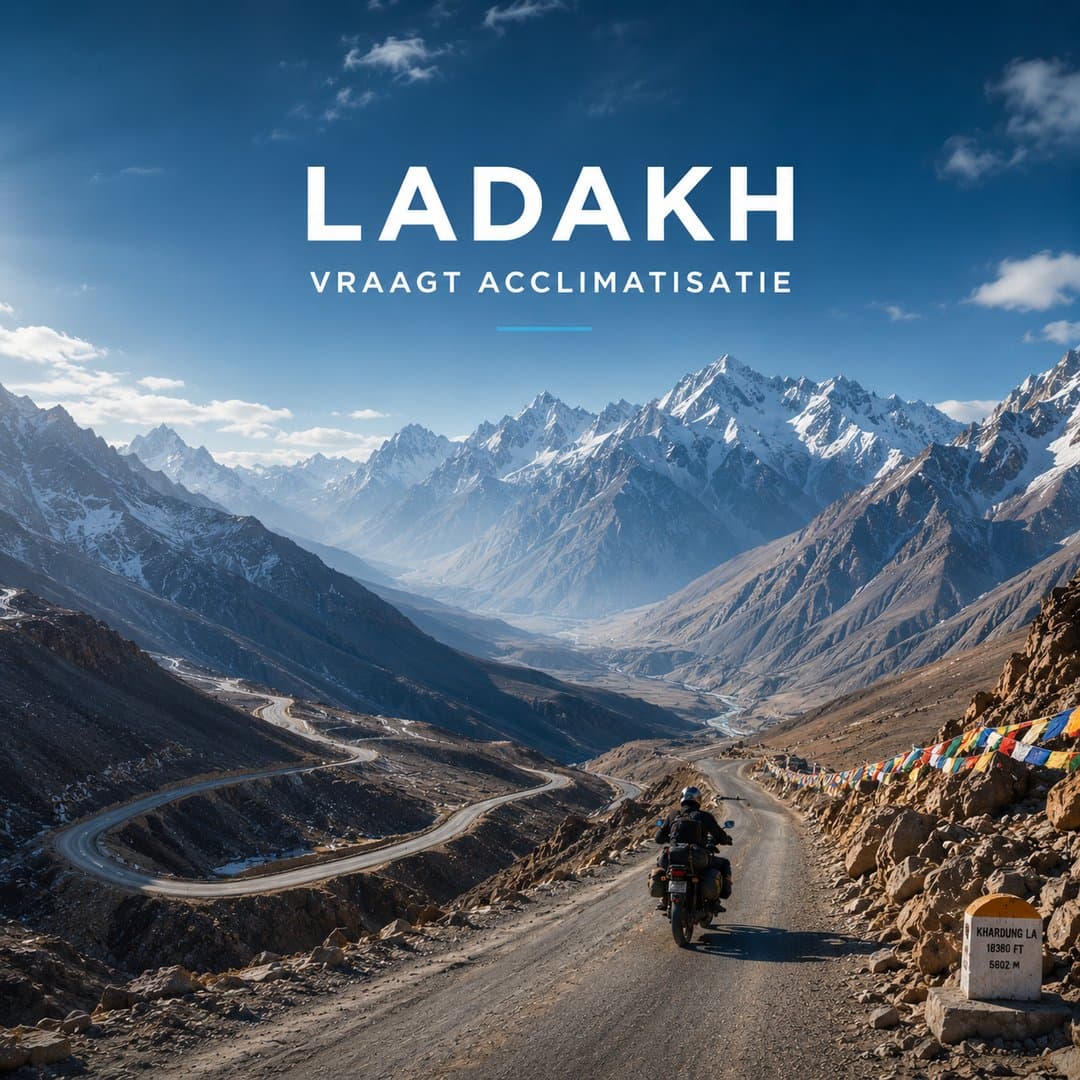
When travelling in mountainous regions, altitude training serves a different purpose. Here, it is less about performance and more about preparing for less oxygen. Anyone travelling to 3000, 4000, 5000 metres or higher will encounter an environment in which the body needs time to adapt.
This applies to Kilimanjaro, Mont Blanc, Aconcagua, Everest Base Camp, the Andes, Nepal, Peru, and Bolivia. It can also be relevant for ski trips, especially when sleeping at altitude quickly. The challenge is often not that people are unfit. The problem is usually that their bodies do not get enough time to acclimatise to the altitude.
Acclimatising at home with an altitude tent can make that preparation more measurable. This does not lower the air pressure, but the percentage of oxygen in the inhaled air. This is called normobaric hypoxia. This gives your body a controlled stimulus while you sleep at home.
This is particularly useful when your ascent is rapid, contains few rest days, or when you've previously reacted sensitively to altitude. A hypobaric chamber does not replace true acclimatisation. However, it makes the process more controlled, measurable, and planable. As a result, you'll depart better prepared than if you were to encounter low-oxygen air for the first time upon arrival.
Anyone preparing for a mountain trip can delve into acclimatising at home for mountain expeditions. This is particularly relevant when the schedule is tight and there's little room to build up momentum gradually.
Height training is less logical when
Altitude training is not automatically beneficial for everyone. It is particularly less logical when there is no clear objective. Those who are just looking for “something extra” but are unwilling to follow a protocol, measure saturation, or pay attention to sleep, are missing the fundamentals.
Caution is also important with medical conditions. Consider serious heart or lung conditions, uncontrolled high blood pressure, pregnancy, severe sleep apnoea or unexplained shortness of breath. In such situations, prior medical consultation is part of sensible use.
Furthermore, altitude training is not a quick fix. The body adapts gradually. Anyone expecting a major effect within a few days will typically be disappointed. The best results come from rest, repetition, sufficient hours of exposure, and objective monitoring.
More logical versus less logical
Quite logical You have a clear sporting or mountain-oriented objective, sufficient preparation time, and a willingness to build up gradually.
Less logical: You are looking for a quick fix, sleep poorly, ignore signals, or want to go directly to a high setting without monitoring.
Which form of altitude training suits which goal?
There are several forms of altitude training. The classic method is training or residing at altitude. In practice, this is difficult for many people to organise. Therefore, athletes and mountaineers increasingly opt for an altitude tent or a hypoxie system at home.
For most Altitude Dream users, the sleep high, train low approach is the most practical. You sleep with less oxygen while living and training normally during the day. This helps to maintain better training quality. At the same time, your body receives a hypoxic stimulus for several hours each night.
Intermittent hypoxic training may also be of interest, but has a different purpose. This involves shorter periods of low-oxygen air, often while seated or under supervision. This can be useful in specific sporting or therapeutic contexts, but is not the same as sleeping in a hypoxy tent.
| Form | Best suited | Practical significance |
|---|---|---|
| Sleep high, train low | Endurance sports, recovery, mountain preparation. | Sleep as a gentle stimulus, train normally during the day. |
| Altitude internship | Advanced athletes with time and guidance. | Effective, but logistically heavier and more difficult to dose. |
| IHT | Short hypoxia blocks and specific protocols. | More session-oriented, less sleep-oriented. |
Best suited to: Endurance sport, recovery, mountain preparation.
Practical significance: Sleep as a calm stimulus, train normally during the day.
Best suited to: advanced athletes with time and guidance.
Practical significance: effective, but logistically heavier and more difficult to dose.
Best suited to: short hypoxia blocks and specific protocols.
Practical significance: more session-oriented, less sleep-oriented.
💡 Did you know?
With an altitude tent, the air pressure in your room is usually not adjusted. The system lowers the oxygen percentage in the air you breathe. This simulates altitude via normobaric hypoxia while you sleep at home.
How does the stimulus work physiologically?
At high altitudes, there is less oxygen available per breath. The body reacts to this with various adaptations. For example, breathing changes, oxygen transport becomes more important, and the body tries to use the available oxygen more efficiently.
One of the best-known routes is via EPO, haemoglobin and red blood cells. However, that's not the whole story. Mitochondria, capillaries, ventilation, recovery and muscle metabolism also play a role. Therefore, altitude training is broader than just “more red blood cells”.
For athletes, this can be relevant for endurance capacity. For mountain climbers, acclimatisation to low-oxygen air is particularly important. The body learns to recognise the stimulus. This allows the transition to actual altitude to proceed more smoothly, especially when the build-up is sufficiently long and sensible.
📊 Research shows
Altitude training is not a single button. The response varies per person and depends on duration of exposure, intensity, sleep, iron status, training load, and recovery. Therefore, measuring and adjusting is more important than blindly following a fixed altitude.
Video: Why Altitude Training Can Be Interesting
The video below fits well after the initial explanatory content. At this point, the reader will understand who altitude training is relevant for. Subsequently, the video visually demonstrates why controlled exposure to lower oxygen levels can be beneficial for athletes and mountain travellers.
View the explanation about altitude training
This video explains how the body reacts to less oxygen and why that stimulus can be interesting for sports, recovery, and altitude preparation.

This is how you monitor this lens
Altitude training becomes more effective when you don't rely on how you feel. The most important metric is your SpO2, but always as a trend. A single measurement says little. A series of morning measurements tells you much more about how your body is reacting.
For this reason, it is best to measure at the same time every morning. Look at saturation, heart rate, sleep quality, feeling of recovery, and any complaints. The goal is not to drop as low as possible. You are actually looking for a stimulus that is strong enough without undermining your recovery.
| Signal | What you are following | Practical interpretation |
|---|---|---|
| SpO2 trend | Morning values over multiple days. | A stable trend is more important than a single outlier. |
| Sleep quality | Sleep duration, waking up, feeling of rest. | Poorer sleep can indicate too rapid progression. |
| Recovery | Heart rate, HRV, muscle sensation, motivation. | Recovery loss often means that the overall load is too high. |
| Symptoms | Headache, nausea, shortness of breath, dizziness. | With clear symptoms, you reduce the stimulus or pause. |
What you're following: morning values over several days.
Interpretation: A stable trend is more important than a single isolated value.
What you're following: sleep duration, waking up, feeling of rest.
Interpretation: Poorer sleep can indicate build-up is too fast.
What you're following: Resting heart rate, HRV, muscle sensation, motivation.
Interpretation: Recovery loss often means the total load is too high.
What you're following: Headache, nausea, shortness of breath, dizziness.
Interpretation: With clear symptoms, you reduce the stimulus or pause.
Anyone who particularly wants to know how to interpret saturation at altitude can read on about oxygen saturation at altitude. This helps not to see SpO2 as a standalone score, but as part of a broader trend.
Decision rules: when to do, when not to do?
Altitude training is probably interesting if:
- whether you have a distinct sporting peak or mountain trip;
- you have a minimum of several weeks' preparation time;
- you are prepared to build up slowly;
- if you want to monitor SpO2, sleep and recovery;
- you see altitude training as support, not a miracle cure.
Altitude training is less logical if:
- expecting a direct result within a few days;
- I have structural sleep problems.;
- you have medical complaints without consulting a doctor;
- you don't want to use any goal setting, planning or monitoring;
- you use the stimulus on top of an already too heavy training period.
Practical approach for the first few weeks
The first few weeks often determine how well someone tolerates altitude training. Therefore, it's better to start too calmly than too ambitiously. A high setting sounds attractive, but the best response usually comes from repeatable nights of good sleep.
A calm start in 4 steps
- Start with a low stimulus. Let your body get used to sleeping with less oxygen.
- Measure every morning. Track SpO2 as a trend, along with sleep quality and recovery.
- Increase only on stability. Only build when sleep and recovery remain good.
- Return if complaints. Headaches, restless sleep or loss of recovery are signals to slow down.
With an altitude tent, it's not about maximum altitude. It's about the right stimulus at the right time. For some users, 2000 to 2500 metres is already a useful start. For expedition preparation, the final altitude can be higher, but only after a gradual build-up.
Common misunderstandings
- Misunderstanding 1: Altitude training only works for elite athletes. In reality, a serious amateur can also benefit from a good protocol.
- Misunderstanding 2: The higher, the better. Building up too quickly can disrupt sleep and recovery.
- Misunderstanding 3: An altitude tent completely prevents altitude sickness. It can significantly reduce the risk of symptoms, but there is no 100% guarantee.
- Misunderstanding 4: You don't need to measure anything. Without monitoring, you'll miss important signals.
- Misunderstanding 5: Altitude training supplements, rather than replaces, training or acclimatisation. It supports both but does not take over from them.
FAQ about who altitude training is interesting for
Is altitude training only for elite athletes?
No. Altitude training is also interesting for recreational endurance athletes, mountaineers, and people who want to acclimatise to less oxygen. The protocol must, however, be suited to the goal.
Is altitude training interesting for mountaineers?
Yes, especially when you quickly ascend above 3,000 metres or have few acclimatisation days. It can make the preparation more controlled and measurable.
Is altitude training interesting for team sports players?
Yes, but usually indirectly. It can be interesting around recovery, preparation and resilience, especially when carefully scheduled.
How quickly do you notice the effects of altitude training?
That differs per person and goal. Usually, you think in weeks, not days. Sleep quality, recovery, iron status and consistency determine a lot.
Is a high-altitude tent safe?
With healthy users and a gradual increase, a height tent can typically be well managed. In cases of medical complaints, consultation with a doctor is advisable.
Are you unsure which form of altitude training is right for you?
Don't start with the altitude setting, but with your goal. Athletic performance, mountain preparation, and general acclimatisation each require a different approach.
Conclusion: Who is altitude training of interest to?
Altitude training is interesting for people who want to consciously work with the stimulus of less oxygen. For athletes, this can revolve around endurance, recovery and resilience. For mountain trekkers, controlled preparation for altitude is the main focus. Recreational users can also learn how sleep, breathing and recovery react to hypoxia.
The most important condition is that you do not see it as a standalone trick. Altitude training works best with a goal, a gradual build-up, and objective monitoring. SpO2, sleep quality, recovery, and complaints collectively form the steering information. This way, altitude training becomes not a gamble, but a controlled and planned preparation.
This makes altitude training particularly interesting for those who want to prepare seriously. Not harder, not more extreme, but smarter and more measurable.