Weight loss at altitude: why you lose weight
Published 1 June 2026 · 10 min read
Weight loss at altitude is surprisingly common for many mountaineers, trekkers, and climbers. However, losing weight in the mountains doesn't automatically mean your body is adapting well. In practice, it's often a mix of reduced appetite, increased fluid loss, poorer sleep, higher energy expenditure, and, with longer or more strenuous exposure, muscle breakdown. Understanding why this happens allows for quicker assessment of what's normal, what requires adjustment, and when unintentional weight loss becomes a warning sign.
Short answer: You often lose weight at altitude because you usually eat less, lose more fluids, and consume more energy at the same time. In the first few days, some of that weight loss is often fluid. With prolonged exposure, strenuous exercise, or high altitude, muscle mass can also be lost.
- Appetite often decreases in the first few days.
- You lose fluid faster through breathing and often also through extra urination.
- Movement feels heavier and costs relatively more energy.
- Persistent weight loss with nausea, exhaustion or clear performance decline requires extra vigilance.
Conclusion: Losing weight at altitude is often explainable, but not always beneficial.
Nuance: Especially at the beginning, weight loss is often partly fluid, and later muscle mass can also be involved.
Practical hook: Don't just look at the scales, but also at appetite, hydration, SpO2 trend, sleep, and recovery.
Why weight loss at altitude is so common
As you ascend, your body is exposed to less available oxygen. This not only changes your breathing, but also your hormonal and metabolic response. Those who want to better understand what happens in the body should first read how the body reacts at air above the clouds.
For most people there are four main causes. Firstly, you often eat less. Secondly, you lose fluids more easily. Thirdly, moving at altitude requires more effort. Fourthly, you often recover less well, meaning you come into an energy deficit more quickly.
This last point is often underestimated. Many people think they mainly lose weight because they walk or climb more. That plays a part, but the bigger picture is broader. At altitude, your appetite often changes faster than your energy expenditure. This creates a negative energy balance that cannot always be immediately corrected with a normal meal.
⚠️ Reality check
Not every loss of weight at altitude is a sign of efficient acclimatisation. Especially with a rapid decrease in appetite, poorer sleep and clear fatigue, it is wiser to identify the cause than to frame the weight loss positively.
Reduced appetite is often the first explanation
Many people notice that food becomes less appealing at altitude. This can start subtly, with less hunger at breakfast or feeling full more quickly. For some, it progresses to nausea, aversion to heavy foods, or difficulty consuming enough calories. For complaints such as nausea and a distinct decrease in appetite, there is also an overlap with Loss of appetite and altitude sickness a role.
Practically, this means that your energy intake often drops precisely at the moment your body is under extra strain. This is particularly noticeable during treks, climbs, and active holidays above approximately 2,500 metres, but sensitive individuals may already notice this at lower altitudes.
Someone who normally eats well may unknowingly consume too little at altitude. This is because the classic signals of hunger become less reliable. You don't skip a meal because you consciously want to diet, but because your body simply seems to have less appetite at that moment.
Water loss often leads to a rapid drop on the scales.
In the first few days at altitude, weight loss is often partly due to fluid loss. You breathe faster, which causes you to lose more fluid through your airways. The air in the mountains is also often drier, which amplifies this effect. In addition, many people experience extra fluid loss through urine in the early stages.
This means that a weight loss of one to a few kilos in a short period is not automatically fat loss. Sometimes it's mainly a combination of reduced glycogen stores, less stomach and intestinal contents, and loss of body fluid. Therefore, it is wise to always consider changes in weight alongside thirst, urine colour, fatigue, and recovery.
For those who want to delve deeper into this, you'll find practical context in our article about Salt, moisture, and hydration at altitude.
💡 Did you know?
A rapid drop on the scales in the first 24 to 72 hours often says more about fluid and energy balance than actual fat loss. Those who misinterpret this sometimes react too late to dehydration or insufficient intake.
Moving at altitude often costs more than you think
Even at the same pace, exertion at altitude feels harder. There are logical physiological reasons for this. Your heart rate is often higher, your ventilation increases, and simple activities can already require more recovery. Especially during trekking days, ascents, or long training sessions, this effect quickly accumulates.
There's another factor to consider. At altitude, you often operate in conditions that are more energetically demanding: cold, changes in elevation, backpack load, poorer sleep, and less efficient recovery. This means the gap between what you expend and what you consume quickly widens.
This is particularly relevant for athletes. Those who only look at training hours sometimes fail to see that the overall load is higher than at home. This can inadvertently lead to weight loss, even though the training stimulus still appears manageable on paper.
Prolonged exposure can also cause muscle mass to decrease
When you stay at altitude for longer, especially at higher altitudes or during expeditions, the narrative changes. Weight loss is no longer just a matter of fluids and eating less. The risk of losing lean mass and muscle mass also increases.
You see this most clearly when three factors converge: insufficient energy intake, poor sleep, and a high daily workload. In that scenario, your weight can drop while your recovery capacity and strength simultaneously decline. This is disadvantageous for mountaineers as muscle function, coordination, and stability are extra important at altitude.
So, a lower body weight isn't automatically functional. Certainly not if your legs feel empty, your cadence deteriorates, or your recovery after a stage becomes noticeably slow.
Wanneer gewichtsverlies op hoogte normaal is en wanneer niet
Not all weight loss needs to cause concern. A slight drop in the first few days can be consistent with the transition to altitude. This is especially true if you are still eating reasonably well, drinking enough, have no clear symptoms, and your functional capacity remains stable.
Careful interpretation is more important than one hard limit. The combination of signals usually says more than the number alone.
| Phase | What often happens? | Practical significance |
|---|---|---|
| First 24-72 hours | Reduced appetite, more fluid loss, poorer sleep | Weight loss is often partly water. Be extra mindful of drinking and eating. |
| After a few days | Negative energy balance due to lower intake and higher expenditure | Weight loss can persist if meals are not consciously scaled up. |
| Long stay or high altitude | Increased risk of loss of muscle mass and performance | Not only weight, but also strength, recovery and performance monitoring. |
What often happens? Reduced appetite, more fluid loss, poorer sleep.
Practical significance Weight loss is often partly water. Be extra mindful of drinking and eating.
What often happens? Negative energy balance due to lower intake and higher expenditure.
Practical significance Weight loss can persist if meals are not consciously scaled up.
What often happens? Increased risk of muscle mass loss and performance ability.
Practical significance Not only weight, but also strength, recovery and performance monitoring.
When you need to make better adjustments
Just pay extra attention
You eat slightly less, your weight drops a little, but you remain clear-headed, function well and recover reasonably.
Active adjustment
You've had little appetite for several days, are drinking too little, sleeping poorly, and notice significant fatigue or a drop in walking or training quality.
Don't dismiss it
If you are losing weight rapidly, and at the same time experiencing nausea, persistent headaches, dizziness, extreme exhaustion, or a clear deterioration of your complaints, then altitude sickness or another problem should be considered.
How to prevent unnecessary weight loss in the mountains
- Eat something early in the day, even if you don't have much appetite.
- Choose energy-dense, easily digestible food more often.
- Drink regularly, not just when you’re thirsty.
- Don't wait until the evening to make up for calories.
- Plan for gentler build-up days when sleep and appetite are lacking.
- Never consider weight loss in isolation from complaints and functioning.
For many people, a simple rule works well: small portions, spread out more frequently throughout the day. Large, heavy meals aren’t always practical at high altitudes. Liquid calories, simple sources of carbohydrates and practical snacks are often more effective than forcing yourself to eat a large meal that you’re dreading.
Sleep also deserves attention. Those who sleep poorly often eat worse and recover less. As a result, the energy deficit grows again the next day. This is one of the reasons why weight loss at altitude is often not caused by a single factor, but by a chain reaction.
This is how you monitor this lens
Just looking at the scales is too limited. An objective assessment combines multiple signals. Therefore, consider at least the following four points:
- SpO2 trend: assess saturation as a trend over multiple measurements, not as an absolute truth. Those who want to know more about its interpretation will find a practical framework at oxygen saturation at altitude.
- Sleep quality: note sleep time, nocturnal waking and feeling upon waking.
- Recovery: Pay attention to how you feel in the morning, how your legs feel when cycling, your walking pace and your recovery after exercise.
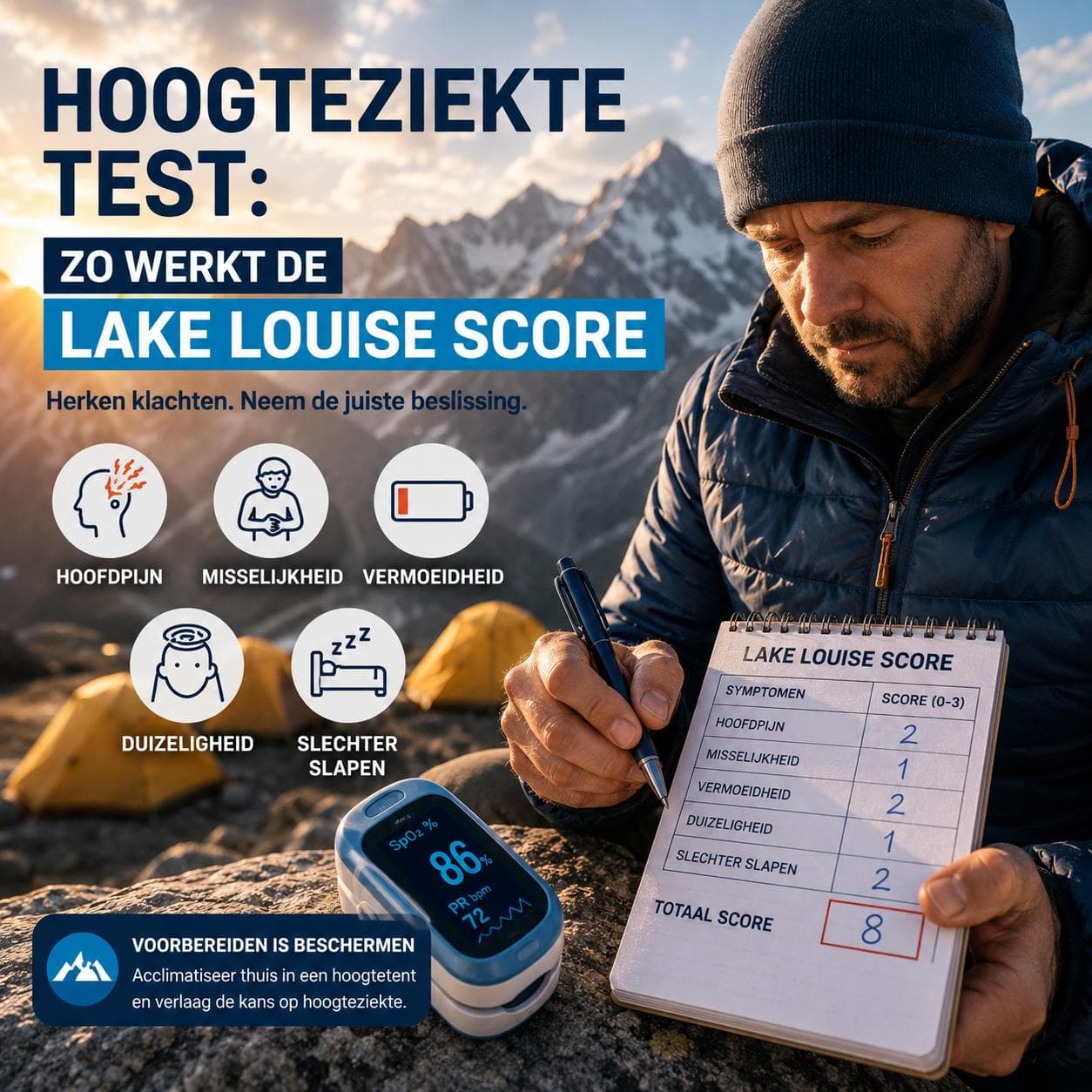
- Symptoms: Make a note of headaches, nausea, dizziness, loss of appetite and unusual fatigue.
A practical rule of thumb: if your weight is falling but your appetite, performance and recovery remain stable, it is often sensible to wait and see. If your weight is falling and your appetite, sleep and performance are deteriorating at the same time, you need to take action sooner by getting more rest, eating better, staying better hydrated and, in some cases, adjusting your rate of ascent or your plan.
🧭 In practice
An isolated low SpO2 reading or a one-off drop in weight means very little. The combination of trends, symptoms and functional status is far more valuable than a single measurement on its own.
Misconceptions about losing weight at altitude
Losing weight means adapting well
No. Some of the weight loss may be due to acclimatisation to the altitude, but losing weight too quickly or too much may indicate insufficient food intake, inadequate recovery or worsening symptoms.
If you’re not hungry, your body needs less
That’s not true either. It’s precisely at high altitudes that your energy requirements can remain high whilst your appetite decreases. That’s what makes not eating enough so treacherous.
A lower weight always helps when climbing or performing
Only if it remains functional. A loss of muscle mass, strength and recovery rarely makes you any better, even if the scales show a lower weight.
It is mainly a problem at extreme altitudes
No. High altitudes increase the risk, but even at moderate altitudes, people can lose a noticeable amount of weight if their appetite, sleep and physical exertion are out of balance.
FAQ
Is it normal to lose weight at high altitudes?
Yes, that can be normal. Particularly in the first few days, this is often due to a reduced appetite and increased fluid loss. It becomes less normal if symptoms, exhaustion or loss of function increase at the same time.
When you lose weight at altitude, do you lose mainly fat or mainly water?
Initially, this is often mainly fluid and less stomach and intestinal contents. With prolonged exposure, fat mass may also decrease. At higher altitudes and during prolonged exertion, muscle mass may also be lost.
How soon should you take unintentional weight loss seriously?
It is not just the speed that matters. The combination with nausea, headaches, difficulty drinking, sleep disturbances and a clear decline in functioning is particularly important.
Is it possible to entirely prevent weight loss at altitude?
No, not always completely. However, you can often minimise it by building up your activity more gradually, eating mindfully, staying well-hydrated and monitoring the signs early on.
Would you like to be better prepared for high-altitude activities?
Understanding how sleep, appetite, recovery and oxygen stimulation are related beforehand allows for smarter planning and a calmer build-up. This guide helps you put acclimatising at home into the right context.
Read more about home acclimatisation for mountain expeditions
Conclusion
Weight loss at high altitude is not usually caused by a single factor. A reduced appetite, increased fluid loss, higher energy expenditure, poorer sleep and, in some cases, muscle breakdown often occur simultaneously. As a result, losing weight in the mountains is not in itself unusual, but it is not automatically a positive thing either.
The best approach, therefore, is not to focus solely on the number on the scales. Look at the bigger picture: how you eat, how you sleep, how you recover, how you function and how your symptoms develop. That way, you’ll be better able to distinguish between what’s a normal part of the process and what needs adjusting.