Thin air: what it does to your body at altitude (complete guide)
Published 23 March 2026 · 3 min read
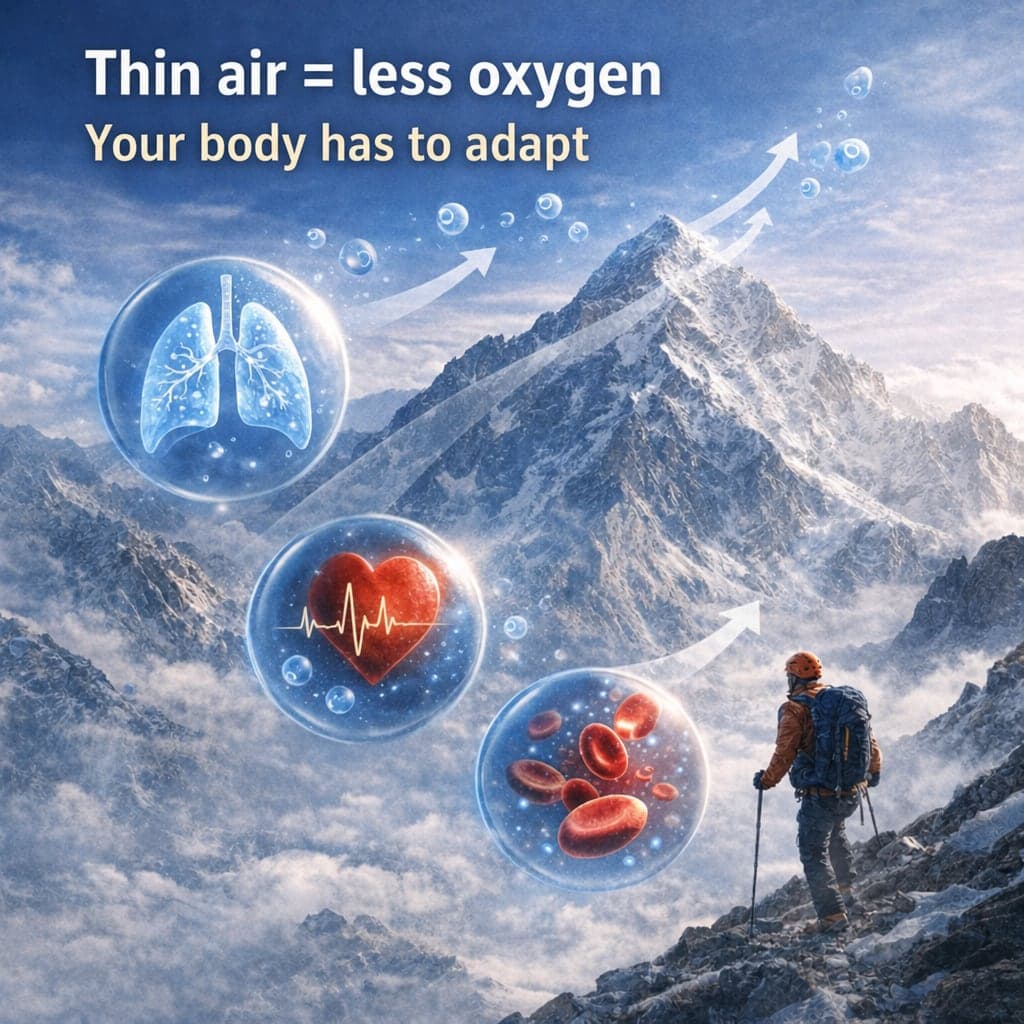
You notice thin air as soon as you get higher than about 2,500 metres. You get tired faster, your heart rate rises and even light exertion feels heavy. This is because at altitude you take in less oxygen per breath. Your body has to adapt to transport enough oxygen to your muscles and brain. Understanding exactly what thin air does can help you acclimatise, prevent altitude sickness and travel or exercise more safely.
The effects start earlier than many people think. Even around 2,000 metres, your physiology changes. This is why knowledge about oxygen saturation at altitude Essential for anyone going to the mountains.
The essentials in 30 seconds
Thin air means less oxygen per breath due to lower air pressure.
Your body reacts with faster breathing, higher heart rate and more red blood cells.
Those who ascend too quickly without acclimatisation are at risk of altitude sickness.
🏔 What is thin air?
Thin air occurs because air pressure decreases as you rise higher. The oxygen percentage remains around 21%, but the amount of oxygen per breath drops.
- Lower air pressure
- Less oxygen per breath
- Greater strain on heart and lungs
- More effort for the same work
This is called hypoxia: a state of oxygen deprivation.
📊 Altitude vs oxygen availability
| Height | Oxygen available | Impact |
|---|---|---|
| 0 m | 100% | normal |
| 2000 m | ≈ 80% | light load |
| 3000 m | ≈ 70% | breathe faster |
| 4000 m | ≈ 60% | great burden |
| 5000 m | ≈ 50% | acclimatisation needed |
| 6000 m | ≈ 40% | extreme hypoxia |
See also the height to oxygen table.
📊 SpO2 per altitude (average values)
| Height | Average SpO2 | Normal reaction |
|---|---|---|
| 0 m | 97-99% | normal |
| 2000 m | 93-95% | slight decrease |
| 3000 m | 90-93% | breathe faster |
| 4000 m | 85-90% | acclimatisation needed |
| 5000 m | 80-85% | great burden |
| 6000 m | 70-80% | extreme hypoxia |
🧬 What happens in your body in thin air?
- Faster breathing
- Higher heart rate
- More red blood cells
- More EPO
- More ventilation during sleep
- Change in blood pH
- More capillaries
This process is called acclimatisation and takes time.
⚠️ The first 72 hours at altitude
Most complaints arise in the first few days.
- Headache
- Poor sleep
- Nausea
- Fast heart rate
- Fatigue
Also read what happens in the first 72 hours at altitude.
😴 Why sleeping at altitude is tougher
- Lower oxygen
- Irregular breathing
- Less deep sleep
- More heart rate
This is why many people feel worse at night than during the day.
⚠️ When does thin air become dangerous?
| Height | Risk |
|---|---|
| 0-2000 m | none |
| 2000-3000 m | light |
| 3000-4000 m | altitude sickness possible |
| 4000-5000 m | high probability without acclimatisation |
| 5000 m+ | dangerous without preparation |
Read also altitude sickness explanation.
🧠 Why some people are more sensitive
- Rapid rise
- Poor sleep
- Dehydration
- Genetic predisposition
- Overexertion
- Previous altitude sickness
📈 How to monitor this objectively
- SpO2 trend over several days
- Resting heart rate
- Sleep quality
- Headache
- Recovery
Decision rules:
- SpO2 stable → good
- SpO2 falling → rising too fast
- Complaints → rest
- Severe complaints → descend
❌ Many misconceptions about thin air
- Being fit does not protect
- Oxygen percentage does not change
- You don't adapt in a day
- Everyone reacts differently
- Going up faster does not help
🧭 Practical tips on thin air
- Ascend slowly
- Drink enough
- Rest first days
- Sleep lower
- Measure SpO2
- Take complaints seriously
📦 Getting used to thin air beforehand
For high mountains, acclimatising in advance can help. This allows the body to adapt before you leave.
❓ Mini-FAQ
From what height is air rarefied?
From ±2500 m
Why do you get tired?
Less oxygen per breath
Is thin air dangerous?
When rising rapidly, yes
Can everyone acclimatise?
Yes, but not as quickly
Does preparation help?
Yes, significantly