Travelling to the mountains whilst pregnant: what’s safe above 2,500 metres?
Published 29 May 2026 · 13 min read
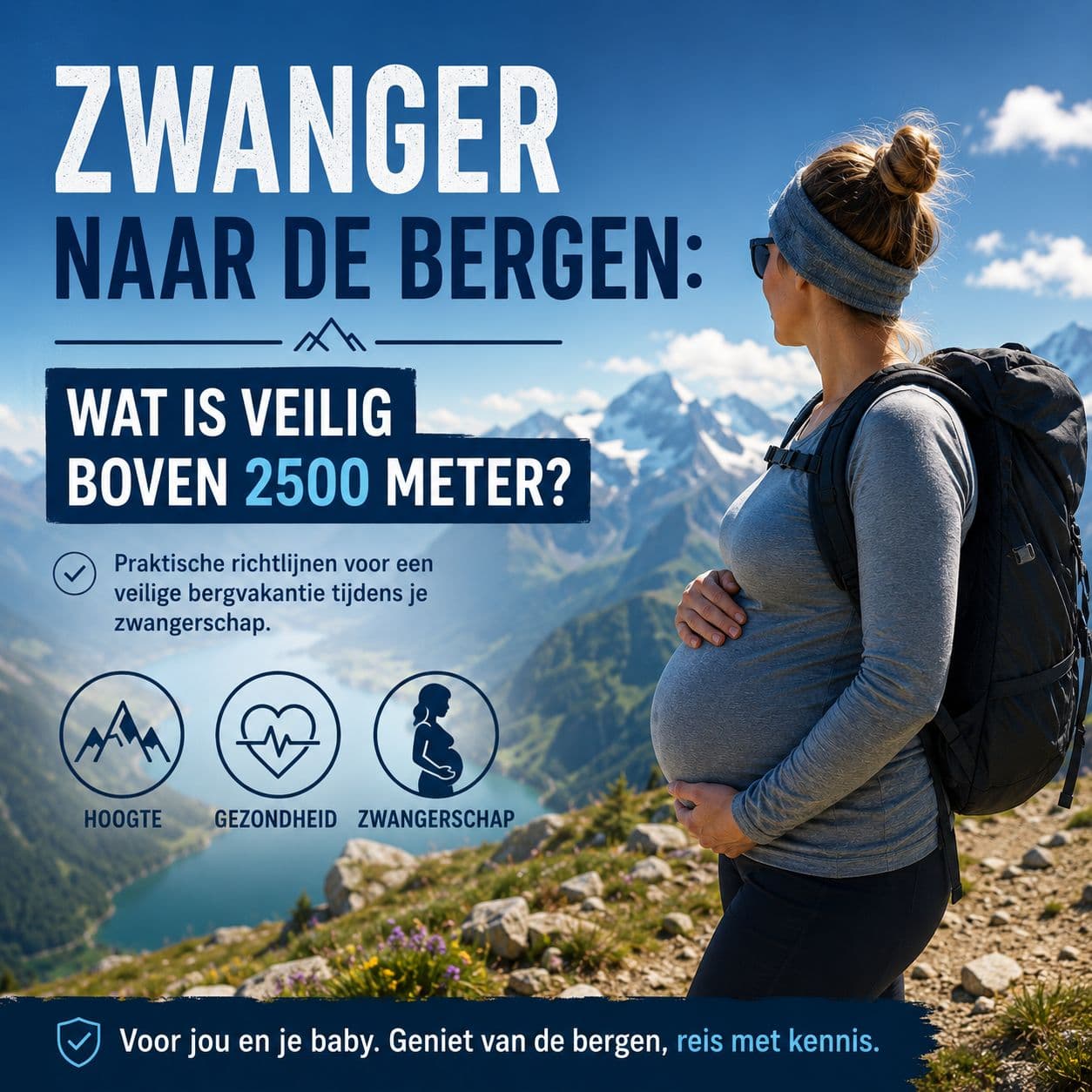
The short answer is that for a healthy pregnancy, a short stay up to around 2,500 metres (approximately 8,200 feet) usually carries a low risk. Above 2,500 metres, more caution is needed, especially with exertion, rapid ascent, prolonged stays, or pre-existing medical risk factors. Therefore, always discuss plans above 2,500 metres in advance with your GP, midwife, or gynaecologist.
Short answer: Pregnancy and visiting the mountains is possible in many cases, but extra caution is advised above 2,500 metres. A short stay up to a maximum of 2,500 metres without strenuous exercise appears to be low risk for most healthy pregnancies. Above 2,500 metres, altitude, duration, exertion, stage of pregnancy, and medical history play a greater role.
- Up to about 2500 metres: usually low risk in a healthy pregnancy.
- Above 2500 metres: more attention to acclimatisation and symptoms.
- At 20 weeks: individual risk assessment becomes more important.
- When it comes to risk factors: it's best to avoid heights without medical approval.
- If in doubt or experiencing complaints: do not continue, but rest or descend.
Conclusion: Being pregnant and going to the mountains isn't automatically irresponsible, but above 2500 metres it demands a conservative approach.
Nuance: The greatest risks usually arise from rapid ascent, heavy exertion, prolonged stays, or existing pregnancy complications.
Practical hook: Plan rest days, limit intensity and consult with your healthcare provider beforehand.
Why height during pregnancy deserves extra attention
At high altitudes, the air still contains around 21% oxygen. However, the air pressure decreases, meaning you take in fewer oxygen molecules with each breath. As a result, your body has to work harder to deliver sufficient oxygen to your organs, muscles and tissues.
During pregnancy, an extra dimension is added to this. Your heart rate, blood volume, and breathing already change due to the pregnancy itself. At altitude, your body must also respond to the lower oxygen pressure on top of this. Therefore, it is logical that travelling above 2500 metres deserves extra attention.
Anyone who wants to understand exactly what happens in thin air will find more background in our article about acclimatising at altitude.
💡 Did you know?
Altitude is not an all-or-nothing threshold. The risk increases gradually with altitude, duration, and exertion. A few hours on a mountain pass is different from sleeping several nights above 3000 metres or actively hiking at greater altitudes.
What happens above 2,500 metres?
The 2500-metre threshold frequently appears in mountain medicine guidelines. Not because it suddenly becomes dangerous at that point, but because from that altitude, the likelihood of noticeable physiological reactions increases. You may experience increased shortness of breath, poorer sleep, headaches, or slower recovery.
For a non-pregnant traveller, these are often normal signs of acclimatisation. During pregnancy, you want to allow less room for error. This is certainly true when you are also exerting yourself at altitudes above 2500 metres.
| Height zone | Impact | Practical meaning during pregnancy |
|---|---|---|
| 0 to 1500 m | Limited height load | For most healthy pregnant women, there is usually no specific height restriction. |
| 1500 to 2500 m | Slight drop in oxygen pressure | Usually well tolerated, provided the pregnancy is normal. |
| 2500 to 3500 m | Clearer acclimatisation stimulus | Build up gradually, limit exertion and take symptoms seriously. |
| 3500 m and higher | Greater physiological load | Only after careful individual consideration and medical advice. |
Impact: Limited height load.
Significance: For most healthy pregnant women, there is usually no specific height restriction.
Impact: Slight drop in oxygen pressure.
Significance: Usually well tolerated, provided the pregnancy is normal.
Impact: Clearer acclimatisation stimulus.
Significance: Build up gradually, limit exertion and take symptoms seriously.
Impact: Greater physiological load.
Significance: Only after careful individual consideration and medical advice.
First half versus second half of pregnancy
A key distinction is the duration of pregnancy. In the first half of pregnancy, roughly the first 20 weeks, the risk of temporary high altitude exposure appears low for healthy women. There is no convincing evidence that altitude itself significantly increases the risk.
After about 20 weeks, the considerations change. The baby grows faster, the placenta plays an increasingly important role, and the strain on the cardiovascular system increases. Therefore, in the second half of pregnancy, altitude, exertion, and duration of stay are considered more carefully.
For women with an increased risk of miscarriage, previous pregnancy complications, or difficulty conceiving, extra caution is advisable. In such situations, travelling to altitude is not standard holiday advice, but a medical consideration.
| Phase | General assessment | Practical approach |
|---|---|---|
| Up to 20 weeks | In a healthy pregnancy, there is usually a low risk with temporary exposure. | Avoid unnecessary risks and discuss higher altitudes in advance. |
| At 20 weeks | More dependent on individual factors, altitude and exertion. | More conservative planning and seeking medical advice beforehand. |
| At 36 weeks | Travelling to remote high-altitude areas is usually less advisable. | Choose accessible destinations and avoid medical uncertainty. |
Estimate In a healthy pregnancy, there is usually a low risk with temporary exposure.
Approach Avoid unnecessary risks and discuss higher altitudes in advance.
Estimate More dependent on individual factors, altitude and exertion.
Approach More conservative planning and seeking medical advice beforehand.
Estimate Travelling to remote high-altitude areas is usually less advisable.
Approach Choose accessible destinations and avoid medical uncertainty.
A mountain holiday during pregnancy is usually responsible when:
For many women, it’s not about an expedition, but a holiday in Austria, Switzerland, France or Italy. Think walking, resting, fresh air and a few cable car rides. That’s a different scenario to strenuous trekking or sleeping at high altitude.
A mountain holiday is usually best considered when the pregnancy is progressing normally, the altitude is limited, you are not engaging in strenuous exercise, and medical help is accessible. Short stays up to around 2500 metres without significant exertion are generally considered low risk.
A holiday in the mountains is usually easier to justify when:
- the pregnancy proceeds without complications
- you do not have high blood pressure or pre-eclampsia
- there are no known placental problems
- no growth restriction of the baby has been identified
- you do not have severe anaemia
- you do not smoke whilst exercising at altitude
- your destination remains accessible for medical assistance
Are there any risk factors? If so, travelling to high altitudes is less advisable. Particularly in the second half of pregnancy, the advice is usually to avoid high altitudes, unless your doctor explicitly advises otherwise.
Acclimatising during pregnancy: how high can you go?
When you’re pregnant, acclimatisation isn’t about sporting performance. The aim is safety, rest and having plenty of leeway. If you go above 2,500 metres, it’s wise to take it easy for the first few days.
Practical protocol above 2500 metres:
- Plan 3 to 4 gentle acclimatisation days before undertaking strenuous activity.
- Avoid strenuous walks immediately after arrival.
- Increase your sleeping height gradually, if possible.
- Keep the pace so low that you can easily keep talking.
- At higher altitudes, wait a little longer before engaging in strenuous exercise.
- Stop or slow down if your symptoms get worse.
A useful rule of thumb is the "talk test". If you can't hold a normal conversation during exercise, the intensity is likely too high. During pregnancy, this is a signal to ease back.
Is it safe to go skiing, climbing or hill walking whilst pregnant?
Height isn’t always the biggest risk. Your body changes during pregnancy. Your centre of gravity shifts, your ligaments and joints become more flexible, and your balance may become less stable. This increases the risk of falling.
On gentle walks along wide paths, that risk is relatively low. When skiing, climbing, on via ferratas, crossing glaciers or on steep descents, the situation is different. A fall could have serious consequences not only for you, but also for the placenta and the baby.
| Activity | Risk | Practical advice |
|---|---|---|
| A leisurely walk | Usually low on well-maintained paths | Choose short routes and avoid the heat, rushing and steep descents. |
| Mountain walking | Depending on terrain | Avoid loose stones, snowfields and remote routes. |
| Skiing | The risk of falling is important | Exercise great caution, particularly later in pregnancy. |
| Climbing | Technical and fall risks | Only after seeking expert advice and with the appropriate equipment. |
Risk: Usually low on well-maintained paths.
Opinion: Choose short routes and avoid the heat, rushing and steep descents.
Risk: Depending on the terrain.
Opinion: Avoid loose stones, snowfields and remote routes.
Risk: The risk of falling is important.
Opinion: Exercise great caution, particularly later in pregnancy.
Risk: Technical and fall risk.
Opinion: Only after seeking expert advice and with the appropriate equipment.
Recognising altitude sickness during pregnancy
Pregnancy does not protect against altitude sickness. According to mountain medicine guidelines, the risk of altitude sickness during pregnancy is neither clearly higher nor lower. The main difficulty is that the symptoms can overlap.
Nausea, fatigue, headaches, dizziness, and poor sleep can be associated with pregnancy. However, they can also indicate the onset of altitude sickness. Therefore, it is wise not to dismiss symptoms at altitude too quickly.
| Complaint | Can suit pregnancy | Can suit altitude sickness |
|---|---|---|
| Nausea | Yes | Yes |
| Headache | Sometimes | Often |
| Dizziness | Sometimes | Yes |
| Poor sleep | Yes | Yes |
| Increasing complaints | Always pay attention | Do not ignore |
Pregnancy Yes.
Altitude sickness Yes.
Pregnancy Sometimes.
Altitude sickness Often.
Pregnancy Sometimes.
Altitude sickness Yes.
Pregnancy Yes.
Altitude sickness Yes.
Pregnancy Always pay attention.
Altitude sickness Do not ignore.
If you want to learn how to better recognise complaints, then also read our guide on Recognising and dealing with altitude sickness.
What about Diamox during pregnancy?
Diamox, with the active ingredient acetazolamide, is sometimes used to prevent or treat altitude sickness. This is not a standard solution during pregnancy.
The use of Diamox is not recommended in the first trimester due to limited safety data. After 36 weeks, it is strongly discouraged due to potential risks to the newborn. Between these periods, it remains an individual medical consideration.
⚠️ Reality check
Never use Diamox during pregnancy on your own initiative. If medication for altitude sickness seems necessary, this must always be discussed with a doctor in advance.
For general background information on this medication, you can refer to our article on Diamox and acetazolamide Read. This does not replace personal medical advice.
Extra attention to hydration, nutrition and recovery
At altitude, you often lose more fluid. This is due to drier air, faster breathing, and sometimes needing to urinate more during acclimatisation. During pregnancy, sufficient fluid intake is extra important.
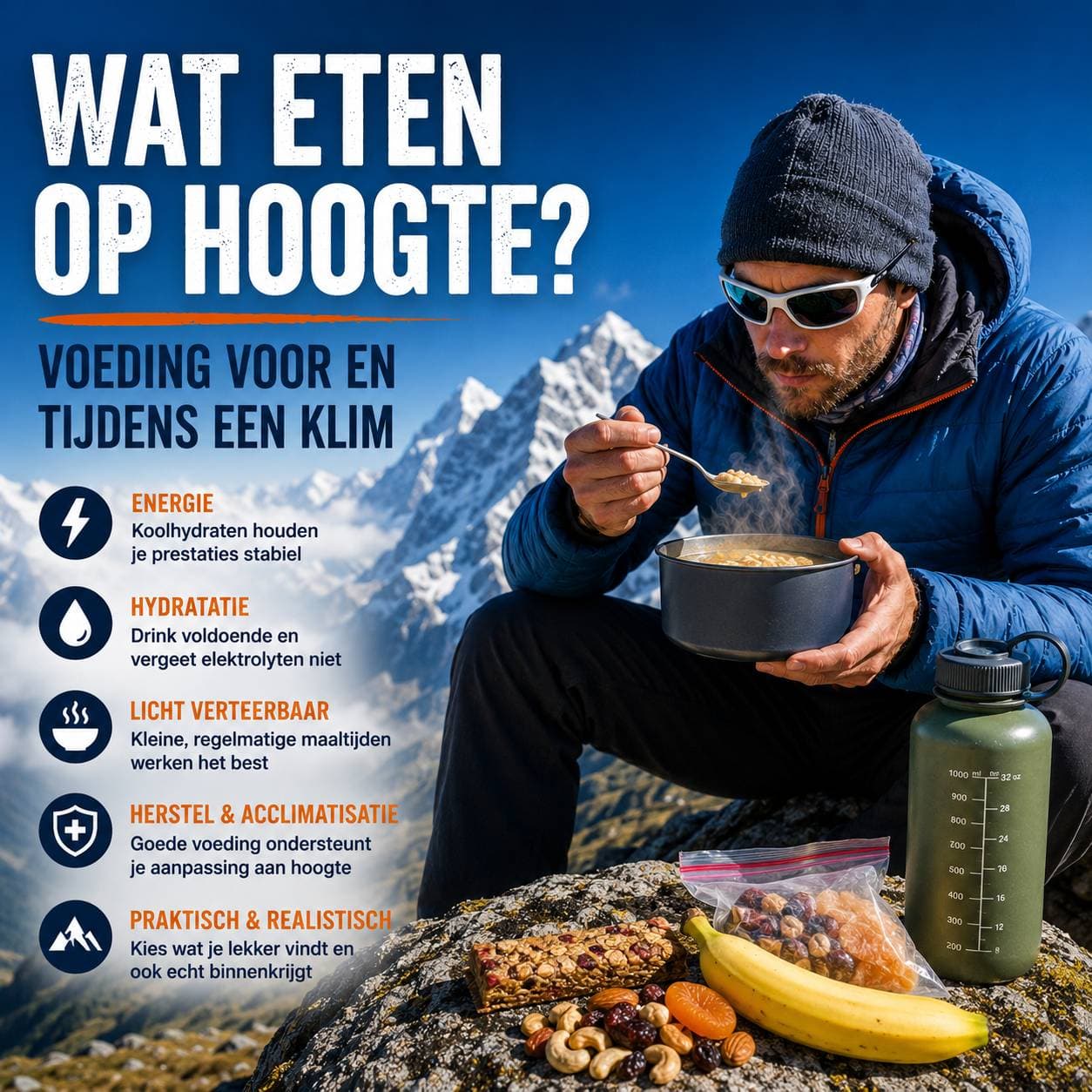
This isn't just about drinking litres. Salt, carbohydrates, and regular meals also play a part. Nausea or a reduced appetite can develop more quickly at altitude. Therefore, it is sensible to pack simple, easily digestible food.
Practical ground rules:
- Drink regularly, not just when you're thirsty
- eat small, carbohydrate-rich meals
- avoid alcohol completely
- Plan moments of rest.
- Avoid overheating and dehydration
Kan een hoogtetent helpen bij het reizen naar grote hoogte tijdens de zwangerschap?
Altitude Dream assists many travellers and athletes in preparing for altitude in a controlled manner. An altitude tent works with normobaric hypoxia: the oxygen percentage is reduced while the air pressure remains normal. This allows the body to get used to lower oxygen availability in advance.
Caution is necessary for pregnant women. There is insufficient research into the use of altitude tents during pregnancy to recommend it as a general solution. Therefore, an altitude tent during pregnancy can only be discussed after explicit medical approval from a doctor who knows your situation.
However, acclimatising at home may be relevant for non-pregnant travelling companions, or for travellers who are preparing for another expedition after their pregnancy. Under normal circumstances, an altitude tent can make the preparation process controlled, measurable and predictable. It significantly reduces the risk of altitude-related symptoms, but never offers a 100% guarantee.
⚠️ Important nuance
A high-altitude tent is not standard advice during pregnancy. Consider it only as a possible option after individual medical consultation, not as an automatic solution for travel above 2500 metres.
This is how you monitor this lens
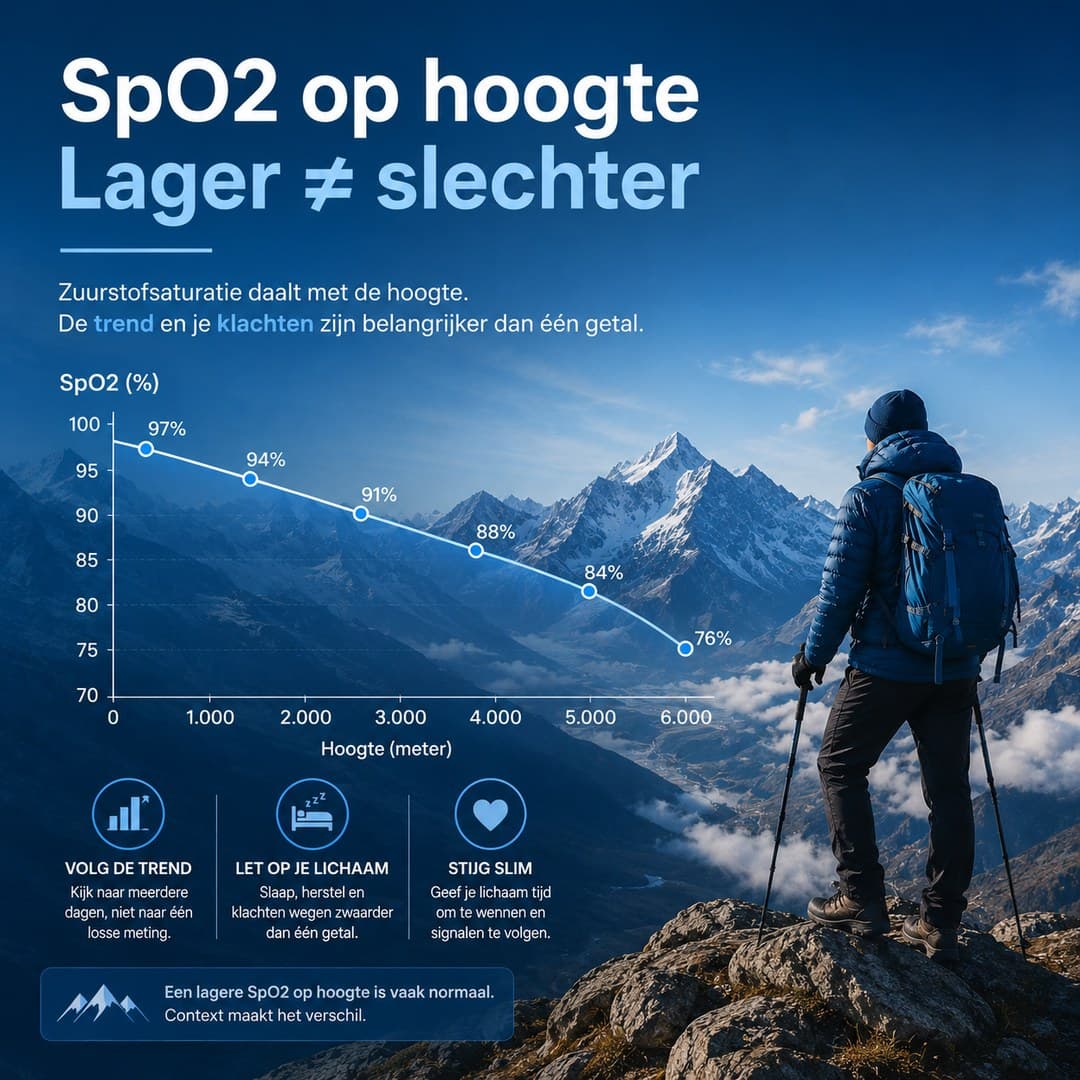
During pregnancy and at altitude, monitoring is primarily intended to recognise trends in good time. Do not rely on a single standalone measurement. Look at the overall picture: symptoms, recovery, sleep, exertion, and any SpO2 trend.
| Signal | What you are following | When to adjust |
|---|---|---|
| SpO2 trend | Multiple resting measurements | In a declining trend combined with complaints. |
| Sleep | Quality and recovery feel | After several bad nights with increasing complaints. |
| Headache | Service and progress | If it increases, especially with nausea or dizziness. |
| Effort | Can you speak easily? | If talking becomes difficult, slow down or stop. |
Tracking: Multiple resting measurements.
Adjustment: In a declining trend combined with complaints.
Tracking: Quality and feeling of recovery.
Adjustment: After several bad nights with increasing complaints.
Tracking: Seriousness and development.
Adjustment: If it increases, especially with nausea or dizziness.
Tracking: Can you speak easily?
Adjustment: If talking becomes difficult, slow down or stop.
SpO2 is useful at altitude as a trend, but not as an absolute truth. A value should always be interpreted alongside symptoms, altitude, sleep and exertion.
Wanneer moet je van hoogtepunten afdalen?
In some situations, it is wiser not to travel to altitude, especially above 2500 metres. This applies particularly in the second half of pregnancy.
Avoid heights or first explicitly ask for medical clearance for:
- High blood pressure or pre-eclampsia
- Poor placental function
- Baby growth restriction
- heart disease in the mother
- Severe anaemia
- earlier increased risk of miscarriage
- Smoking combined with exertion at altitude
- remote travel destinations without medical assistance
Tropical or remote highland regions also require extra caution. Consider limited medical care, traveller's diarrhoea, malaria, hepatitis E, and medication that cannot always be safely used during pregnancy.
Extended stays above 2,500 metres is a different situation.
A short holiday is not the same as staying above 2500 metres for weeks or months. For long-term stays above 2500 metres, guidelines mention more risks, including high blood pressure, pre-eclampsia, placental problems, growth restriction, and low birth weight.
This is why prolonged stays at high altitudes require closer medical monitoring. This includes living, working, or travelling for extended periods in high-altitude areas. This falls outside the scope of a typical mountain holiday.
Practical decision rules for pregnant travellers
- Discuss travel above 2500 metres with your GP, midwife or gynaecologist beforehand.
- Choose a gradual ascent rather than a rapid arrival at a high altitude.
- Plan 3 to 4 rest days before undertaking exertion above 2500 metres.
- Avoid strenuous exercise and use the talk test as a limit.
- Choose well-trodden routes with short return options.
- Stay close enough to medical help, especially after 20 weeks of pregnancy.
- Take headaches, nausea, dizziness, and poor recovery seriously.
- Discharge with clear or increasing symptoms.
Prepare heights wisely and measurably
Travelling to altitude and want to understand how acclimatisation works? Read how acclimatising at home is usually deployed for mountain trips. During pregnancy, personal medical advice always remains paramount.
Find out more about acclimatising at home for mountain trips
Conclusion
Going to the mountains while pregnant can be responsible in many situations, provided the pregnancy is healthy, the altitude is limited, and you don't take too many risks. Up to around 2500 metres, a short stay without strenuous exertion appears to be generally low risk.
Above 2500 metres, the decision becomes more personal. The duration of your stay, your stage of pregnancy, your level of exertion, and your medical history all determine how much leeway you have. A cautious approach is particularly advisable after 20 weeks of pregnancy.
The best choice is usually straightforward: consult beforehand, ascend calmly, limit exertion, monitor any complaints, and prioritise safety over ambition. This way, the mountain experience remains enjoyable, without unnecessary risk.
FAQ
Is 2500 metres dangerous during pregnancy?
Not automatically. Short stays up to around 2500 metres are usually low risk for a healthy pregnancy. Above 2500 metres, extra caution is advisable.
Is it possible to go hiking while pregnant above 2500 metres?
That depends on your health, stage of pregnancy, route and exertion. Plan rest days, walk at a leisurely pace and consult your healthcare provider beforehand.
Is altitude sickness more dangerous when you are pregnant?
The chance does not appear significantly greater or smaller. However, it is more important to take complaints seriously, as the oxygen supply to the placenta is also relevant.
Can I use Diamox during pregnancy?
Never use Diamox on your own initiative during pregnancy. It is not recommended in the first trimester and strongly discouraged after 36 weeks.
Is a height tent safe to use if I am pregnant?
There is insufficient research into this. Only use a hypobaric chamber during pregnancy after explicit medical approval from your doctor.
Source and medical context: This article is in line with the general NKBV/UIAA guideline “Women at Altitude: Pregnancy”. This information is intended for general guidance and does not replace personal medical advice.