
Altitude training for cyclists: this is how you pedal harder with less oxygen
Published 20 September 2025 · 3 min read
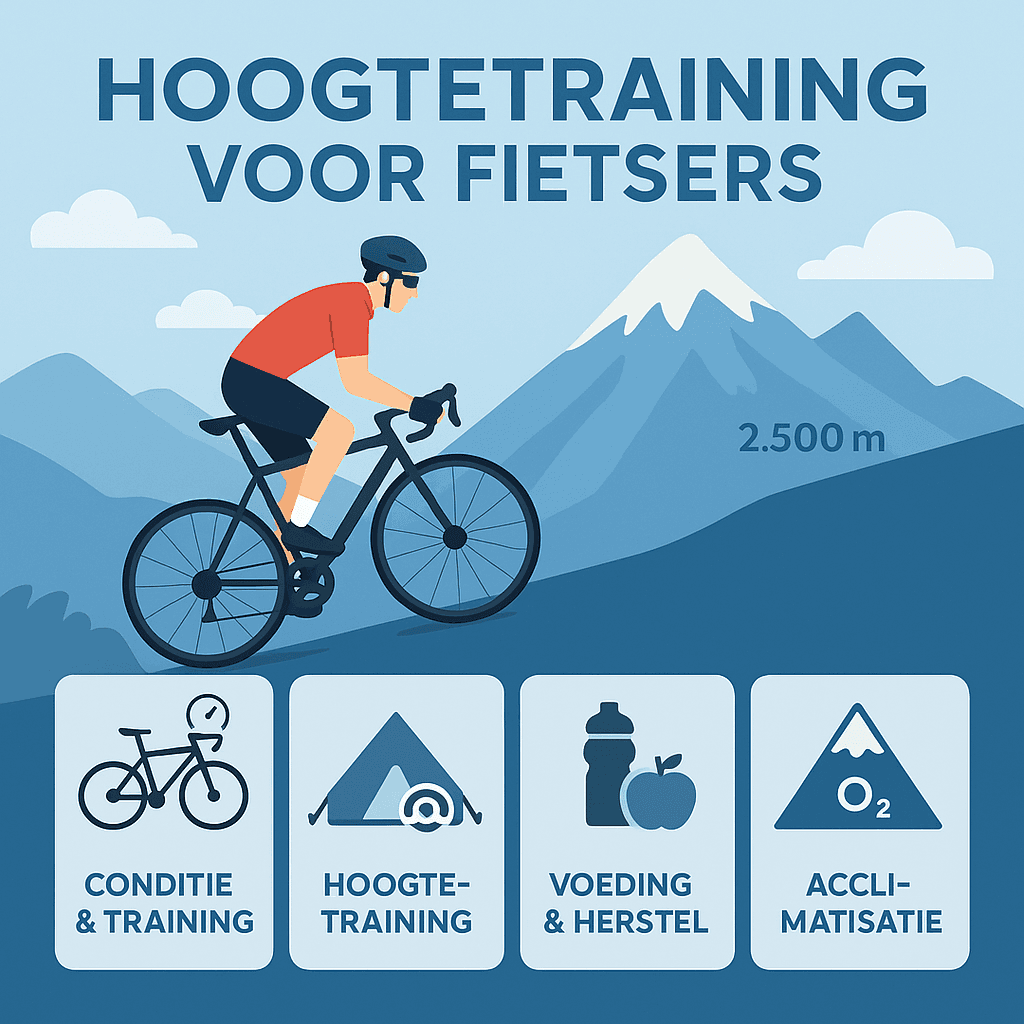
Whether you are an aspiring amateur or an elite cyclist, anyone who wants to get faster on the bike looks for ways to improve their performance. One of the most effective methods is altitude training. Training with less oxygen allows your body to adapt, so you end up pedalling harder at sea level with the same feeling of exertion. In this article, we explain how altitude training works for cyclists, what methods are available and how to use it optimally to get more power from your legs.
Why altitude training works for cyclists
Altitude training revolves around a simple principle: at altitude, there is less oxygen in the air. Your body responds by producing more red blood cells, which means oxygen is transported through your muscles more efficiently. The result? More endurance, higher power output and faster recovery. For cyclists, this can make all the difference in a climb, time trial or long race.
1. Physiological benefits of altitude training
- More red blood cells: Your body produces extra erythropoietin (EPO), which increases oxygen transport capacity.
- Better oxygen utilisation: Muscles learn to use limited oxygen more efficiently.
- Improved VO2max: Your maximum oxygen uptake increases, which directly increases your cycling power.
- Mental benefit: Training in difficult conditions makes you more mentally resilient.
2. Methods of altitude training
Cyclists can benefit from altitude training in several ways:
- High mountain training: Stay and train at altitude (1,800-2,500 m) for several weeks. This is effective but costly and time-intensive.
- Height tents and height rooms: Sleep at altitude while exercising as usual during the day. With a altitude tent or altitude room Mimic your altitude training at home.
- Hypoxic training: Training with an altitude mask or generator that filters oxygen from the air. Good for interval training and simulation.
- Sleep high, train low: The gold standard: sleep at altitude and train at lower levels for maximum effectiveness.
3. How cyclists use altitude training practically
A good approach depends on your goals and your schedule:
- For a Gran Fondo or cyclo: Start sleeping in an altitude tent 3-4 weeks before the event. That way, you arrive with increased red blood cells.
- For criteriums or time trials: Short blocks of hypoxic interval training improve your VO2max and sprinting ability.
- For pro riders: A combination of altitude training and sleep at altitude, combined with precise training schedules and blood monitoring.
4. Potential drawbacks and pitfalls
Altitude training is not a magic solution. Keep in mind:
- Fatigue: Less oxygen can lead to worse recovery and insomnia.
- Individual differences: Not everyone responds equally strongly to altitude training.
- Timing: The effect of increased red blood cells diminishes again after 2-4 weeks. So plan your training block smartly towards your goal race.
- Medical contraindications: Consult a doctor if you have heart or lung problems.
5. Sample schedule: altitude training for cyclists
Here is a basic example for recreational and competitive cyclists:
Option A - High altitude tent (3-4 weeks)
- Nights 1-3: 1,800 m
- Night 4-10: 2,200 m
- Night 11-21: 2,500-2,700 m
- Combine this with normal cycling training at sea level
Option B - Interval hypoxic training (2-3x per week)
- 10x 2 minutes on high power with hypoxic air
- 2-minute recovery with normal air
- Goal: improve VO2max and anaerobic capacity
6. Altitude training and nutrition
Nutrition plays an important role in the success of your altitude training:
- Iron: Essential for red blood cell production. Make sure your iron stores are up to scratch (with food or supplements).
- Proteins: For muscle recovery after heavy training blocks.
- Carbohydrates: Altitude burns more energy, so extra carbohydrates are necessary.
- Hydration: Drink at least 3 litres a day. The air at altitude is drier and you lose moisture faster.
7. For which cyclists is altitude training suitable?
Altitude training is useful for:
- Gran Fondo and touring cyclists: Better prepared to conquer the cols.
- Amateur and elite cyclists: More power in courses and time trials.
- Triathletes: Extra endurance combined with swimming and running.
- Track cyclists: Improve VO2max and explosive power.
Conclusion: pedal harder, breathe smarter
Altitude training can be a gamechanger for cyclists. By acclimatising your body to low-oxygen conditions, you increase your performance on the bike. If applied properly and timed smartly, it increases stamina, VO2max and ultimately: pedalling harder with less oxygen.
Wondering how to get started at home? Check out our height tent rental service For cyclists who want to take their performance to the next level.


