Trekking in Nepal: the best routes for beginners
Published 12 June 2026 · 13 min read

A Trekking in Nepal For many mountain lovers, this is their first real introduction to the Himalayas. You’ll be walking amongst eight-thousanders, sleeping in simple lodges and experiencing just how impressive the mountains become once you’ve been travelling at altitudes above 3,000 metres for several days.
However, not every trek in Nepal is suitable as a first trek. The best choice depends not only on your fitness, but above all on your experience, the time you have available, your rate of acclimatisation and the altitude at which you’ll be sleeping along the way. Even a fit walker can still suffer from altitude sickness if the itinerary involves ascending too quickly.
In this guide, you’ll find out which Trekking in Nepal for beginners the most logical option. You’ll compare Poon Hill, Langtang Valley, Annapurna Base Camp and Everest Base Camp in terms of altitude, duration, difficulty and the risk of altitude sickness. You’ll also find out how to prepare more effectively and when acclimatising at home can be a good idea.
Short answer:
- Annapurna Base Camp For many beginners, this is the best first proper trek in Nepal.
- Poon Hill is ideal as a brief and accessible introduction to the Himalayas.
- Langtang Valley offers plenty of mountain experiences with fewer crowds and a manageable range of altitudes.
- Everest Base Camp is achievable for ambitious beginners, but requires the most preparation.
- Acclimatization is often more important than physical fitness alone on a trek in Nepal.
Conclusion: As a beginner, don’t automatically choose the best-known route; instead, choose the Nepal trek that suits your experience, the time you have available and your ability to acclimatise.
Key point to note: Even fit athletes can suffer from altitude sickness if they ascend too quickly.
Practical hook: Plan your rest days carefully, listen to your body and build up your altitude gradually.
Why a trek in Nepal is so appealing to beginners
Nepal is one of the most accessible countries in the world for multi-day treks in the high mountains. You don’t need any technical climbing experience for the best-known routes; the logistics are well organised and on many routes you walk from lodge to lodge.
This makes Nepal an attractive destination for beginners. You usually don’t need to carry a tent, cooking equipment or heavy expedition gear. At the same time, a trek in Nepal remains a serious mountain expedition. The days are long, the terrain is varied and the altitude makes even simple exertion more strenuous than you are used to.
The biggest difference compared to hiking in the Alps lies in the availability of oxygen. The higher you climb, the less oxygen your body takes in with each breath. Anyone wishing to set off well prepared would be wise to understand this beforehand what acclimatisation actually is and why a gentle ascent is so important.
Did you know?
Many beginners choose their Nepal trek based on its name or photos, whereas the altitude profile is more important. The most scenic route isn’t necessarily the best one for a first trek.
Which Nepal trek is suitable for beginners?
For a first trek in Nepal, four routes are particularly worth considering: Poon Hill, Langtang Valley, Annapurna Base Camp and Everest Base Camp. They all offer a genuine Himalayan experience, but vary considerably in terms of maximum altitude, duration, how busy they are and the risk of altitude sickness.
| Route | Max. height | Average duration | Suitable for |
|---|---|---|---|
| Poon Hill | 3,210 m | 4–5 days | Complete beginners with little time |
| Langtang Valley | 3,870 m | 7–10 days | Those seeking peace and quiet who want to experience the mountains to the full |
| Annapurna Base Camp | 4,130 m | 8–12 days | Beginners looking for a complete Himalayan trek |
| Everest Base Camp | 5,364 m | 12–15 days | Ambitious beginners who are well prepared |
The right choice depends mainly on the question: how many days do you have to ascend, recover and allow your body to acclimatise to the altitude?
1. Annapurna Base Camp: the best trek in Nepal for many beginners
Annapurna Base Camp For many travellers, this is the best first serious trek in Nepal. The route is varied, well-organised and ends in a spectacular amphitheatre of mountains. You’ll walk through villages, forests and valleys, eventually reaching a high-alpine environment with views of Annapurna South, Hiunchuli and Machapuchare, amongst others.
The maximum altitude is around 4,130 metres. That’s high enough to take acclimatisation seriously, but less extreme than Everest Base Camp. As a result, Annapurna Base Camp offers many beginners a better balance between the experience, feasibility and risk.
Why Annapurna Base Camp is a good choice for a first trek in Nepal
- The route is well-marked and relatively straightforward.
- You’ll get a genuine high-mountain experience without going above 5,000 metres.
- The lodges and logistics are usually well organised.
- The walk is long enough to get into the rhythm of a trek.
- The maximum altitude is quite high, but it’s more manageable than Everest Base Camp.
Nevertheless, the Annapurna Base Camp trek is still one where you must respect the altitude. A leisurely pace is particularly important above 3,000 metres. Anyone considering this route can prepare by following a specific Annapurna Base Camp acclimatisation schedule.
Best choice if: you’re looking for your first full Himalayan trek, with plenty of nature, stunning views and a manageable maximum altitude.
2. Poon Hill: a short trek in Nepal for absolute beginners
Poon Hill is the most accessible trek in Nepal for those who are short on time or want to get a taste of what it’s like to trek in Nepal for several days. The route is in the Annapurna region, is easily accessible from Pokhara and requires less preparation than longer high-altitude routes.
The highlight is the sunrise from Poon Hill. On a clear day, you can see Dhaulagiri and Annapurna, amongst others. As the maximum altitude is around 3,210 metres, the risk of serious altitude-related problems is lower than on routes above 4,000 or 5,000 metres.
Why Poon Hill is a good place to start
- You’ll only need 4 to 5 days’ walking.
- The route is straightforward from a logistical point of view.
- The height remains relatively limited.
- You’ll still get a view of the great Himalayan peaks.
- The trek can easily be combined with a longer trip through Nepal.
Poon Hill is less suitable if you’re looking for a truly immersive expedition experience. It’s more of a short, accessible introduction than a full-scale high-altitude trek.
Best choice if: you’re short on time, have never been on a multi-day trek before, or want to get a gentle introduction to Nepal.
3. Langtang Valley: a peaceful trek in Nepal with plenty of mountain atmosphere
Langtang Valley is an excellent choice for beginners looking for a less crowded experience than in the Everest or Annapurna regions. The route starts relatively close to Kathmandu, but soon feels remote and alpine.
You’ll walk through forests, villages and valleys towards Kyanjin Gompa, mostly at an altitude of around 3,870 metres. That’s high enough to take acclimatisation seriously, but lower than Everest Base Camp. As a result, the Langtang Valley is often a great stop-off point between Poon Hill and more challenging routes.
Why the Langtang Valley is often underestimated
- The route is less busy than the best-known treks in Nepal.
- You’ll get to experience plenty of the mountains in a relatively short space of time.
- The logistics are simpler than for routes involving domestic flights.
- For many beginners, the maximum sleeping height remains easier to manage.
- You can add optional day walks if you acclimatise well.
The main thing to bear in mind is that the route does gain altitude quite quickly. Take any complaints seriously and allow plenty of time in your schedule.
Best choice if: if you’re looking for peace and quiet, culture and a real mountain experience without heading straight up to the altitude of Everest Base Camp.
4. Everest Base Camp: an iconic trek in Nepal that requires the most preparation
Everest Base Camp is the most famous trek in Nepal. For many travellers, it is a dream to hike through the Khumbu Valley, visit Namche Bazaar and eventually stand at the foot of Mount Everest.
Technically, the route isn’t extremely difficult, but the altitude makes the trek a serious challenge. Everest Base Camp is at around 5,364 metres, and you’ll be spending several nights above 4,000 metres. This calls for a realistic itinerary, plenty of rest days and a good response to the initial effects of altitude.
Is Everest Base Camp suitable for beginners?
Yes, but not for every beginner. Everest Base Camp is achievable if you’re fit enough for the trek, mentally strong, don’t set yourself too tight a schedule, and take acclimatisation seriously. Extra rest days in Namche Bazaar and Dingboche aren’t a luxury, but an important part of the trek.
Anyone considering this route would be well advised to familiarise themselves with the following in advance: Preventing altitude sickness at Everest Base Camp.
Best choice if: you are ambitious, have enough time and are prepared to plan your preparation and acclimatisation carefully.
When does altitude become a factor on a trek in Nepal?
Altitude usually becomes a factor from around 2,500 metres. From that point onwards, the risk of altitude-related symptoms gradually increases. Above 3,500 metres, many hikers clearly notice that sleeping, recovering and walking become more difficult.
That doesn’t mean you need to be afraid of heights. It does, however, mean you need to plan more carefully. A good Nepal trek for beginners should allow plenty of time to ascend, recover and observe how your body reacts.
A good Nepal trekking acclimatisation schedule helps to assess the route not only in terms of distance, but also in terms of cruising altitude and rate of climb.
Altitude sickness whilst trekking in Nepal: what should you look out for?
Altitude sickness does not occur because you are not fit enough, but because your body is not given enough time to adapt to the reduced oxygen levels. That is what makes it so treacherous: elite athletes are just as likely to experience symptoms as recreational walkers.
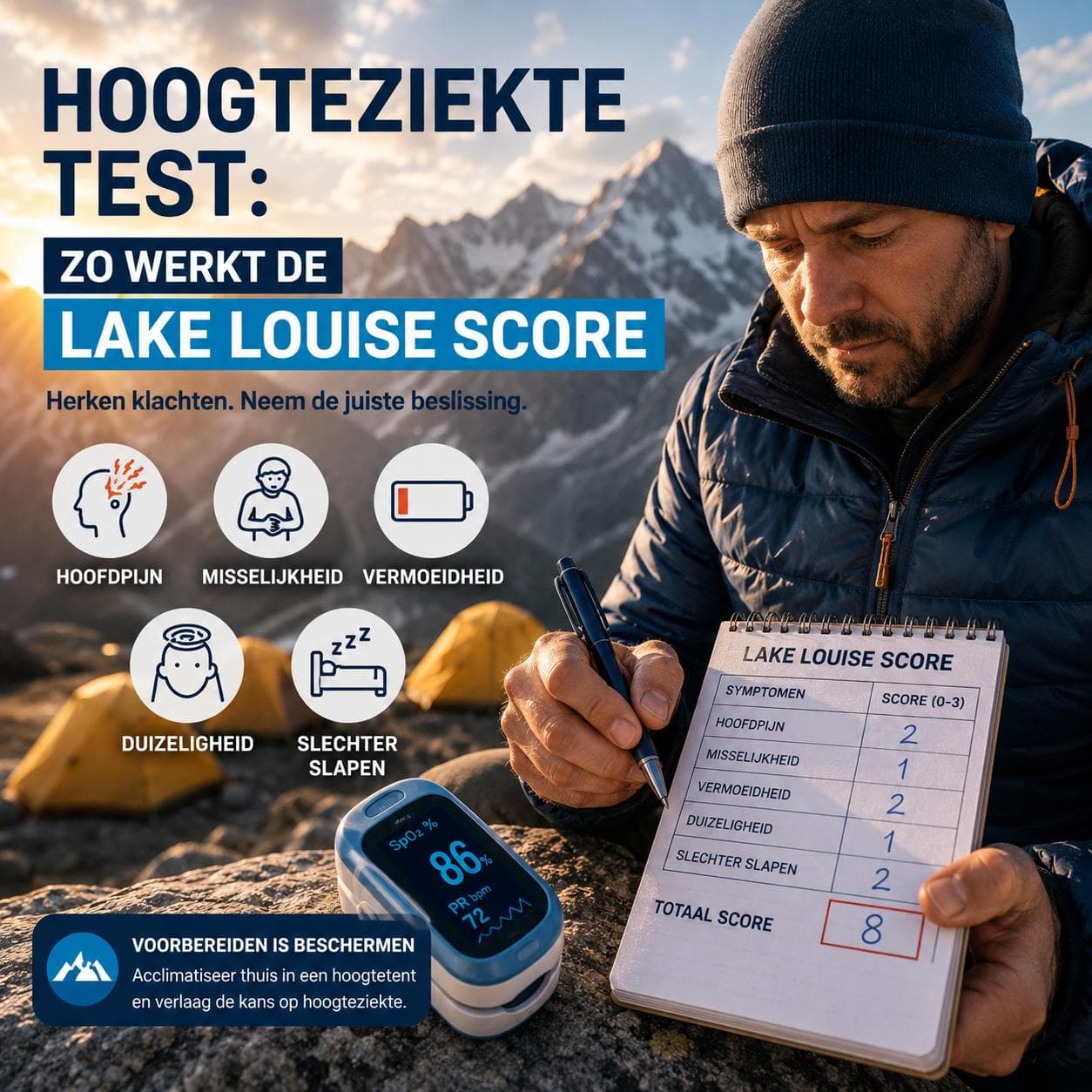
Common signs of altitude sickness
- A headache that doesn’t seem to make sense following normal physical exertion.
- Nausea or loss of appetite.
- Dizziness or light-headedness.
- Poor sleep or waking up frequently.
- Unexplained tiredness.
- Shortness of breath during light exertion.
The most important rule of thumb is simple: if your symptoms get worse, do not climb any further. Rest, reassessment and, if necessary, descending are more important than the original plan.
Common mistakes on a first trek in Nepal
Beginners don’t usually make the mistake of not walking far enough. They mainly make planning mistakes. A schedule that’s too fast, too few rest days or too much focus on the final destination can make the trip unnecessarily difficult.
- Choosing a route because you’re familiar with it, not because it’s the right one.
- Not allowing enough days for acclimatisation.
- Climbing too quickly above 3,500 metres.
- Dismissing headaches at high altitude as mere tiredness.
- Do not allow for any flexibility in the itinerary.
- Eating too little due to a loss of appetite.
- Not drinking enough in cold weather.
- Wearing new walking shoes without breaking them in properly.
- Carrying a rucksack that’s too heavy.
- Not having a plan for rest, delays or complaints.
Best time of year for a trek in Nepal
The best times of year for trekking in Nepal are usually spring and autumn. In March, April and May, the days are often longer, the temperature is more pleasant and the rhododendrons are in bloom along many routes. In October and November, the air is often clear and the views are spectacular.
Winter may be quieter, but it brings cold weather, snow and shorter days. The monsoon season is generally less suitable for beginners due to rain, mud, leeches on some routes and poorer visibility. Some treks may still be possible, but for a first trek in Nepal, a more stable season is usually a wiser choice.
How to monitor your body whilst trekking in Nepal
A trek in Nepal isn’t just about distance and altitude gain. It’s mainly about how your body reacts to the altitude. That’s why objective monitoring is valuable, especially if you’re going above 3,000 or 4,000 metres for the first time.
- SpO₂ trend: Take measurements at fixed intervals and look at the trend, not at a single isolated value.
- Sleep quality: Look out for restless sleep, frequent waking and a feeling of recovery.
- Recovery: If you find that even simple physical activity feels increasingly difficult, take it seriously.
- Symptoms: Headaches, nausea, dizziness and loss of appetite should be taken seriously.
- Decision rule: should not rise any further as symptoms worsen.
Would you like to gain a better understanding of how altitude affects oxygen availability? If so, use the height to oxygen table as a handy reference.
Can you prepare for a trek in Nepal at home?
Yes. Especially if you’re setting off from sea level and travelling relatively quickly to Kathmandu, Pokhara or Lukla, your body has little time to acclimatise gradually. A controlled acclimatisation programme at home can therefore be useful, particularly for routes that take you above 4,000 metres.
When acclimatising at home using an altitude tent, the oxygen concentration is reduced. The air pressure remains the same. This is known as normobaric hypoxia. The aim is to expose your body to an altitude stimulus in a controlled, measurable and predictable way.
An altitude tent is no substitute for acclimatisation in Nepal. Once there, you still need to ascend gradually, observe rest days and take any symptoms seriously. However, a well-structured programme can help you set off better prepared and significantly reduce the risk of altitude sickness.
Which Nepal trek is right for you? A practical guide to choosing
Are you unsure which of several routes to choose? If so, use this simple decision-making rule.
- Choose Poon Hill if you’re short on time or want to get a taste of Nepal without too much hassle.
- Choose Langtang Valley if you’re looking for peace and quiet, simplicity and plenty of mountain experiences without having to climb to extreme heights.
- Choose Annapurna Base Camp if you’re looking for the best overall balance between experience, feasibility and height.
- Choose Everest Base Camp if you’re ambitious, have enough time and are planning your acclimatisation properly.
- Don’t choose a strict timetable if you’ve never been above 3,500 metres.
Preparing for a trek in Nepal?
Are you heading to Annapurna, Langtang, Everest Base Camp or another trek above 4,000 metres? With a structured acclimatisation programme, you can help your body get used to the effects of altitude even before you set off.
FAQ on trekking in Nepal for beginners
What is the best trek in Nepal for beginners?
For many beginners, Annapurna Base Camp is the best choice. The route offers plenty of the Himalayan experience, good lodges and a maximum altitude that is challenging, but less extreme than Everest Base Camp.
Is Everest Base Camp suitable for beginners?
Yes, Everest Base Camp may be suitable for beginners, but only with sufficient preparation, a realistic itinerary and enough days for acclimatisation. The route isn’t technically difficult, but the altitude makes the trek challenging.
Which trek in Nepal is the easiest?
Poon Hill is usually the most accessible option. The route is shorter, logistically simpler and stays at a lower altitude than most other well-known treks in Nepal.
How many days do you need for your first trek in Nepal?
Four to five days are enough for a brief introduction. For a full Himalayan experience, eight to twelve days is more realistic. For Everest Base Camp, you’ll usually need twelve to fifteen days.
When is the best time of year for a trek in Nepal?
The best times to visit are usually March to May and October to November. During these periods, conditions are often more stable and the views are usually better than during the monsoon season.
Can you prevent altitude sickness completely?
No. However, you can significantly reduce the risk by increasing your training gradually, planning enough rest days, taking any symptoms seriously and keeping a close eye on how your body is responding.
Does a high-altitude tent help with preparing for Nepal?
An altitude tent can help to expose your body to altitude in a controlled manner before you set off. It is no substitute for acclimatisation on site, but can support your preparation for treks above 4,000 metres.
Conclusion: choose the Nepal trek that suits your fitness level
A trekking trip in Nepal for beginners requires careful route selection. Poon Hill is ideal as a short introductory trek. The Langtang Valley offers tranquillity and a real sense of being in the mountains. For many people, Annapurna Base Camp is the best first proper Himalayan trek. Everest Base Camp remains the iconic dream route, but requires the most preparation.
So don’t just choose with your heart, but also with your planning. The right route will give you more enjoyment, less risk and a better chance of experiencing the Himalayas fully.
External source: Nepal Tourism Board – trekking in Nepal
Read our disclaimer on altitude and health information
Sources
- Fulco CS et al. (2011). Effectiveness of preacclimatization strategies for high-altitude exposure. Am J Physiol Regul Integr Comp Physiol 300(2):R428-436.