Ladakh and Leh: how to acclimatise for the world’s highest roads
Published 3 June 2026 · 13 min read
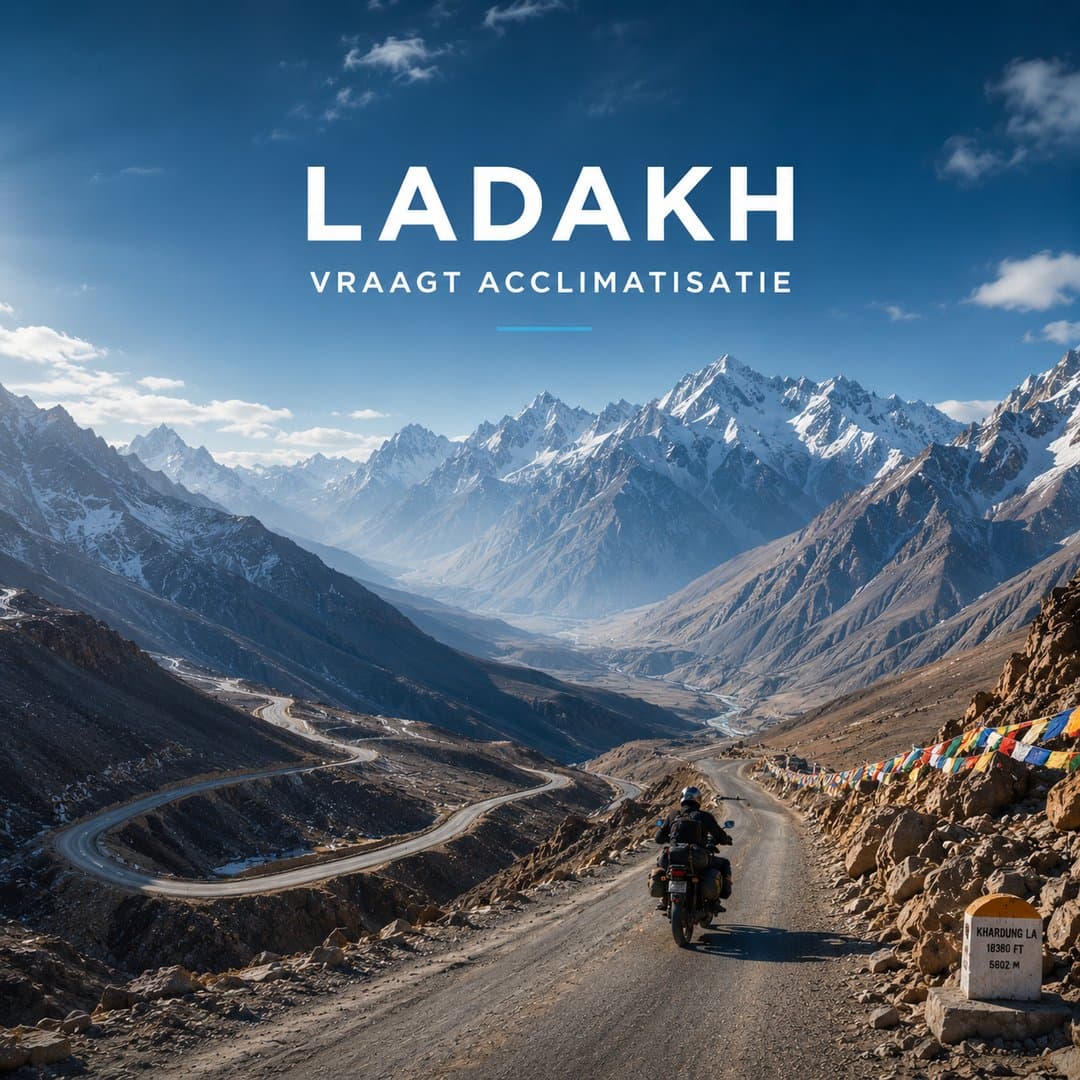
Anyone travelling to Ladakh often starts in Leh, at around 3,500 metres. But the real challenge comes afterwards: high passes such as Khardung La, Chang La, Taglang La and Umling La take you to extreme altitudes where acclimatisation is not a detail, but a prerequisite to truly enjoy your journey. That is why Ladakh acclimatisation primarily a matter of smart planning, gradual progression, and allowing your body time to acclimatise to less oxygen.
This doesn't just apply to mountaineers. It's precisely travellers by motorbike, car, bicycle or organised road trip in Ladakh who often quickly encounter significant altitude differences. You'll sleep in Leh, drive over passes above 5,000 metres and sometimes stay for several days in thin air. Good preparation can significantly improve your travel comfort, resilience and chances of a successful trip.
Short answer: If you want to travel safely through Ladakh, plan for at least 48 hours of rest and light activity in Leh before visiting higher altitude areas. After that, gradually incorporate passes such as Khardung La, Chang La, Taglang La and Umling La. Pre-acclimatisation with a high-altitude tent can help your body get used to lower oxygen levels in a controlled, measurable and planned way before you depart.
Conclusion: Ladakh already starts high, as Leh is around 3,500 metres.
Nuance: these passes are often day passes, but the toll does count.
Practical hook: Combine rest in Leh, quiet route planning and potential pre-acclimatisation at home.
If you want to prepare more broadly for altitude, it makes sense to first understand how acclimatising at altitude works. For travellers who want to start acclimatising to lower oxygen levels at home, this topic also logically connects to acclimatising at home for mountain travel.
Why acclimatise to Ladakh from the start in Leh
Many travellers underestimate Leh. This is because Leh often feels like a comfortable starting point. There are hotels, cafes, shops, guides, motorcycle rental companies, and travel agencies. Nevertheless, your body is immediately at a serious altitude.
At approximately 3,500 metres, the oxygen pressure is clearly lower than at sea level. Consequently, your body has to work harder to make the same amount of oxygen available. Your breathing quickens, your heart rate may be higher, and your sleep might be more restless. This is normal, but it takes time.
Therefore, local authorities and many tour operators advise acclimatising for at least 48 hours upon arrival in Leh before proceeding to higher altitudes. Those first two days are not wasted time; rather, they form the foundation for the rest of your trip.
🧭 In practice
If you arrive in Leh by plane, you'll go from low altitude to approximately 3,500 metres in a few hours. That's much faster than your body can normally keep up with. Therefore, consciously plan to take it easy for your first few days, even if you feel fine on arrival.
Acclimatising in Leh: what you should and shouldn't do in the first 48 hours
Acclimatisation isn't about doing nothing; it's about pacing yourself wisely. Your body needs exercise, fluids, nourishment, and sleep, but the intensity should remain light. The first 48 hours are not suitable for strenuous hikes, long drives, demanding bike rides, or a quick trip to a high mountain pass.
A good start usually looks simple. You take a leisurely stroll through Leh, drink plenty of fluids, eat easily digestible food, and go to bed early. You don't plan an ambitious day trip to Khardung La on day one. Alcohol and sleeping pills are also inadvisable, as they can affect your breathing and sleep quality.
Practical checklist for the first 48 hours in Leh
- Don't plan any strenuous hikes on the day of arrival.
- Keep walks short and calm.
- Drink regularly, but don't force extreme amounts.
- Eat sufficient carbohydrates and easily digestible meals.
- Avoid alcohol in the first few days.
- Get enough sleep and accept that the first night might be restless.
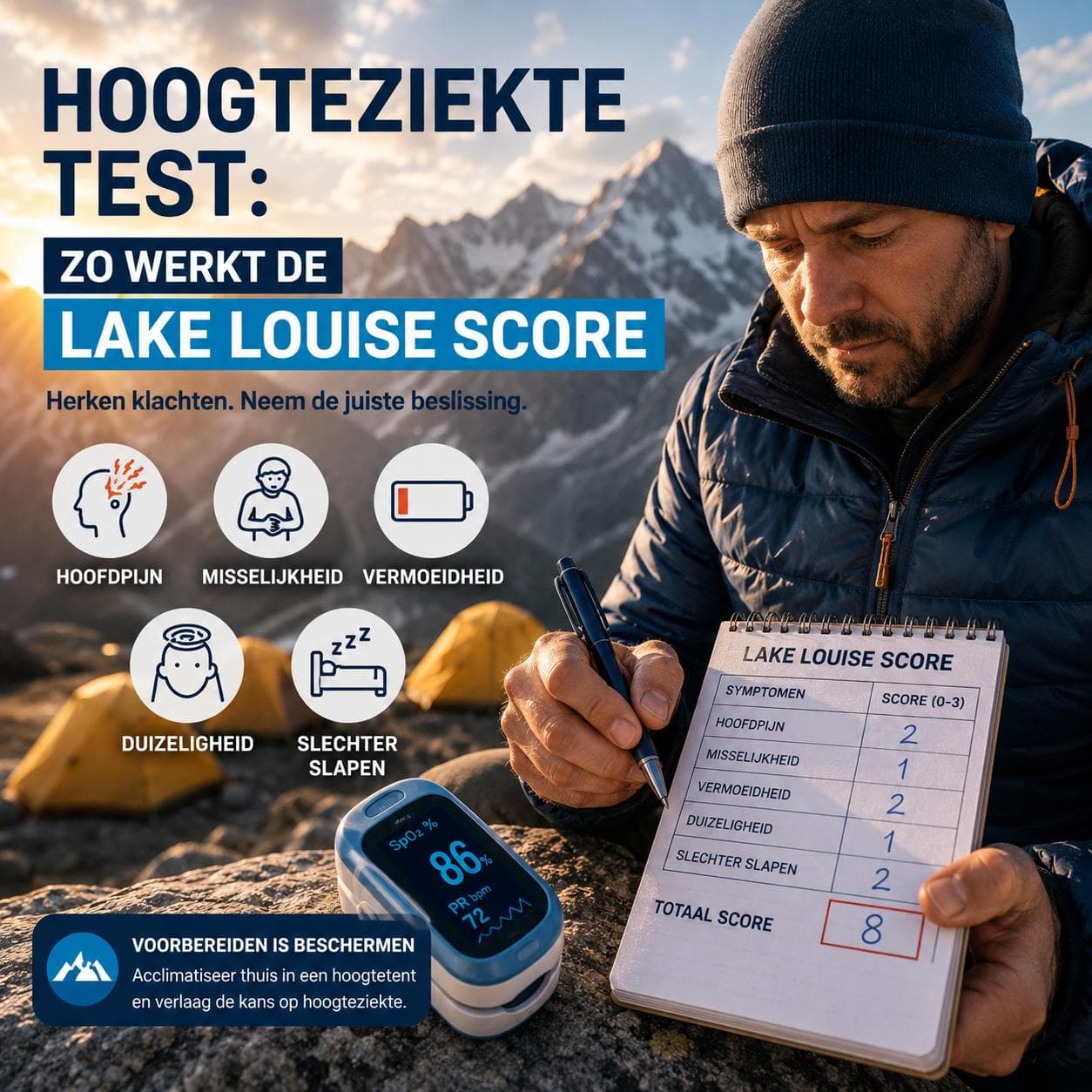
- Watch out for headache, nausea, dizziness, and unusual tiredness.
Anyone who wants to know more about complaints and risks can delve into altitude sickness symptoms and risks. This helps to distinguish normal adaptation from signals that require attention.
Altitude sickness in Ladakh: why route planning is so important
Altitude sickness in Ladakh doesn't usually arise from seeing a high pass once. The risk mainly lies in the combination of rapid arrival, short rest, multiple high passes, long travel days, and sleeping at altitude.
A motorcyclist can feel quite comfortable in Leh, then ride to Nubra Valley via Khardung La, then onwards to Pangong Tso via rugged terrain, and later cross Chang La or Taglang La again. A cyclist has an additional burden, as every climb at high altitude demands much more. Even road-trippers in a jeep can experience complaints, even without physical exertion.
Fitness helps you cope better with your journey, but it doesn't automatically protect you from altitude sickness. In fact, sporty travellers might want to push on too quickly, meaning they sometimes miss the early warning signs.
Normal adjustment or reason to brake?
| Signal | Interpretation | Practical action |
|---|---|---|
| Mild mild headache | Can adjust to acclimatise to altitude | Keep calm, drink, don't sleep higher |
| Pay attention nausea or dizziness | May indicate insufficient acclimatisation | Pause route and track complaints |
| Seriously Complaints are increasing | Do not ignore or drive on. | Do not ascend further, consider medical assistance |
| Urgent Confusion or breathlessness at rest | Can be suitable for severe altitude problems | Seek immediate medical assistance |
Interpretation: Can be used to acclimatise to altitude.
Action: Stay calm, drink, don't sleep higher.
Interpretation: May indicate insufficient acclimatisation.
Action: Pause route and track complaints.
Interpretation: Do not ignore or drive away.
Action: Do not rise further, consider medical help.
Interpretation: Can suit serious altitude problems.
Action: Seek immediate medical assistance.
Khardung La, Chang La, Taglang La and Umling La: high passes as acclimatisation tests
The famous roads of Ladakh are not just photo opportunities. They are also physiological tests. Khardung La is often mentioned around 5,359 metres. Chang La is located around 5,360 metres. Taglang La is around 5,328 metres. Umling La is often cited at around 5,798 to 5,883 metres, depending on the source and measurement notation.
The exact altitude of some passes is not always stated consistently in India and by tour operators. For your body, that difference matters less. Above 5,000 metres, oxygen availability is significantly reduced. Moreover, cold, wind, poor roads, dust, jet lag, and long travel days can further increase the strain.
| Pas route | Global height | Why is this relevant? | Practical significance |
|---|---|---|---|
| Leh | Approximately 3,500 m | Many travellers start directly here | At least 48 hours of rest and quiet acclimatisation |
| Khardung La | Around 5,300 m+ | Popular route to Nubra Valley | Stay within your limits, ride at a moderate pace |
| Chang La | Around 5,300 m+ | Known route towards Pangong Tso | Do not plan immediately after arrival |
| Taglang La | Around 5,300 m+ | Important pass on the Manali-Leh route | Beware of rapid rise from lower areas |
| Umling Pass | Approximately 5,800 m+ | One of the most extreme motorbike routes at high altitude | Only with good preparation and acclimatisation |
Global height Around 3,500 m.
Why relevant Many travellers start here directly.
Practical significance: A minimum of 48 hours for gentle acclimatisation.
Global height Around 5,300 m+.
Why relevant Popular route to Nubra Valley.
Practical significance: Keep pace, ride slowly.
Global height Around 5,300 m+.
Why relevant Well-known route to Pangong Tso.
Practical significance: Don't plan anything directly after arrival.
Global height Around 5,300 m+.
Why relevant Important pass on the Manali-Leh route.
Practical significance: Beware of rapid rises from lower areas.
Global height Approximately 5,800m+.
Why relevant One of the most extreme motorbike routes at high altitude.
Practical significance: Only with proper preparation and acclimatisation.
Preparing a smart trip to Ladakh: from arrival to high passes
To prepare a good Ladakh trip, start with a simple choice: build in rest before you need it. That means you shouldn't plan your route as if every day is purely logistical. Altitude is also a factor in your planning.
For many travellers, this is a logical progression:
Example itinerary for a more relaxed Ladakh route
- Day 1: Arrival in Leh, rest, short walk, early to bed.
- Day 2: Relaxed exploration in and around Leh, no high passes.
- Day 3: light daytime activity or short drive, still without extreme altitude stress.
- Day 4: First higher route, for example in the direction of Nubra via Khardung La.
- Day 5 and onwards: Higher intensity levels should only be combined if recovery and symptoms remain good.
This setup is not a medical protocol for everyone. However, it is a more realistic starting point than proceeding directly to extreme altitude upon arrival. Those who have previously experienced altitude sickness, are prone to headaches or have a tight travel schedule should plan with extra caution.
A practical deepening can also be found in the article about the first 72 hours at altitude. It's precisely that period that often determines how comfortable the rest of the journey is.
Pre-acclimatisation in Ladakh: why starting at home can make sense
Pre-acclimatisation for Ladakh means you gradually get your body used to lower oxygen levels before you leave. This can be beneficial if you have limited time, are flying directly to Leh, or are planning a strenuous route with several high passes.
An altitude tent works with normobaric hypoxia. This means that the air pressure remains normal, but the oxygen percentage in the inhaled air is reduced. As a result, your body experiences a stimulus that is similar to altitude. The advantage is that you can do this at home gradually, measurably, and predictably.
A high-altitude tent is not a substitute for acclimatisation on site. You still need to start slowly in Leh. However, a well-structured itinerary can help make the transition to 3,500 metres less abrupt, allowing your body to begin the journey better prepared.
For those who want to understand this concretely, A sleeping bag packing schedule a logical floor. It's not about sleeping as high as possible, but about building up and monitoring calmly.
💡 Did you know?
During pre-acclimatisation, the quality of the build-up is more important than the highest setting. A gradual stimulus, sufficient sleep hours, and monitoring of recovery usually provide more information than a single, isolated high value.
High-altitude tent Ladakh: who is this particularly relevant for?
A height tent for Ladakh is particularly relevant for travellers who know in advance that their route allows for little flexibility. Consider motorcyclists with a tight group schedule, cyclists expecting high physical exertion, photographers or road trippers wanting to ride multiple high passes, and travellers flying directly to Leh.
Even people who have previously reacted sensitively to altitude can benefit from controlled preparation. This doesn't mean that symptoms become impossible. It does mean that your body is confronted less abruptly with the transition from lowlands to high altitude.
Pre-acclimatisation is advisable to consider when
- You fly directly to Leh and have few rest days.
- Your route includes several passes above 5,000 metres.
- You're going cycling or motorcycling with long days.
- You are travelling with a group and can only adjust the pace to a limited extent.
- You previously had altitude complaints.
- You want to make your preparation measurable and plannable.
Misunderstandings about acclimatising to Ladakh
Misunderstanding 1: If you are fit, you won't get altitude sickness
Fitness helps with exertion, but it doesn't guarantee rapid acclimatisation. A well-trained cyclist can still suffer from headaches, nausea, or poor sleep. Altitude sickness varies greatly from person to person.
Misconception 2: A high pass is safe because you'll only be there briefly
Keeping a close eye on your pacing is wise. However, the tax still counts, especially if you also have a long drive on the same day, get cold, eat poorly, or sleep high afterwards.
Misunderstanding 3: Oxygen in the car solves the problem
Supplemental oxygen can be useful in acute situations, but it does not replace proper acclimatisation. It is not a strategy to compensate for overly aggressive route planning.
Misconception 4: A high-altitude tent makes acclimatisation in Leh unnecessary
That’s not true. An altitude tent can support your preparation and significantly reduce the risk of altitude-related problems, but it does not offer a 100% guarantee. You’re still dependent on route planning, rest, recovery and how your body reacts once you’re there.
This is how you monitor this lens
Monitoring helps you avoid relying purely on instinct. This is important because enthusiasm, peer pressure, and itineraries can influence your judgment. Therefore, look at trends, not at a single isolated measurement.
| Measuring point | What are you paying attention to? | Decision rule |
|---|---|---|
| SpO2 trend | Is your saturation dropping more than expected or recovering poorly? | Look at the trend over multiple measurements, not at a single number. |
| Sleep | Do you often wake up, sleep restlessly, or recover poorly? | Plan calmer if poor sleep coincides with complaints. |
| Recovery | Does your heart rate remain high or does light exertion feel strenuous? | Postpone a higher gear if you are clearly fatigued. |
| Symptoms | Headache, nausea, dizziness, or breathlessness? | Do not rise further if complaints increase. |
What are you paying attention to? Is your saturation dropping more than expected or recovering poorly?
Decision rule: Look at the trend over multiple measurements, not at a single number.
What are you paying attention to? Do you often wake up, sleep restlessly, or recover poorly?
Decision rule: Plan calmer if poor sleep coincides with complaints.
What are you paying attention to? Does your heart rate remain high or does light exertion feel strenuous?
Decision rule: Postpone a higher gear if you are clearly fatigued.
What are you paying attention to? Headache, nausea, dizziness, or breathlessness?
Decision rule: Do not rise further if complaints increase.
To interpret SpO2 better, always use trends and context. A single value is less informative than the progression over several days. You can find more background information in our guide on oxygen saturation at altitude.
Practical tips for motorcycle, car, bike, and organised travel
For motorcyclists
Don't plan your first high pass too early. Ride defensively, stay warm and take short stops. On high passes, don't stay longer than necessary. Fatigue and cold can affect your reaction times.
For road trippers by car or jeep
You can also get altitude sickness without strenuous effort. Don't make travel days unnecessarily long. Don't combine multiple high passes if someone in the group already has symptoms.
For cyclists
Cycling in Ladakh places a lot of demands on your oxygen system. Build up training days slowly. Keep intensity low in the first few days and plan ample rest periods.
For organised trips
Check beforehand how the itinerary is structured. Ask how much rest there is in Leh, where you will sleep, and how quickly you will ascend to higher altitudes. A good programme is only truly good if it is physiologically sound.
Frequently asked questions about acclimatising to Ladakh
How long should you acclimatise in Leh?
Plan at least 48 hours of quiet acclimatisation in Leh before travelling to higher regions. If you experience symptoms, poor sleep, or have had altitude problems before, extra leeway is advisable.
Is Khardung La dangerous due to the altitude?
Khardung La is particularly taxing if you go too soon after arriving or are already experiencing symptoms. Stay on the pass for a short time, ride slowly and only plan the route after acclimatising in Leh.
Is Umling La suitable for every traveller?
No. Umling La is extremely high and requires good preparation, local knowledge, permits, suitable transport, and sufficient acclimatisation. Do not view it as a standard day trip.
Does a height tent help for Ladakh?
A hypoxic tent can help to acclimatise to lower oxygen levels in a controlled way before departure. It does not replace acclimatisation in Leh, but can improve preparation.
Can you prevent altitude sickness completely?
Not with 100% certainty. You can, however, reduce the risk considerably by ascending gradually, planning carefully, taking any symptoms seriously and, if necessary, acclimatising beforehand.
Reliable sources and further in-depth information
Prepare your Ladakh trip in a controlled manner
Do you fly directly to Leh or travel via high passes such as Khardung La, Chang La, Taglang La, or Umling La? In that case, a personalised pre-acclimatisation plan can help make your preparation calmer, more measurable, and better tailored.
Conclusion: The high-altitude roads of Ladakh require calm preparation
Ladakh is one of the most impressive regions in the world for motorcyclists, cyclists, road trippers, and mountain travellers. However, the beauty of Leh, Khardung La, Chang La, Taglang La, and Umling La truly comes alive when your body can handle the altitude.
Therefore, a good journey doesn't begin at the first mountain pass, but in your planning. Take Leh seriously as a high-altitude starting point. Use the first 48 hours consciously. Gradually incorporate higher routes. Monitor symptoms, sleep, recovery, and SpO2 as trends. Consider pre-acclimatisation if your schedule allows little leeway or if you are staying at high altitude for several days.
This way, you not only increase your safety, but also your travel comfort, carrying capacity, and your chances of truly experiencing Ladakh as you intended.