Everything you need to know about altitude sickness: symptoms, risks and what to do
Published 28 September 2025 · 3 min read
Altitude sickness, also known as acute mountain sickness (AMS) dubbed, is a common problem among those who move quickly to high altitudes. Whether you are planning a ski trip around 2,500 to 3,000 metres, climbing Kilimanjaro or preparing an expedition in the Alps or Himalayas, the risk is real. In most cases, symptoms remain mild, but in severe forms altitude sickness can lead to altitude pulmonary oedema (HAPE) or altitude cerebral oedema (HACE), both life-threatening. In this article, you will discover all the essential knowledge about symptoms, risk factors, prevention and treatment.
What is altitude sickness
Altitude sickness results from hypoxia: a lack of oxygen in the body due to the lower oxygen pressure at altitude. From about 2,500 metres, the likelihood of symptoms increases. The combination of rapid ascent, exertion and insufficient acclimatisation is often the cause.
Three forms of altitude sickness
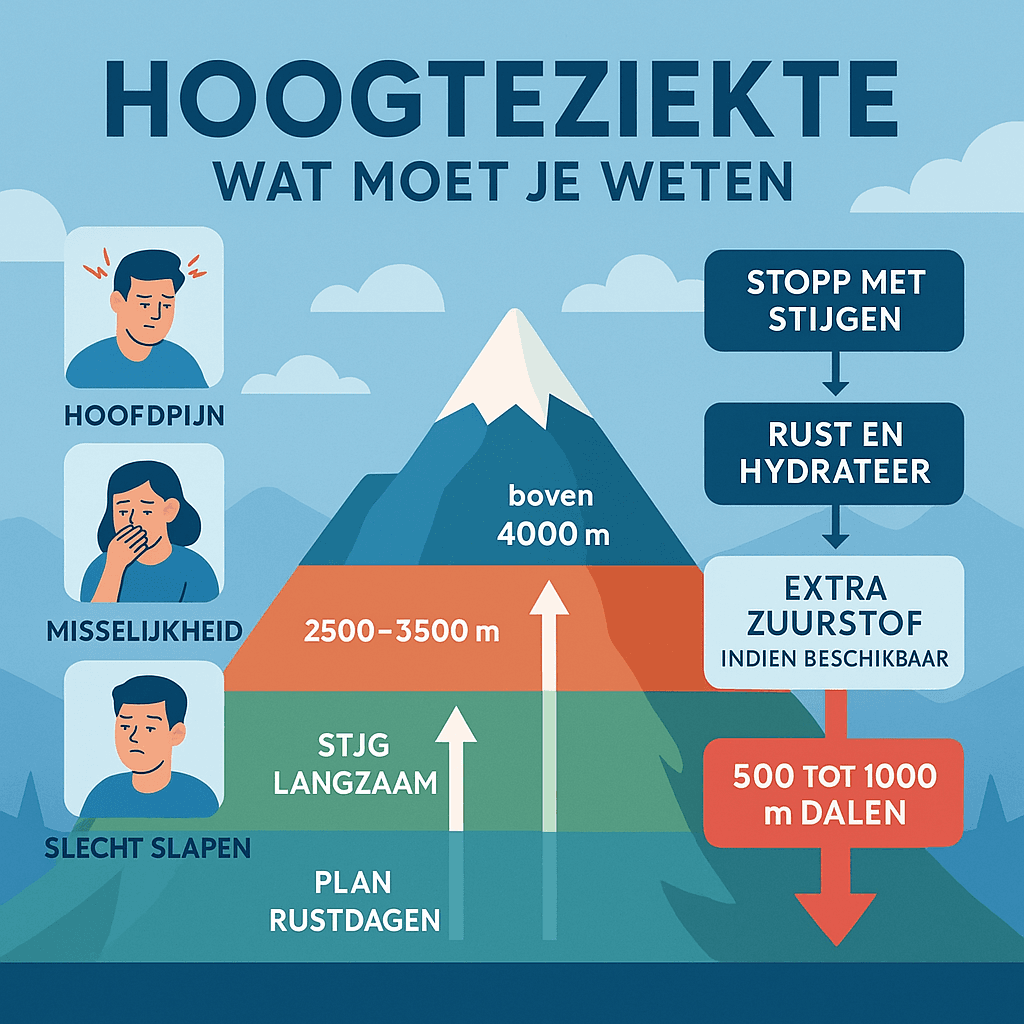
- Acute altitude sickness (AMS) - The most common and mildest form. Complaints: headache, nausea, dizziness, fatigue and sleep problems.
- High-pitched pulmonary oedema (HAPE) - Fluid accumulation in the lungs. Symptoms: shortness of breath at rest, cough and extreme exercise intolerance. A medical emergency.
- High-altitude cerebral oedema (HACE) - Fluid accumulation in the brain. Symptoms: confusion, coordination problems, loss of consciousness. Immediate descent and medical attention are required.
For a medical scientific depth in acute mountain sickness and the Lake Louise score system, the abstract on NCBI is useful:
Acute mountain sickness - StatPearls.
Symptoms of altitude sickness
Mild symptoms (AMS)
- Headache
- Nausea or vomiting
- Fatigue and general malaise
- Dizziness or lightheadedness
- Sleep problems
- Reduced appetite
Severe alarm symptoms
- Shortness of breath at rest (characteristic of HAPE)
- Persistent cough, possibly with pink frothy sputum
- Inability to walk normally, instability (ataxia in HACE)
- Confusion, behavioural change, hallucinations or loss of consciousness
- Extreme exhaustion unbefitting the effort
Recognise one or more of these alarm symptoms, then immediately stop ascending and descend. Also when in doubt: choose safety.
Who is more at risk
- Fast risers - The faster you climb to a new sleeping height, the greater the risk of altitude sickness.
- Large height differences - Especially above 2,500 metres, the risk increases exponentially.
- Individual aptitude - Susceptibility varies from person to person. Previous altitude sickness increases the likelihood of recurrence.
- Fit but in a hurry - Fit athletes sometimes underestimate the importance of rest and rise too fast.
- Alcohol and sedatives - Can suppress breathing and worsen symptoms.
Prevention of altitude sickness
The golden rule: climb high, sleep low and ascend slowly. A safe rule of thumb is above 2,500 metres to keep your sleeping height no more than about 300 to 500 metres per day and include a rest day every 2-3 days. See also the comprehensive guidelines of the
CDC Yellow Book.
- Plan rest days
- Hydrate sufficiently and eat regularly
- Avoid alcohol and sleep aids
- Use a saturation gauge as a tool
- Acclimatise at home with an altitude tent to get your body used to it beforehand
What to do in case of altitude sickness
In mild AMS
- Stop rising and take a rest
- Hydrate and eat lightly
- Use paracetamol or ibuprofen for headaches
- Consider oxygen or mobile altitude chamber where possible
At HAPE or HACE
- Immediate descent (500 to 1,000 metres or more)
- Getting medical help
- Possibly medication such as acetazolamide or dexamethasone, always under a doctor's supervision
External sources
- CDC - Travel to High Altitudes
- NHS - Altitude sickness
- Cleveland Clinic - Altitude sickness
- Mountain guide - Altitude chambers in Belgium
Conclusion
Altitude sickness ranges from annoying but temporary headaches to life-threatening complications such as HAPE and HACE. The key lies in rising calmly, recognising signals early and preparing preventively. Those who want extra security can acclimatising at home with an altitude tent. This will make your mountain adventure safer and more successful.