How does altitude training work?
Published 3 August 2012 · 4 min read
How does altitude training for athletes work? Physiology, effect and proper application
How does altitude training for athletes really work? Many athletes hear that it produces “more red blood cells” but do not understand what is happening physiologically. Without that understanding, altitude training is often used too aggressively or monitored incorrectly. This article will give you a clear, science-based and practical framework for targeting altitude training as a performance tool.
The essentials in 30 seconds
Conclusion: Altitude training improves oxygen transport and the efficiency of your energy system via controlled hypoxic stimuli during sleep.
Nuance: The effect occurs only with sufficient duration, proper construction and objective monitoring.
Practical lead: Build hypoxic sleep incrementally and adjust for SpO2 trend, sleep quality and exercise output.
Video explanation: the basics of altitude training
The video below provides a visual explanation of how altitude training works and why athletes use it to improve their endurance performance.

What does altitude training mean for athletes?
For athletes, altitude training is not about survival at altitude, but about improving the oxygen transport system. By exposure to less available oxygen, the body activates adaptation mechanisms that are directly relevant to endurance sports such as running, cycling and triathlon.
For a broader context around methods, also read altitude training and the practical application of Sleep High Train Low.
The physiological core: what changes in an athlete?
1. Acute response
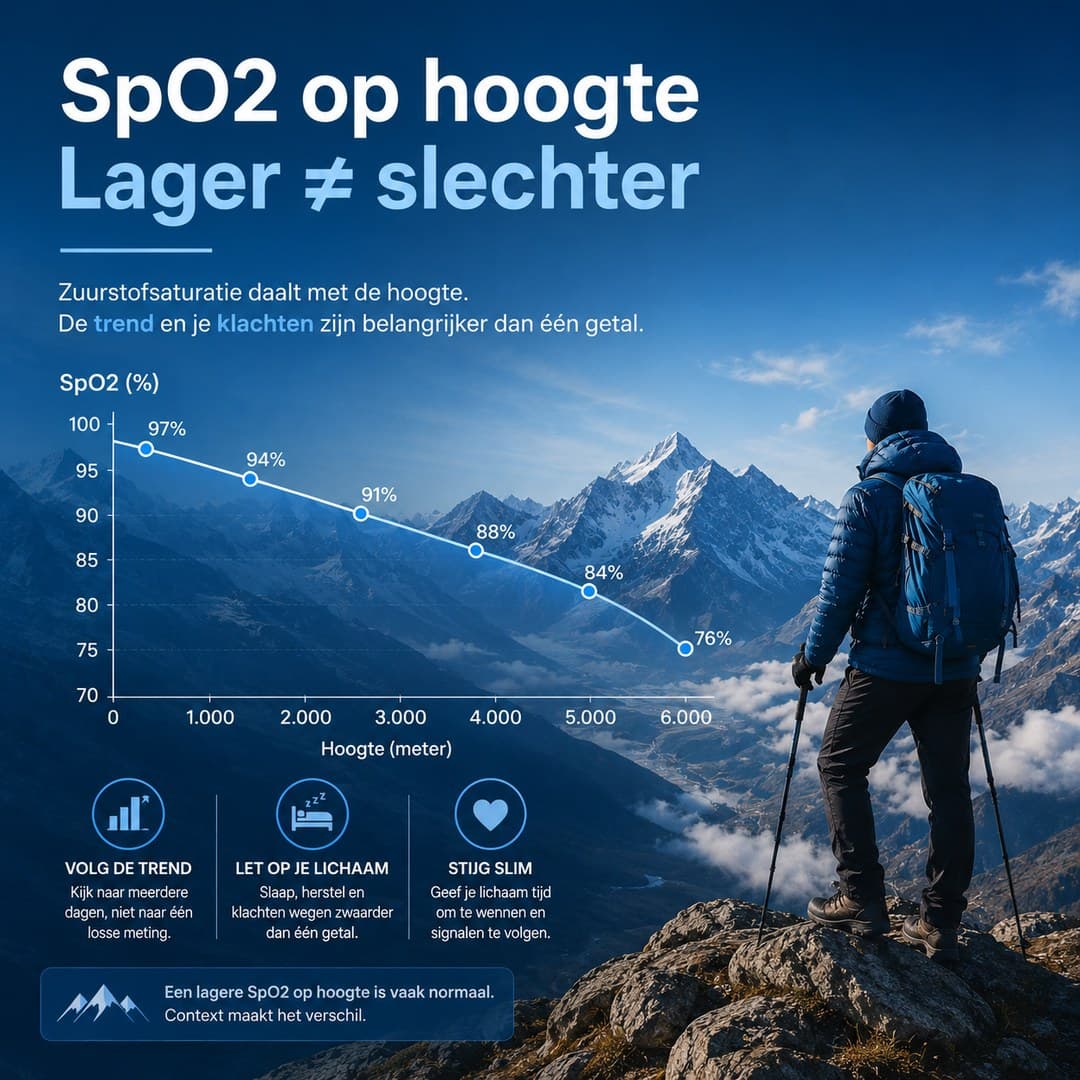
Within minutes, respiratory rate and heart rate rise. Oxygen saturation falls. This is not a performance improvement, but a direct compensation.
2. Hormonal activation
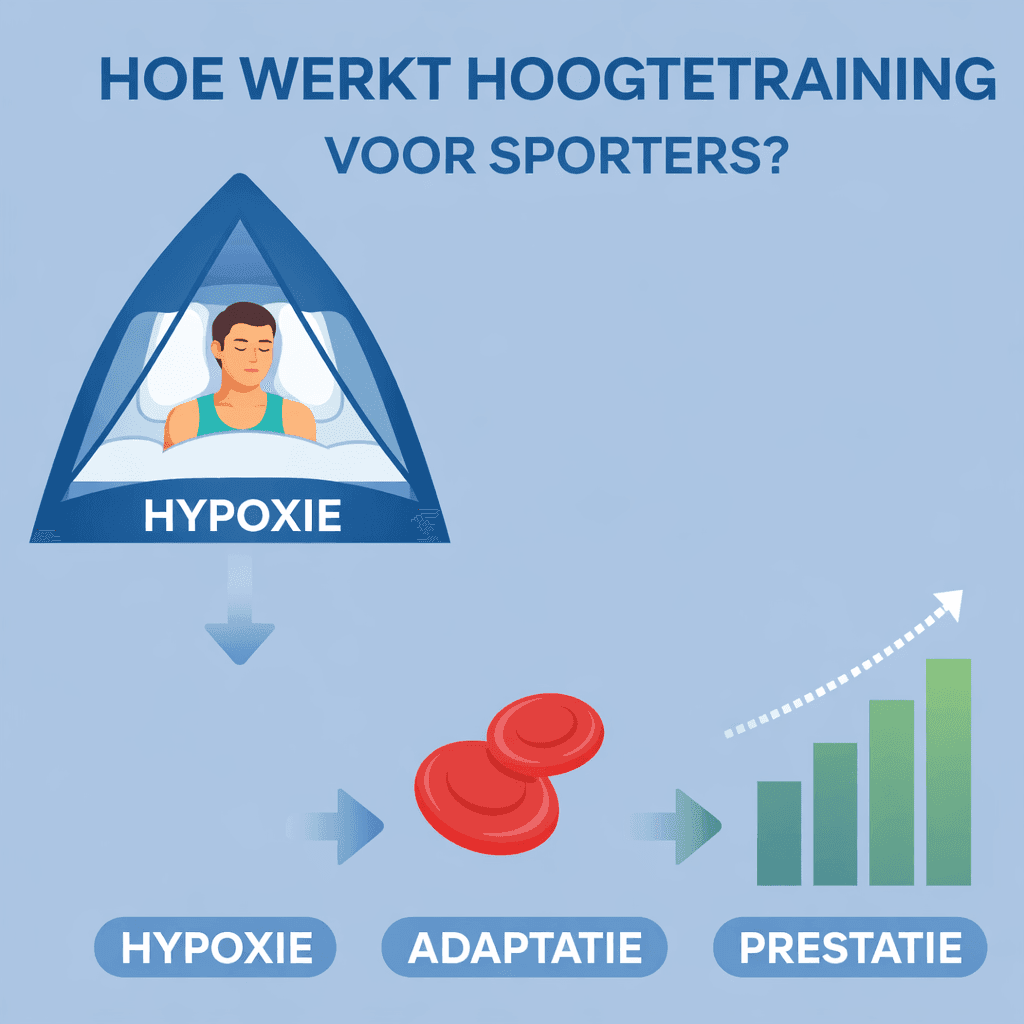
The kidneys increase the production of erythropoietin. This stimulates the production of red blood cells, which can improve oxygen transport.
You can read more about this mechanism in how altitude training increases your EPO levels.
3. Muscle and mitochondrial adaptation
Besides haematological changes, oxygen extraction in the muscle also improves. The mitochondria become more efficient. This explains why some athletes experience improvement without large increases in haemoglobin.
💡 Did you know? Much of the performance improvement comes not just from extra red blood cells, but from improved efficiency at the cellular level. The body learns to deliver the same output with less available oxygen.
The most common fallacy among athletes
The biggest mistake is thinking that higher is automatically better. Too aggressive hypoxia disrupts sleep, increases stress hormones and undermines training quality.
⚠️ Reality check Poor sleep for several nights reduces training adaptation more than a moderate hypoxic stimulus can improve it. High altitude training should never undermine your recovery.
Sleep High Train Low: the sports standard
The most commonly used method for athletes is Live High Train Low. In this, you sleep in normobaric hypoxia and train at sea level. So you combine adaptation with maintaining intensity.
You can also read more practical application in altitude tent use complete guide.
🧭 In practice Athletes who adjust their simulated altitude to stabilise their SpO2 trend around about 92 per cent usually maintain better sleep and more consistent training quality than athletes aiming purely for maximum altitude.
This is how you monitor altitude training objectively
Successful altitude training is data-driven. Monitor at least three parameters:
- SpO2 trend: Measure daily at the same time. Look at a 5-day trend, not a single isolated value.
- Sleep quality: Sleeping time, nighttime awakening and subjective score.
- Training output: Power, pace or RPE at a fixed reference session.
Concrete decision rule: If your SpO2 structurally falls below 88 per cent and your training output deteriorates three days in a row, temporarily lower the simulated altitude.
📊 Research shows That consistent exposure of at least 4 to 6 weeks with sufficient daily duration is required to achieve significant haematological adaptation in endurance athletes.
When to continue, adjust or stop?
When to continue
- Stable SpO2 trend
- Sleep slightly disturbed but recovering
- Training quality remains intact
When to adapt
- Declining asset values
- Persistent sleep problems
- SpO2 trend below target zone
When to stop
- Severe headache
- Neurological symptoms
- Unexplained extreme fatigue
In case of alarm symptoms, stopping and descending is the primary intervention. See also altitude sickness.
Roadmap: this is how to apply altitude training correctly
- Determine your goal: base period or peak preparation.
- Start at moderate simulated altitude.
- Build up incrementally every 3 to 5 days.
- Measure SpO2 daily and record sleep score.
- Evaluate training output weekly.
- Schedule at least 4 to 6 weeks of consistent exposure.
- Lower temporarily when stress signals are evident.
High altitude tent as a controlled sports tool
An altitude tent is no substitute for acclimatisation, but it will significantly reduce the risk of altitude sickness. For athletes, in particular, it offers a controlled way to create a consistent adaptation stimulus via normobaric hypoxia during sleep.
The key lies in incremental build-up and SpO2-driven adjustment. In doubt about altitude buildup or interpretation of your data? Feel free to contact us via contact.
❓ Mini-FAQ How long does it take to notice effects?
Most athletes experience subjective changes after 2 to 3 weeks. Objective haematological effects usually become apparent after 4 to 6 weeks of consistent exposure.
Scientific foundation
International consensus documents confirm that Live High Train Low can provide performance enhancement in endurance athletes when applied correctly.
International Society for Mountain Medicine
In conclusion
Altitude training works. But only when stimulus, recovery and monitoring are balanced. See it not as a trick, but as a physiological process that demands respect. Then hypoxia becomes not an experiment, but a controlled performance tool.