High altitude tent second-hand: what to look out for?
Published 8 April 2026 · 11 min read
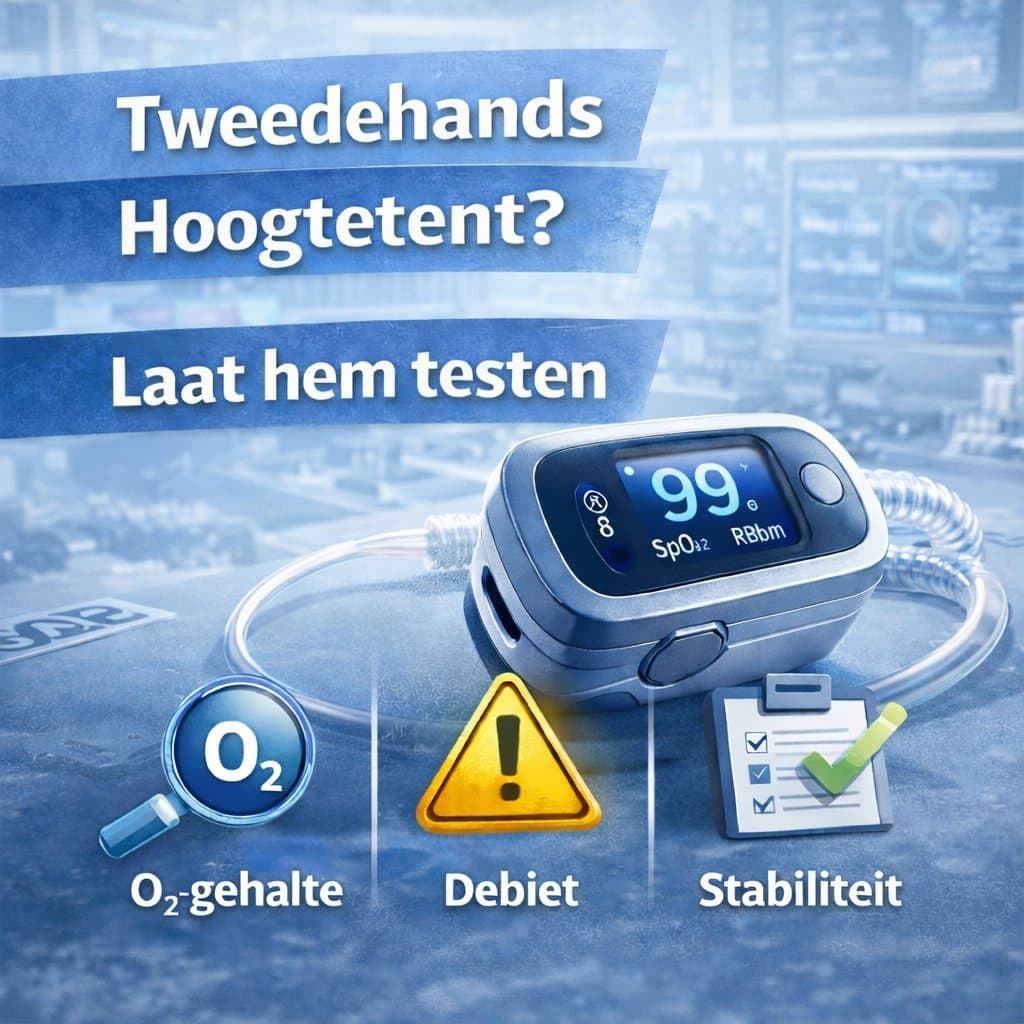
A altitude tent second-hand buying can be smart, but only if you look beyond price and appearance. Especially with a used system, the height generator is the critical part. You can often still judge a tent fabric, zip or hose with the naked eye. The real question is whether the generator still delivers enough flow, whether the oxygen percentage in the tent remains stable and whether the internal technology is still in good condition. In this article, you will read what to look for objectively, when second-hand is interesting and when it is better to keep your distance.
- Only buy a second-hand altitude tent if the technical condition is demonstrably good.
- In particular, have the altitude generator assessed for flow rate, O2 percentage stability and condition of the ATF cells.
- Check maintenance history, age, hours of use and any overhauls.
- Count on a specialist overhaul often being the wisest first step after purchase.
- If there is no such clarity, then cheap is often expensive.
Conclusion: second-hand can be interesting, but only if the technology is demonstrably up to standard.
Nuance: in a used system, the risk is almost never in the fabric, but in the generator and internal components.
Practical hook: Before or immediately after purchase, have a specialist check whether the system still really delivers what it promises.
High altitude tent second-hand: when is it a smart choice?
A second-hand system is particularly interesting for athletes and mountain travellers who are looking for quality, but do not necessarily need a completely new system. Think of someone who is preparing for an expedition, altitude training or a period of acclimatisation at home, but wants to remain budget-conscious while doing so. In such a situation, a used system could be fine, provided its technical performance is still up to scratch.
This is immediately the nuance. When you buy a second-hand altitude tent, you don't just buy a box, a hose and a tent. You are buying a hypoxic system that must reliably produce low-oxygen air. If you first want to have a good look at the trade-off between use, comfort and deployment, you can also read our page on the advantages and disadvantages of a high altitude tent view.
The biggest mistake is thinking that any second-hand altitude generator is automatically a bargain. In reality, the technical condition of the generator determines almost everything. If the flow rate is too low, the oxygen percentage fluctuates too much or internal parts are worn out, the system may still feel complete, but it will underperform in practice.
With second-hand elevation systems, a neat exterior says little about true quality. The performance is in the airflow, stability and internal state of the generator. This is exactly why technical inspection is so much more important than just a quick visual inspection.
Checking altitude tent second-hand: what exactly should you look for?
Anyone looking to buy a used system should look systematically. Not just what the seller says, but what you can demonstrate. The points below are most important.
1. The altitude generator is more important than the tent itself
When buying second-hand, the biggest risk is almost always in the generator. The canvas of the tent may be discoloured or have signs of use without this being an immediate problem. But a generator that no longer performs well undermines the whole system. Therefore, always have a check that it still delivers sufficient air volume and that the hypoxic output remains stable.
2. Get specialist assessment of ATF cells
A crucial question is whether the ATF cells are still in good condition. That is precisely where there is a lot of hidden wear. For a buyer, this can almost never be reliably assessed by himself. It is therefore wise to have a specialist take a critical look at whether these components are still functioning properly and are not at the end of their service life. This is not a detail, but one of the components that determines whether the system is still seriously usable.
3. Check the flow rate, not just the set height
A display can still show a nice altitude while the actual performance has already deteriorated. Therefore, you should not only look at what the display indicates, but more importantly at the flow rate. Insufficient airflow makes the O2 percentage in the tent less stable, especially during a full night of use. And that very stability is what makes the difference between a usable system and one that works on paper but disappoints in practice.
4. Ask about maintenance, hours of use and previous overhauls
A good seller can tell you how old the system is, how intensively it has been used and whether it has been serviced or overhauled before. If those details are not there, then you should become extra critical. A generator that has run for years without maintenance never deserves the benefit of the doubt.
5. Look at hoses, filters, zips and seals
Preconditions also count. Check that hoses are still flexible and intact, that couplings fit properly, that the tent fabric has no leaks and that the zips still close properly. These are not the most expensive parts, but they determine whether the hypoxia created remains effective in the tent.
6. Ask if the system has been tested under load
A short daytime demo says little. What matters is whether the generator performs adequately during a real use situation. A system can start up and make noise, but still be insufficiently stable during an entire night. Therefore, ask not only whether the generator works, but also how it was tested and with what measured values.
- Ask about age, hours of use and maintenance history.
- Have flow rate and O2 stability checked in the tent.
- Have the condition of the ATF cells assessed by a specialist.
- Check hoses, filters, couplings, zips and tent fabric.
- Check whether an overhaul has been done recently or is needed immediately.
- Rather buy a demonstrably verified system than a cheap insecure one.
Key signals on one page
The comparison below helps to quickly assess a second-hand offer. This does not replace a technical inspection, but it does help to distinguish good signs from real alerts.
| Checkpoint | Good sign | Warning signal | So what do you do? |
|---|---|---|---|
| Age and history | Clear age, maintenance and provenance are known. | No invoices, no history, unclear provenance. | Only proceed if a specialist fully checks the system. |
| ATF cells | Specialist confirms internal condition is still good. | No assessment possible or doubt about condition. | Factor revision or replacement into your decision. |
| Flow rate | The generator still provides sufficient air volume. | Airflow is weak or collapses during operation. | Do not buy without technical measurement and clear results. |
| O2 stability | The oxygen percentage in the tent remains stable. | The value fluctuates sharply or sinks insufficiently. | Have the system tested in a realistic setup. |
| Filters and accessories | Hoses, filters and couplings are complete and neat. | Obsolete filters, worn hoses, leaking couplings. | Replace immediately or negotiate only if revision follows. |
| Price | The price suits age, maintenance and condition. | Too cheap without explanation. | Assume additional risk and don't be tempted by price alone. |
Age and history
Good sign: Clear age, maintenance and origin are known.
Warning: No invoices, no history, unclear provenance.
Action: proceed only if a specialist fully checks the system.
ATF cells
Good sign: Specialist confirms internal condition is still good.
Warning: no assessment possible or doubt about condition.
Action: Factor revision or replacement into your decision.
Flow rate
Good sign: the generator is still supplying sufficient air volume.
Warning: airflow is weak or collapses during operation.
Action: do not buy without technical measurement and clear results.
O2 stability
Good sign: the oxygen percentage in the tent remains stable.
Warning: the value fluctuates sharply or sinks insufficiently.
Action: Have the system tested in a realistic set-up.
Filters and accessories
Good sign: hoses, filters and couplings are complete and neat.
Warning: outdated filters, worn hoses, leaking couplings.
Action: Replace immediately or negotiate only if revision follows.
Price
Good sign: the price suits age, maintenance and condition.
Warning: too cheap without explanation.
Action: assume additional risk and don't be tempted by price alone.
Why overhaul when used is often the wisest move
With a second-hand high altitude generator, overhaul is often not an unnecessary luxury, but a rational choice. Even if a system still seems fine at first glance, without a technical inspection you do not know whether the tuning, filtering and internal operation are still at the right level. Therefore, in many cases it is wise to plan an overhaul immediately after purchase. Then you don't start with assumptions, but with certainty.
This is all the more true as these systems require periodic maintenance. Those wishing to orient themselves first to the wider choice between purchase and use can also read about buy or rent a high altitude tent. With second-hand systems, this consideration is even more important, as the purchase price is only one part of the overall picture.
In practice, overhaul is especially valuable to confirm that the generator still does what it is supposed to do. Think about checking internal components, calibration, filters and general technical condition. This prevents you from working for weeks with a system that performs less than expected.
- Have the system technically assessed before commissioning or immediately after delivery.
- Replace filters, worn hoses or other consumables where necessary.
- Have the generator overhauled if maintenance history is missing or in doubt.
- Only then build up slowly with a controlled schedule.
- For the first few weeks, monitor not only your feelings, but especially the trend in SpO2 and sleep quality.
When second-hand is smart and when it is not
Smart, though: if the provenance is clear, the technical condition is demonstrably good, the price fits the condition and you have room to have the system professionally checked over.
Not smart: if the seller has no service history, evades technical questions or mainly uses price as the main argument.
Doubtful: if the offer seems attractive, but an overhaul is almost certainly needed. Then you have to recalculate the real total price.
For many buyers, the profit of second-hand is mainly in young, well-controlled systems. There is less uncertainty there than with older unfamiliar machines. Those who really want to compare on deployment, comfort and practicality can also look at our complete buying guide for comparing high altitude tents. This helps to base the choice not only on price, but on total value.
This is how you monitor this lens
Even after purchase, you want to be able to objectively assess whether a second-hand system is performing well. You don't do that based on one single night or a single saturation measurement, but on trends.
- SpO2 trend: look at the morning trend over several nights. Not just one single value, but the pattern counts.
- Sleep quality: Pay attention to whether sleep gradually stabilises after the first adaptation nights.
- Recovery: assess how you feel during the day. A well-functioning system gives stimulus, but not constant exhaustion.
- Symptoms: Persistent headaches, agitation or an illogical pattern may indicate a misalignment or unstable output.
Those who will actually use the system would be wise to also understand What is a normal saturation trend in a high altitude tent. This will help you better discern what is a normal adjustment and what may indicate a technical or practical problem.
In addition, it helps if you know how the set altitude and your body's reaction are related. Therefore, it is also relevant to know how your setting the correct height in a high altitude tent. A used system can be technically good, but still feel bad if the set-up is illogical or too aggressive.
A common misconception: if the machine is running, it will be fine
This is perhaps the biggest misconception with second-hand height systems. Many buyers see a machine that starts up, blows air and shows a height, and then conclude that it's fine. But hypoxic systems in particular are all about quality of output. You don't just want noise and airflow, but a stable, usable and reproducible hypoxic stimulus.
Therefore, buying second-hand without a specialist check is actually the same as buying a motorbike without looking at the engine. The outside may convince, but the real value is under the hood.
Conclusion
A altitude tent second-hand buying can be absolutely interesting, but only if you have technical verification of what you are buying. Pay particular attention to the condition of the altitude generator, the flow rate, the stability of the O2 percentage in the tent and the condition of the ATF cells. Ask about maintenance, hours of use and previous overhauls. And if there is any doubt about this, an overhaul is usually not a cost you should avoid, but the very step that makes the difference between uncertainty and reliability.
The best second-hand buy is rarely the cheapest. The best buy is the system you know with reasonable certainty that it still performs well, has been correctly checked and is ready for real use.
Looking for more security than a random second-hand buy?
Altitude Dream regularly has young refurbished systems available that have been technically checked and are offered with warranty. Already bought a system or in doubt about its condition? Then an overhaul is often the quickest route to clarity.
FAQ
Is a second-hand high altitude tent safe to use?
This is possible, but only if the technical condition of the generator is good. Safety depends not only on the marquee, but especially on stable and correctly functioning hypoxic output.
With second-hand, where is the greatest risk?
Not in the cloth, but in the high generator. Above all, flow rate, O2 percentage stability and the state of internal components determine whether the system is still really usable.
Should you have a second-hand system rebuilt straight away?
In many cases, yes. Especially if maintenance history is missing or you don't have an objective technical measurement. Then you don't buy on trust, but on control.
How do you know if a used generator is still working properly?
By having it professionally tested for flow, stability, adjustment and internal state. A working display is not enough for that.