Oxygen tent vs altitude tent: what’s the difference?
Published 14 February 2026 · 3 min read
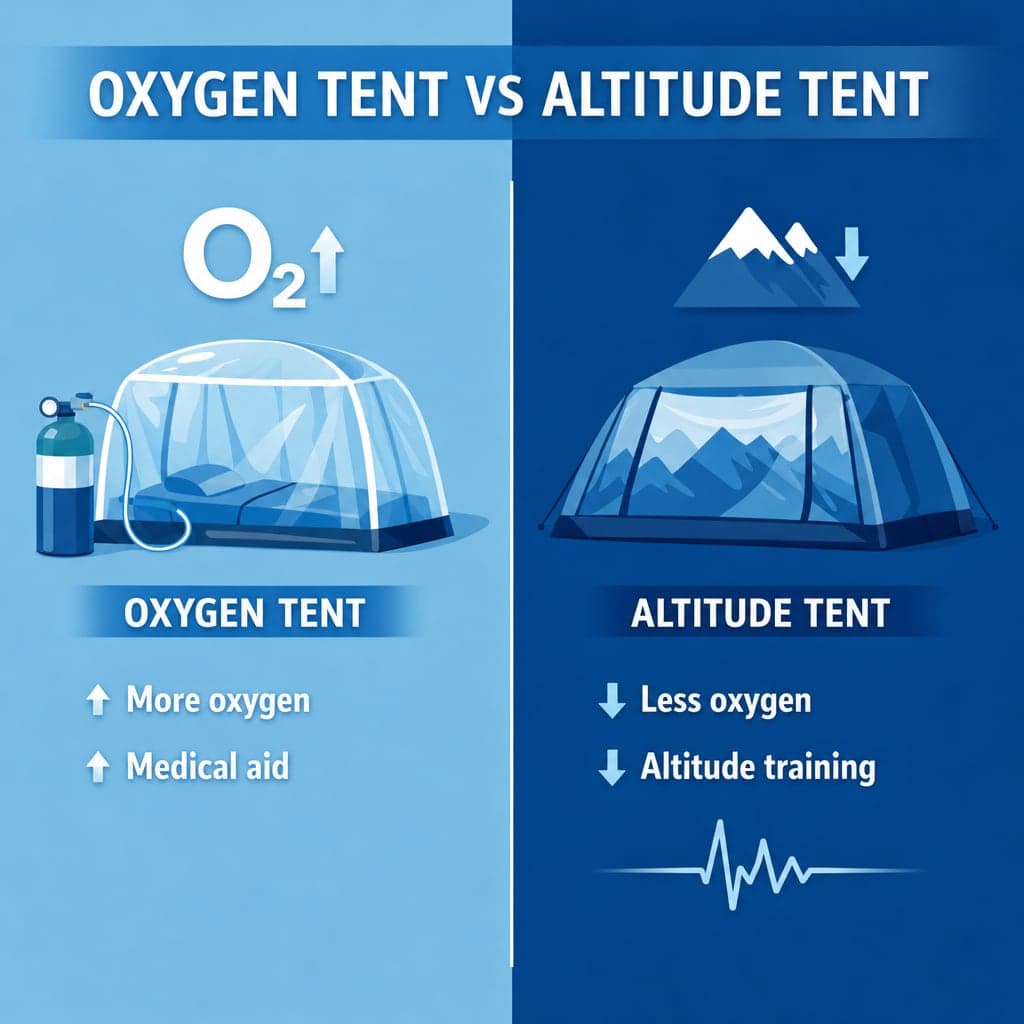
The oxygen tent altitude tent difference is often misunderstood. An oxygen tent adds extra oxygen to the air. An altitude tent, also known as an altitude tent, actually decreases oxygen levels. This is a fundamental physiological difference. One system increases oxygen availability. The other mimics altitude via normobaric hypoxia.
Those searching on this topic usually want clarity. Is it about the same thing? Is it marketing language? Or are they completely different applications? In this article, you get a clear, medically based answer. Without confusion.
The essentials in 30 seconds
- An oxygen tent increases the oxygen percentage in inhaled air.
- An altitude tent lowers the oxygen percentage via normobaric hypoxia.
- An oxygen tent is used for medical indications.
- An altitude tent is used for altitude training and pre-acclimatisation.
- Physiologically, they work in the opposite direction.
Why the oxygen altitude tent difference is often misunderstood
The confusion arises from the term “oxygen”. People automatically think of oxygen when they think of altitude. Therefore, an oxygen tent sounds like it has something to do with mountains. But physiologically, it is the opposite.
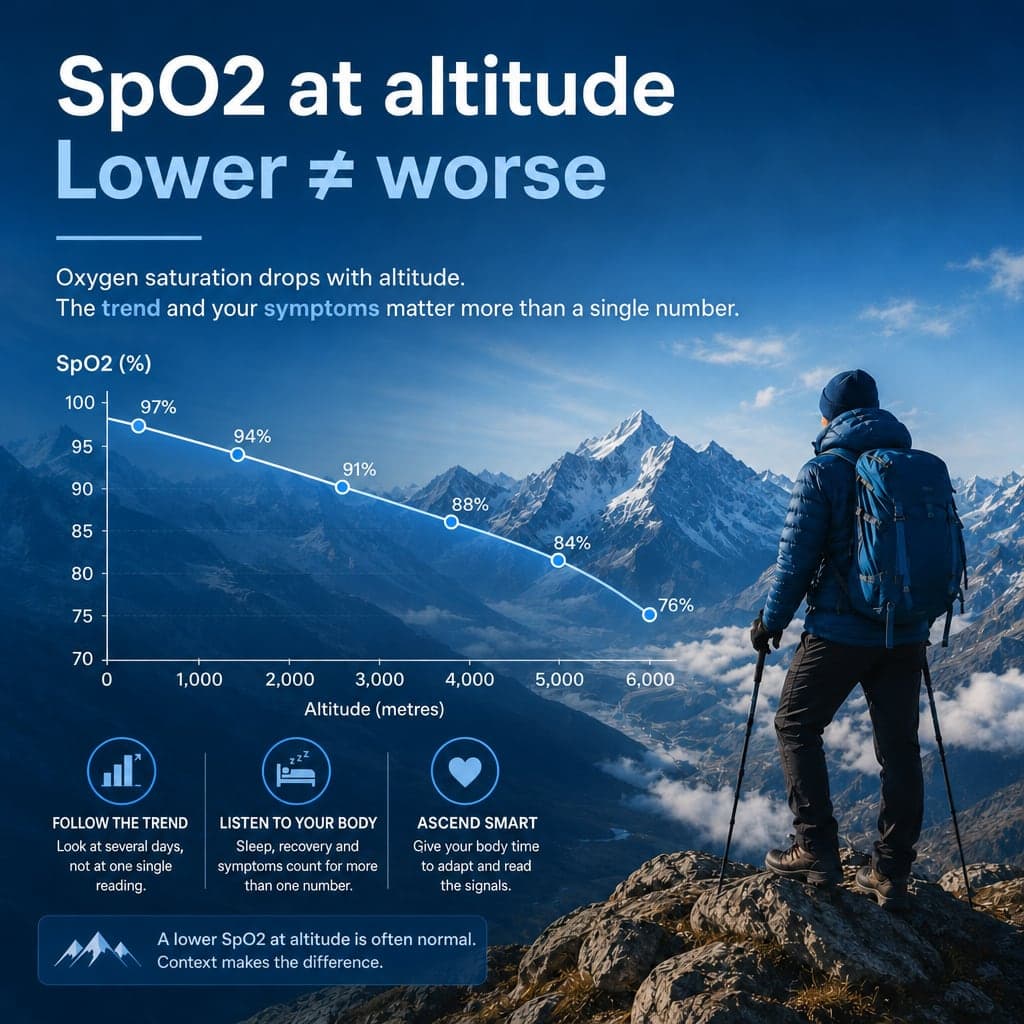
At altitude, the percentage of oxygen you can use effectively drops. A altitude tent works by mimicking that effect. This is done via normobaric hypoxia: air pressure remains the same, but the oxygen percentage drops.
An oxygen tent does exactly the opposite. It increases the concentration of oxygen in the air. This is intended for patients with respiratory problems or acute hypoxia.
What exactly is an oxygen tent?
An oxygen tent is a medical device. It is used for conditions where a person does not absorb enough oxygen. Think of lung diseases, severe infections or recovery after operations.
The tent is filled with air in which the oxygen percentage is higher than the normal 21 per cent. As a result, oxygen saturation increases rapidly.
Physiological effect:
- Rapid rise in SpO2
- Reduction of breathing work
- No adjustment of EPO or red blood cells
The body does not receive an adaptation stimulus. Instead, it is relieved.
What is an altitude tent or altitude tent?
An altitude tent lowers oxygen levels. This simulates staying at altitude. You can find more explanations in the complete guide to using an altitude tent.
Important: a high altitude tent works via normobaric hypoxia. The air pressure does not change. Only the oxygen percentage is reduced.
Typical simulation heights:
- 2,000 to 2,500 metres for sports adaptation
- 3000 to 4000 metres for expedition preparation
- Step-up at specific targets
Physiological effect:
- Stimulation of EPO production
- Increase in red blood cells over time
- Improved oxygen transport capacity
You can read more about that mechanism in How high training increases your EPO levels.
The core difference in one diagram
Oxygen tent: More oxygen → relief → recovery.
Altitude tent: Less oxygen → adaptation → performance enhancement or acclimatisation.
One system supports a deficit. The other creates a deficit in a controlled way to provoke adaptation.
When do you use an altitude tent?
An altitude tent is used at:
- Preparing for high mountains
- Live High Train Low strategies
- Improving aerobic capacity
- Pre-acclimatisation for 4,000 metres and above
You can find more background on altitude training here: what is altitude training?
Important to frame correctly:
An altitude tent is no substitute for on-site acclimatisation, but it will significantly reduce the risk of altitude sickness.
How to monitor this objectively
Never use one single SpO2 measurement. Always look for trends.
1. SpO2 trend
A slight drop in week 1 is normal. Stabilisation within 5 to 7 days is desirable.
2. Sleep quality
Repeated waking or agitation indicates too rapid a build-up.
3. Recovery feeling
Fatigue may increase slightly. Persistent exhaustion is a signal to adjust.
Decision rule: Falls SpO2 for more than 5 days without stabilisation, lower 300-metre simulation altitude.
Why an oxygen tent is no substitute for altitude training
An oxygen tent may temporarily increase SpO2. But it does not trigger adaptation. No EPO is stimulated. No structural improvement in oxygen transport occurs.
Those who want to improve performance or prepare for altitude need controlled hypoxia. Not supplemental oxygen.
Summary
The oxygen tent altitude tent difference is fundamental:
- Oxygen tent = medical support.
- Altitude tent = controlled adaptation.
- Opposite physiological effect.
Want to understand how to apply it safely and effectively? Then read the complete guide to high altitude tents.