How is altitude sickness caused?
Published 8 February 2014 · 8 min read
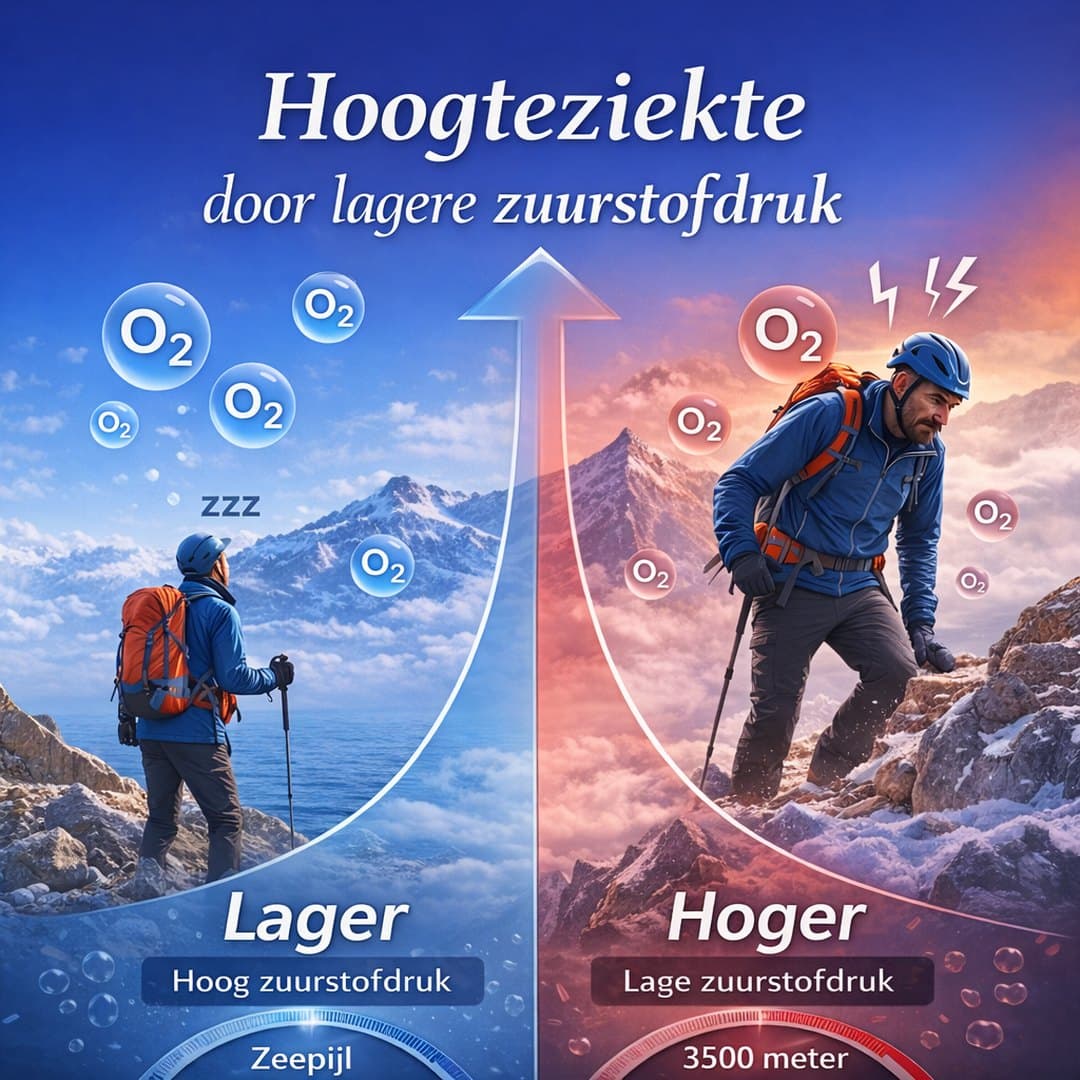
How is altitude sickness caused? At its core, altitude sickness occurs because at altitude your body takes in less usable oxygen per breath. Not because the air is suddenly only half oxygen, but because the air pressure drops. As a result, the oxygen pressure in the inhaled air drops and it becomes more difficult to transport enough oxygen from the lungs to the blood and tissues. If you rise faster than your body can adapt, symptoms arise.
Those heading into the mountains would do well to first get the comprehensive guide on altitude sickness understand. Then it becomes clearer faster why one day at altitude goes fine and the next night suddenly gives headaches, nausea or restless sleep.
Conclusion: altitude sickness occurs due to a lack of available oxygen at altitude.
Nuance: not only altitude counts, but also your ascent rate, sleep altitude and personal sensitivity.
Practical hook: those who understand the cause also make better choices around acclimatisation, rest and descent.
Short answer
- Air pressure drops at altitude, reducing oxygen pressure.
- As a result, less oxygen enters your blood per breath.
- Your body tries to compensate with faster breathing and other adjustments.
- If this adaptation does not happen quickly enough, symptoms of altitude sickness develop.
How is altitude sickness caused in brief?
Many people think that altitude sickness occurs because there is less oxygen in the air at altitude. This is just not correct. The oxygen percentage in the air remains about the same. What does change significantly is the air pressure. It is precisely this lower air pressure that makes the oxygen pressure drop. As a result, the transfer of oxygen into the lungs becomes less efficient.
You can think of it as a lower driving force. At sea level, oxygen is moved relatively easily from the inhaled air to the blood. At altitude, that pressure difference becomes smaller. Your body has to work harder to achieve the same result. At first, it often manages reasonably well. You start breathing faster and your heart rate rises. But if you climb too fast, sleep too high or are already tired, that compensatory system can fail.
This is when the classic first signs appear: headache, fatigue, reduced appetite, nausea, dizziness or poor sleep. In a more comprehensive overview of symptoms and risks of altitude sickness you can see how broad that pattern of complaints can be.
| What will change? | At sea level | At height | Consequence |
|---|---|---|---|
| Oxygen percentage in air | Almost equal | Almost equal | Not this is the main problem |
| Air pressure | Higher | Bearing | Less pressure to absorb oxygen |
| Oxygen pressure | Higher | Bearing | Reduced oxygen transport to blood |
| Load on the body | Normal | Higher | More likely to complain |
📊 Research shows
Around 3,050 metres, inhaled oxygen pressure is only slightly lower than at sea level. As a result, arterial saturation can drop noticeably on rapid exposure. This explains why sleep, exercise and further ascent can suddenly feel much heavier, even in fit travellers and athletes.
What happens in your body when you rise fast?
As soon as you get higher, your body tries to compensate for the lower oxygen availability. It does so in several ways at once. Your breathing speeds up, your heart rate goes up and your kidneys start helping to support this new balance. That response is smart, but it also takes energy. That's why many people feel less refreshed at altitude, sleep more lightly and recover more slowly.
Faster breathing
The first and most immediate reaction is to breathe faster and deeper. This helps to take in more oxygen, but for many people it feels restless. You especially notice this difference at rest and during sleep. Nighttime breathing fluctuations are quite normal at altitude and can explain why you sleep restlessly despite fatigue.
Change in oxygen transport
As less oxygen reaches the blood, less oxygen also becomes available to muscles, brain and other organs. This produces not only physical, but also cognitive effects. You may think slower, become more irritable or less able to make decisions. This is one reason why underestimated altitude sickness can be dangerous.
Fluid shifts in brain and lungs
In some people, mild symptoms do not stop there. Then the blood vessels in the brain or lungs react unfavourably to the lack of oxygen. In the brain, this can lead to swelling and neurological symptoms. In the lungs, increased pressure in the pulmonary circulation can cause fluid leakage. Then you are no longer talking about ordinary altitude headaches, but severe altitude sickness.
Why does one person get altitude sickness and another not?
That difference usually has nothing to do with character or perseverance. Nor does fitness automatically protect. Someone who trains extremely well at home may still develop symptoms faster at altitude than a less fit travelling companion. This is because altitude sickness is mainly related to individual susceptibility and the way your body reacts to hypoxia.
Key factors are:
- how fast you rise
- at what height you sleep
- how many days your body gets to acclimatise
- whether you have had altitude sickness before
- how taxing your first days are
Those who had complaints before would be wise to check their own susceptibility to altitude sickness take seriously. This is not a detail, but often the best predictor for the next trip.
⚠️ Reality check
Being top fit will help your mountain, but it will not make you immune to altitude sickness. Indeed, strong athletes sometimes climb too fast precisely because they feel good. As a result, they are more likely to exceed their body's capacity to adapt. At altitude, physiology almost always wins out over ego, experience or motivation.
What forms of altitude sickness can occur?
Altitude sickness is not an all-or-nothing story. There are gradations. This is exactly why early recognition is so important.
Acute mountain sickness
This is the most common form. It usually starts with a headache, often combined with nausea, fatigue, dizziness or poor sleep. This phase requires rest, not tough pushing through. Many problems arise because people downplay this mild form.
HACE
Severe brain involvement can cause confusion, coordination problems, drowsiness and behavioural changes. This is a medical alarm signal. Those who can no longer walk stably or respond clearly should not go higher but immediately lower.
HAPE
With severe lung involvement, you get shortness of breath at rest, a pressing sensation in the chest, marked performance fall and sometimes cough with frothy sputum. This too is an emergency situation. HAPE is one of the most dangerous complications of staying at altitude.
Common misunderstandings about the cause
Misconception 1: air at altitude contains much less than 21% oxygen
Not the percentage, but the pressure changes. As a result, oxygen pressure drops and oxygen is absorbed less effectively.
Misconception 2: You only get altitude sickness above extreme altitudes
No. The probability clearly rises from around 2,500 metres, especially if you arrive quickly and climb further immediately.
Misconception 3: If you have no complaints for the first few hours, you are safe
That too is not true. Many complaints start later, often after the first sleep at altitude or after another rise.
Misconception 4: headaches at altitude are always harmless
Headache is often the first signal, but in combination with nausea, drowsiness or loss of coordination, you need to be alert. This is when a vague signal turns into a clear warning.
This is how you monitor this lens
Those who want to prevent altitude sickness should not sail by feel alone. Objective monitoring helps to intervene earlier.
- SpO2 trend: look at the trend over multiple moments, not a single single measurement. A decreasing trend along with increasing complaints is more relevant than a single figure.
- Sleep quality: pay attention to falling asleep, waking up at night and how rested you get up. Poor sleep is often an early signal of inadequate adaptation.
- Recovery: notice that a regular staircase, short walk or light exercise suddenly feels disproportionately heavy, take it seriously.
- Symptoms: note headache, nausea, appetite, dizziness and mental acuity. It is precisely the combination of signs that is important.
A practical decision rule: if you see a worsening SpO2 trend, poorer sleep and increasing symptoms, that is no time to increase further. Then you should tread water or sleep lower.
Practical decision rules at height
- If you have a mild headache and few other symptoms, stay at the same level and give your body time.
- If symptoms do not improve after rest and an extra night, do not go higher.
- If symptoms become markedly worse, descend.
- In case of confusion, loss of coordination or shortness of breath at rest, act immediately.
If you are in doubt whether complaints are still mild, also read how to act in case of acute altitude sickness. At altitude, doubt is usually not a good reason to continue walking for another stretch.
Frequently asked questions
From what altitude can altitude sickness occur?
Usually the risk becomes relevant from around 2,500 metres. Rapid ascent increases that risk.
Is altitude sickness caused by less oxygen in the air?
Not because of a much lower oxygen percentage, but because of lower air pressure and therefore lower oxygen pressure.
Can good fitness prevent altitude sickness?
No. Good fitness helps with exertion, but does not automatically protect against altitude sickness.
What is the first signal that things could go wrong?
It often starts with headaches, worse sleep, nausea or noticeable fatigue after arriving at altitude.
Would you rather prevent altitude sickness than deal with it afterwards?
Then delve into the key prevention rules, acclimatisation principles and practical mistakes many mountain travellers make in the first few days at altitude.
Conclusion
How is altitude sickness caused? Due to falling air pressure and therefore lower oxygen pressure at altitude. Your body receives less usable oxygen per breath and therefore has to compensate. If that adjustment lags behind your rate of ascent, symptoms arise. Those who understand this mechanism will automatically ascend more calmly, monitor better and take the right decision faster. And exactly that makes the difference between a strong acclimatisation and a trip that derails unnecessarily.