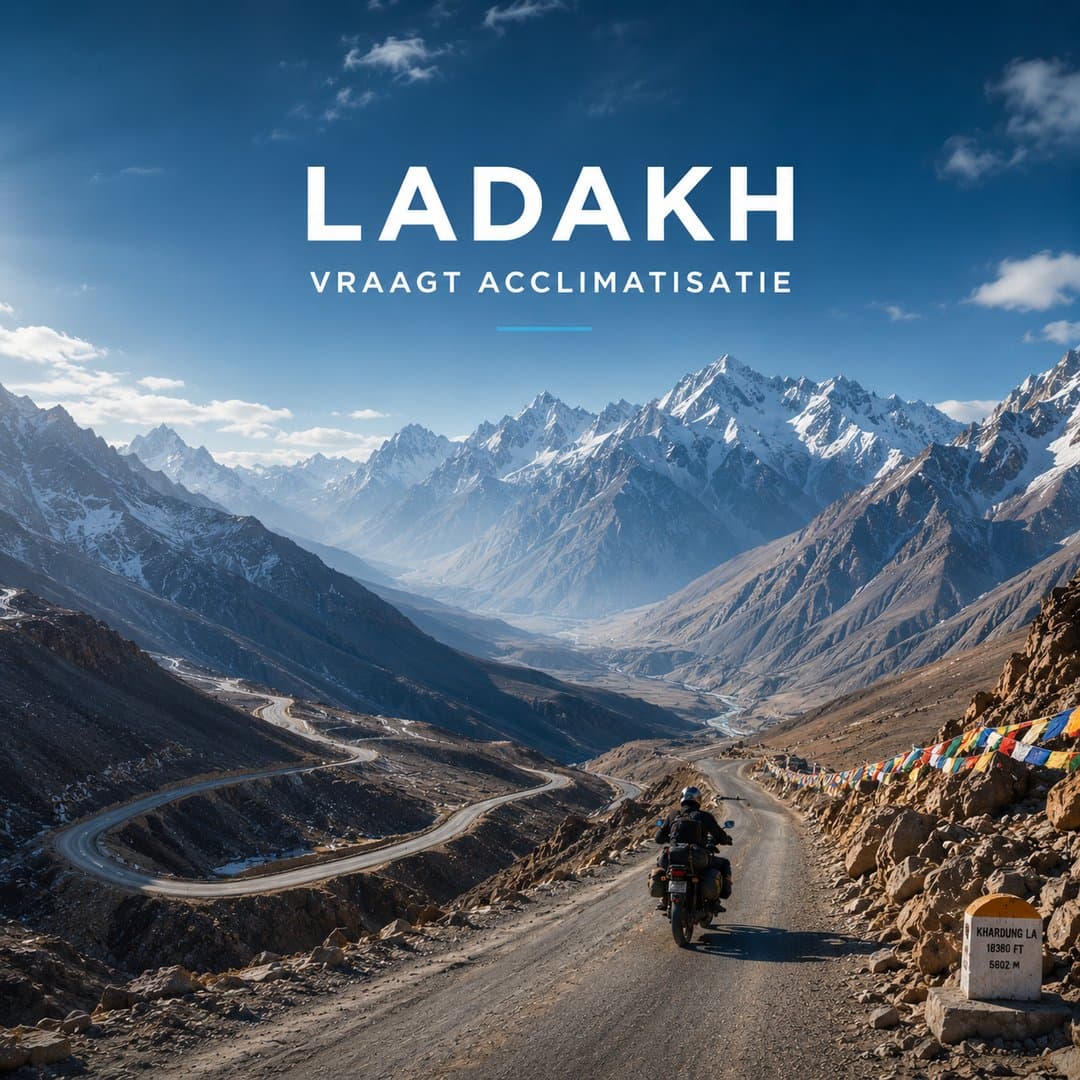
Preventing altitude sickness: complete guide – in-depth information & frequently asked questions
Published 3 January 2026 · 9 min read

Prevent altitude sickness It starts with a simple reality: your body can adapt to lower oxygen pressure, but only if you give it time. Those who ascend wisely, sleep well, recognise what is “normal” and what is not in good time, and dare to make adjustments, greatly reduce the risk of complaints. This guide provides you with more in-depth information than the basic rules: why people underestimate altitude sickness, at what altitude things can really go wrong, how to distinguish between AMS, HAPE and HACE, and what signs mean that you should descend immediately.
1. What exactly is altitude sickness and why do people underestimate it?
Altitude sickness is not a “weakness” or a tale of misfortune. It is a predictable reaction to rapid exposure to lower oxygen pressure (hypobaric hypoxia). Important detail: the oxygen percentage in the air remains roughly the same, but the air pressure drops, causing you to take in fewer oxygen molecules per breath. This slows down recovery, makes sleep more superficial and increases the effort required.
People underestimate altitude sickness for three reasons:
- The start is often deceptively good. You may feel fine during the first 24 hours at altitude, but your body will present you with the bill later on.
- Symptoms resemble normal fatigue. Headaches, poor sleep, reduced appetite: these symptoms can also be caused by jet lag, heat or a long day of travelling. As a result, genuine altitude sickness is often recognised too late.
- Peer pressure and schedules push you forward. “We have to reach that lodge” is a classic pitfall. Height punishes haste.
The key is therefore not only knowing what altitude sickness is, but above all: recognising when you need to take a break, when you need to descend, and how to structure your plan so that you rarely have to make those decisions.
2. At what height do you run a risk?
The question “altitude sickness from what altitudeThere is no magic number, but there are clear thresholds:
- Up to approximately 2000-2500 metres: Most people have few problems, although you may feel exertion more heavily.
- From approximately 2500-3000 metres: This is where the real acclimatisation game begins. The chance of symptoms of altitude sickness increases, especially if you ascend quickly or go straight to sleep at this altitude.
- Above 3,500–4,000 metres: Margin of error smaller. Sleep height and ascent rate become decisive. Here you often see the difference between “it was still okay” and “it's really not working anymore”.
- Above 5000 m: Recovery slows down, symptoms may be delayed and become more severe. An extra day of rest is often not a luxury but a prerequisite.
Would you like to specify this for each altitude zone and oxygen availability? Use the altitude-to-oxygen-table to see why the same effort at 4500 metres suddenly feels “twice as hard”.
3. The difference between AMS, HAPE and HACE (clear and understandable)
Altitude sickness is often mentioned in the same breath, but medically speaking there are three main types. They are related, but the approach differs. Below is a clear explanation, without any technical jargon.
AMS (Acute Mountain Sickness)
AMS is the most common form. Think of it as a “high altitude hangover”: headache with one or more symptoms such as nausea, dizziness, sleep disturbance, fatigue and reduced appetite. Important: AMS is a sign that your acclimatisation is lagging behind your ascent rate.
What you do then:
- Do not continue climbing as long as symptoms persist.
- Rest, warmth, moisture and light food.
- Reassess after 12-24 hours. If it is improving, you may proceed with caution. If it is worsening, it is advisable to descend.
HAPE (High Altitude Pulmonary Oedema)
HAPE is fluid accumulation in the lungs due to altitude. This is none “Normal shortness of breath”. The red flag is: you become short of breath at rest, you have an increasing (often wet-sounding) cough, you feel pressure on your chest, and your performance drops noticeably. Sometimes you may also see a greyish colour, blue lips or extreme fatigue.
What you do then:
- Descend immediately (preferably with assistance).
- Oxygen if available.
- Medical assessment as soon as possible.
HACE (High Altitude Cerebral Edema)
HACE is swelling in the brain caused by altitude and is life-threatening. It often starts as severe AMS that progresses. Classic warning signs: confusion, unsteady walking (ataxia), drowsiness, behavioural changes, hallucinations. The danger is that the person themselves can no longer properly assess how bad their condition is.
What you do then:
- Descend immediately (no discussion).
- Oxygen and medical assistance, emergency medication only as part of a serious emergency plan.
For those who want more medical detail: UIAA Mountain Medicine has clear guidelines on field recognition and emergency management of AMS, HAPE and HACE. See: UIAA MedCom guideline (PDF) and the summary Emergency field management.
4. Why fitness does not protect you from altitude sickness
One of the most persistent misconceptions: “I'm fit, so I won't get altitude sickness.” Fitness does help you suffer less from exertion, but it does not protect you from the mechanism behind AMS, HAPE or HACE. Altitude sickness is primarily about:
- how quickly you climb (especially at cruising altitude)
- how sensitive you are physiologically to hypoxia (individual)
- how well you recover (sleep, nutrition, hydration)
In practice, we see that fit athletes sometimes take extra risks: climbing faster, running harder, taking fewer rest days. And that is precisely the recipe for problems. A smart schedule beats a strong schedule.
5. The role of ascent rate, sleep altitude and recovery
If you take one principle away from this guide, let it be this: sleep height is leading. During the day, it is best to apply the principle of “climb high, sleep low”, but your body mainly adapts during rest and sleep. Sleeping too high, too quickly in succession, is the most common cause of complaints.
Practical guideline: how to build safely
Above roughly 2500-3000 metres, you want to be conservative. A useful rule of thumb for many hikers:
- maximum 300-500 m ascent in sleeping height per day
- every 1000 m an extra acclimatisation day
These guidelines are set out in detail in What is a normal acclimatisation rate per 1000 metres? and form a solid foundation for those who acclimatise for 4000m or acclimatise for 5000 metres plant.
Sleeping at altitude: why it often goes wrong
Sleeping at altitude For many people, this is the first time they really notice hypoxia. Your breathing changes, you wake up more often, you feel restless, and the next day you feel increasingly tired. Poor sleep is not only unpleasant, it is also a risk factor: less recovery means less acclimatisation capacity.
Three practical points:
- Do not plan your most strenuous day immediately after a significant increase in altitude. First stabilise.
- Take sleep problems seriously if they are accompanied by headaches and nausea.
- Staying warmCold weather exacerbates stress and can make your breathing more irregular.
6. Common misconceptions about altitude sickness
- “Drinking plenty of fluids prevents altitude sickness.” Adequate hydration is wise, but overhydration does not solve acclimatisation. The key remains pace and sleep altitude.
- “If I don't have a headache, it's not altitude sickness.” Headache is often the first symptom of AMS, but HAPE can also start with shortness of breath and coughing.
- “Just hang in there, tomorrow it will be gone.” Sometimes that is true for mild symptoms and with plenty of rest, but if the symptoms worsen, persevering is exactly the wrong thing to do.
- “I have already been to 3,000 metres, so 5,000 metres should be fine too.” Every new altitude zone requires readjustment. The body does not automatically “save” that acclimatisation for months on end.
7. Frequently asked questions (FAQ, in-depth)
How quickly can altitude sickness develop?
Often within 6 to 24 hours after a rapid rise, sometimes later. That is why people still feel fine upon arrival and only develop symptoms at night or the next day. The insidious thing is the delay.
What are the most common symptoms of altitude sickness?
With AMS: headache, nausea, reduced appetite, dizziness, poor sleep, noticeable fatigue. A useful additional source of general prevention tips is the NHS page on altitude sickness: NHS altitude sickness.
Does medication help prevent altitude sickness?
For some travellers, medication may be part of a plan, but it is not a substitute for acclimatisation at altitude. Furthermore, it requires medical consideration (side effects, contraindications, target altitude, ascent profile). The CDC Yellow Book section on high altitude travel discusses prevention and treatment options in context: CDC Yellow Book – altitude sickness. Always discuss this with a doctor who is familiar with high altitude medicine.
Is “climb high, sleep low” always better?
It is often effective, but only if the total load is right. Walking higher during the day and sleeping lower can stimulate acclimatisation, but if you stay too high for too long or exercise too intensively, you will exhaust yourself and still sleep poorly. It is a tool, not a licence.
What if I only have a few days?
Then the most important question is: can you adjust your plan (add a rest day, shorten a stage, choose a lower overnight stay)? If that is not possible, risk management becomes even more important. In that scenario, more and more mountain travellers are opting for pre-acclimatisation, so that the first few days are less of a “shock”. See also our explanation about acclimatising at home: acclimatize at home to the height.
How do I know when to stop climbing?
A simple rule: with symptoms no higher. If symptoms remain stable or improve after rest, you can sometimes continue. If symptoms increase, that is a stop sign. If you experience shortness of breath at rest, confusion or unsteadiness when walking, that is not a matter of “doubt”, it is a matter of action.
8. When should you descend? Red flags
This is the part you hope you will never need, but you want to be clear about it in advance. Descending is not a failure. It is the right decision at the right time.
Red flags: take immediate action
- Shortness of breath at rest, increasing cough, chest pressure (think of HAPE)
- Confusion, drowsiness, strange behaviour, hallucinations (think of HACE)
- Unsteady gait or loss of coordination
- Complaints that quickly worsen despite rest and a night at the same altitude
If you notice any of these signs, stop, organise a descent, use oxygen if available, and seek medical help. In its field guidelines, the UIAA emphasises that if in doubt, altitude sickness should be the first diagnosis and only then should alternatives be ruled out. See: UIAA emergency field management.
9. How altitude training and pre-acclimatisation can help
Acclimatising on the mountain remains the basis. But in practice, not everyone has the luxury of extra days, or wants to reduce the risk of dropping out in the first 72 hours. This is where pre-acclimatisation comes in: controlled adaptation to hypoxia before departure.
For those who want to prepare well for a serious high-altitude zone, sleeping in hypoxia can give you a meaningful head start. Our practical advice for a high-altitude tent programme:
- At least 4 weeks
- Maximum 6 weeks
The exact structure depends on your target altitude, experience and recovery. If you are heading for very high altitudes, where the margin for error is small, be sure to read: acclimatise for 6000m.
10. Summary: how to minimise risk as much as possible
- Understand the altitude zone where you are coming from (use the altitude-to-oxygen-table).
- Respect sleeping height: build conservatively, especially above 3000 metres.
- Recognise symptoms of altitude sickness Ask early and do not escalate complaints.
- Know AMS HAPE HACE and remember the red flags.
- Recovery planPoor sleep is a signal, not a detail.
- Dare to make adjustmentsAn additional night's rest is often the difference between continuing and turning back.
More and more mountaineers are choosing to professionalise their preparation, especially if the schedule is tight or if it is their first time above 4000-5000 m. Would you like to know which training programme is best suited to your goal? Then start with the guidelines for acclimatise for 4000m and acclimatise for 5000 metres, and then continue on to acclimatise for 6000m if your route or expedition requires it.
For those who want to be well prepared and start a trek or expedition with greater peace of mind, pre-acclimatisation at home can be a valuable addition. Read, for example, how this works in practice in acclimatize at home to the height.