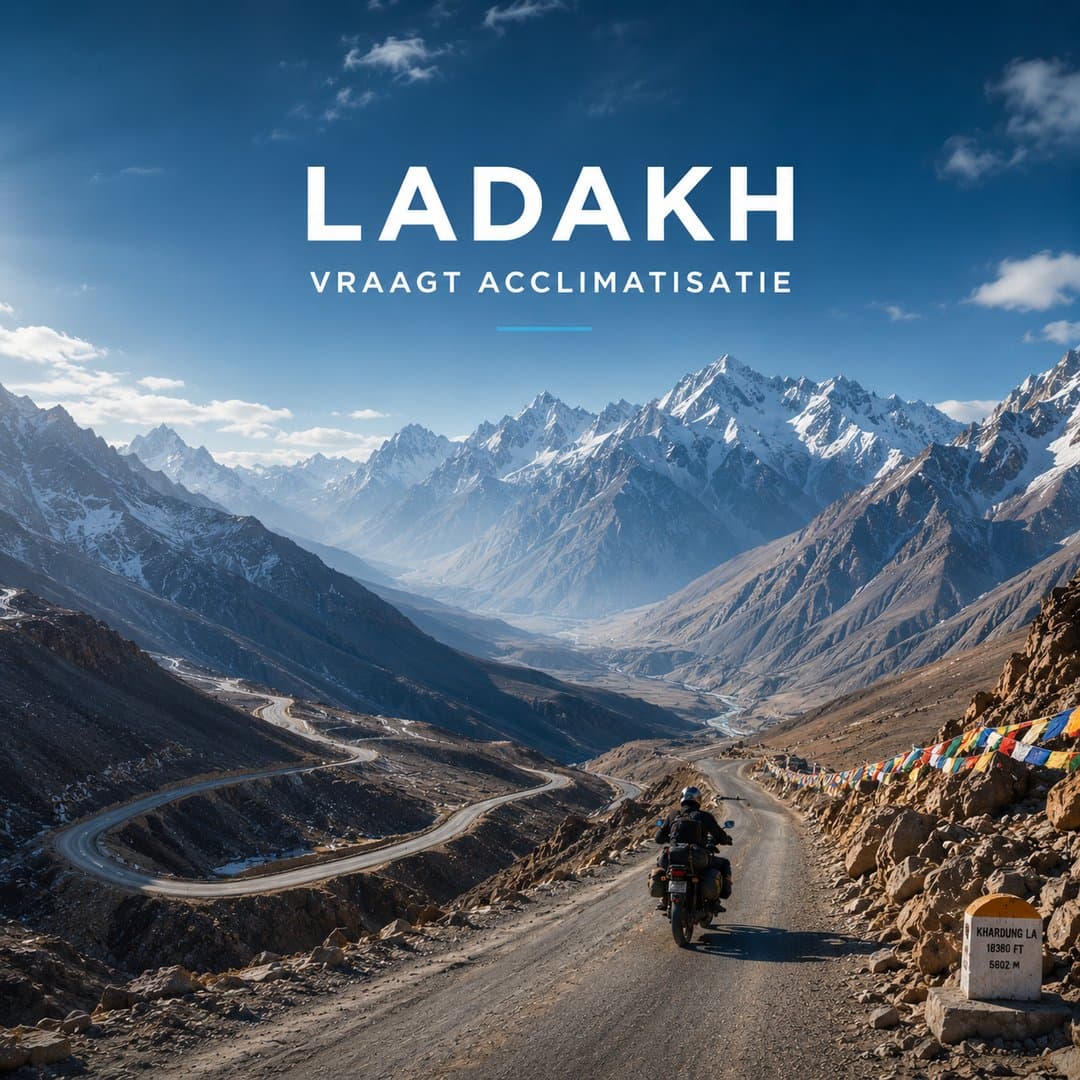
Risk of altitude sickness: how high is your chance really?
Published 22 March 2014 · 10 min read
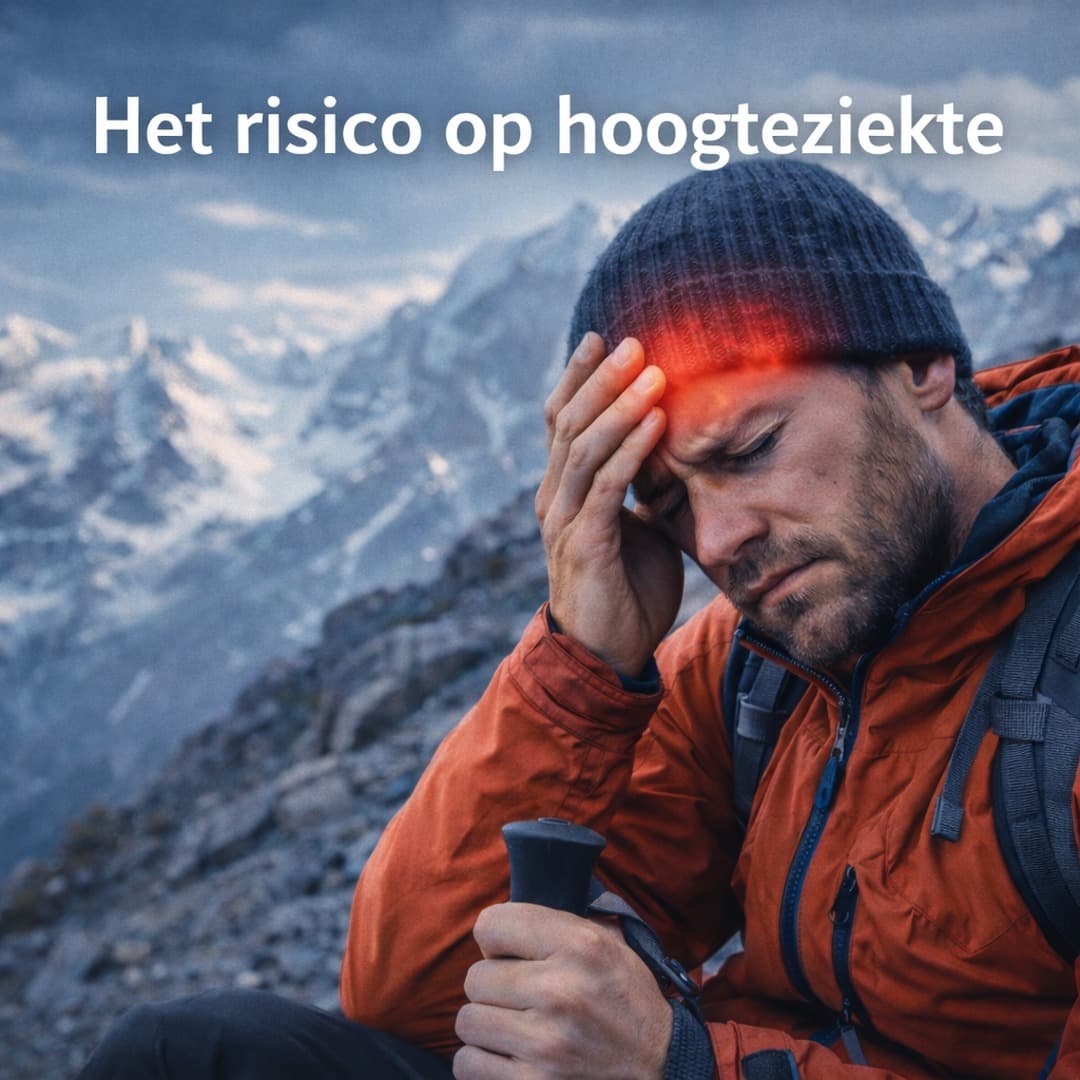
The risk of altitude sickness is greater and less predictable than many mountain travellers think. It is not only extreme expeditions that are at risk. Even a trek, skiing holiday or quick trip to a mountain village can be enough to trigger symptoms, especially if you ascend too quickly and go straight to sleep high up. In this article, you will read which factors really determine your risk of altitude sickness, how to rationally assess your plan and when extra preparation is wise.
Those who build their schedule smartly can significantly reduce the risk. That is why we look not only at altitude, but especially at sleeping height, ascent rate, previous experience and practical signs along the way. For a broader basis, you can also read our guide on preventing altitude sickness include.
Your risk of altitude sickness depends mainly on four things: how high you sleep, how fast you ascend, whether you had previous symptoms and how much recovery you allow on the way. For many people, the real risk does not start only at extreme altitude, but from around 2,500 metres when an overnight stay at altitude follows.
- Rapidly rising to a high sleeping height increases the risk the most.
- Fitness hardly protects against altitude sickness.
- Rising further with complaints is the mistake that most often exacerbates problems.
Conclusion: the risk of altitude sickness is mainly determined by sleep altitude and pace, not how athletic you are.
Nuance: The same route may feel trouble-free for one person and too aggressive for another.
Practical hook: So assess your plan on overnight stays, rest days and previous altitude experience, not ambition alone.
When are you at risk of altitude sickness?
The most important threshold is not the summit you briefly touch during the day, but the altitude at which you stay and especially sleep. International travel medicine guidelines describe that unacclimatised travellers are already at risk from a sleeping altitude around 2450m, while that risk increases markedly when the first overnight stay is higher or the ascent thereafter is too rapid. Therefore, a cable car ride or day hike is rarely the real issue. It only becomes really relevant once your body has to recover for hours or an entire night with less oxygen.
The old version of this article rightly emphasised altitude bands and predisposition, but lacked a concrete decision framework for the reader. That framework starts with a simple question: at what altitude do you sleep the first night, and how many metres does that sleeping altitude rise the following days?
| Height zone | Practical interpretation | What this means for your plan |
|---|---|---|
| Up to 2500 m | For most people, limited risk, though exertion can feel heavier. | Usually not a big problem, but beware of rapid arrivals from sea level and sensitive travellers. |
| 2500 to 3000 m | This is where the real acclimatisation game begins. | A first overnight stay in this zone already requires calm, mild pace and honest symptom control. |
| 3000 to 4000 m | Risk rises quickly if sleep height and ascent rate are not right. | Plan conservatively. Small mistakes in daily schedule here are quickly felt in sleep and recovery. |
| Above 4000 m | The margin of error becomes small and recovery is slower. | Extra rest days, tight monitoring and a plan B are not a luxury but a basic requirement here. |
Interpretation: limited risk for most people, but exertion can already feel markedly heavier.
Practical significance: especially watch out for rapid arrivals from lowlands and for travellers who had previous complaints.
Interpretation: this is often the first zone where acclimatisation really counts.
Practical significance: Build in rest and take a first night at altitude seriously, even if you still feel fine during the day.
Interpretation: Risk increases rapidly when sleep height and pace are not well matched.
Practical significance: This is where your plan should be leading, not your enthusiasm or peer pressure.
Interpretation: recovery slows down and the margin of error becomes small.
Practical significance: Extra calm, clear decision rules and a conservative structure are essential here.
What factors really determine your risk of altitude sickness?
The core is surprisingly consistent. Topical guidelines mainly mention previous altitude complaints, maximum and especially initial sleep altitude, rate of ascent and degree of exertion as key risk factors. This is very much in line with the direction of the existing page, but gives more guidance than a loose list.
Clearly increases your risk
- Instant high sleep without an intermediate step
- Rapid ascent above 3,000 metres
- Previous AMS, HAPE or HACE
- Heavy exertion in the first few days
- Pushing on despite headache, nausea or poor sleep
Often gives false security
- An excellent condition
- A strong marathon or cycling background
- Having been problem-free at lower altitude once before
- Thinking your complaints will “walk away”
- Only looking at the top and not sleeping height
Those who want to understand more deeply why this happens physiologically can read our explanation of how altitude sickness is caused. This especially helps to understand why the body often does not react to an overly aggressive rise until hours later.
Practice interpretation: the best predictor for your next trip is not your VO2max, but how you reacted at similar altitudes before. If you had rapid symptoms on a previous trip, that is not a coincidence but valuable information for your new planning.
What determines your risk less than many people think?
One of the most persistent misconceptions is that fit people are automatically safer. Precisely this is often not true. Travel medicine sources stress that training and physical fitness do not substantially reduce the risk of altitude sickness. In fact, they can cause a person to go harder than recovery allows. Gender also plays little role. Children are about as susceptible as adults, while people over 50 sometimes actually seem to have a slightly lower risk.
For families, this is especially important. Young children often cannot properly name their symptoms. Loss of appetite, irritability, worse sleep or unexplained listlessness after a rapid rise then deserve more attention than adults sometimes think.
Condition
Being well-trained helps with performance, but hardly protects against the mechanism behind altitude sickness.
Gender
Being male or female usually changes the risk little. Planning remains much more important.
Children
Children are not automatically safer. The problem is mainly that signals are less clearly expressed.
When is your risk really low, medium or high?
A useful way of thinking is not in black and white, but in risk profiles. This allows you to assess your trip plan even before you leave.
Quick decision rule
Low risk: your first overnight remains relatively moderate, you rise calmly after that and you had few complaints before.
Medium risk: you sleep pretty high the first night or you have little room for rest days.
High risk: you must sleep directly above about 3400 metres, then ascend rapidly, or you had obvious altitude complaints before.
This is exactly why two travellers on the same route can still have different risk profiles. The route is the same, but the combination of sleep elevation, pace, history and recovery capacity differs.
Here's how to reduce the risk of altitude sickness in practice
The good news is that risk is rarely completely random. Those who build their plan rationally remove a lot of uncertainty from the process. The most useful prevention rules come up again and again: don't sleep high too fast, take smaller steps above 3,000 metres, build in extra rest days and don't train or party aggressively in the first 48 hours.
Step 1 - Look at your first sleeping height first
Ideally, do not go from lowland to a very high overnight in one day. That first night in particular often determines how hard the body comes under pressure.
Step 2 - Build above 3,000 metres conservatively
A practical rule of thumb is to raise sleeping height only slightly and schedule an extra adjustment day for every extra 1,000 metres.
Step 3 - Keep calm for the first 48 hours
Avoid heavy training stimuli, long hero-eating sessions and alcohol. That combination makes it much harder to read signals properly.
Step 4 - Never move on with obvious complaints
Mild complaints usually call for resting at the same level. Increasing complaints call for adjusting or declining, not showing character.
Step 5 - Think about your emergency scenario in advance
Who decides, who observes and what do you do if someone becomes distressed, confused or unsteady? You want to have that clear upfront.
For readers who want to pay particular attention to early signs, our page on symptoms and risks of altitude sickness a logical deepening.
Common misconceptions about risk of altitude sickness
“I'm fit, so I'll be safe”
No. Fitness does help you move faster, but not automatically acclimatise smarter. As a result, a strong athlete can actually get into trouble faster.
“If I don't have a headache, there's nothing wrong”
Headache is often an important early signal, but not the only one. Chest tightness at rest, unsteady gait or confused behaviour are much more serious alarm signals.
“A bad night is just part of it”
Poor sleep at altitude is not strange, but it is relevant information. Those who sleep poorly, wake up tired and develop other symptoms at the same time are often not in a good adjustment zone.
“I have little time, so I just have to get on with it”
Time pressure is one of the most underestimated risk factors. Not because time is dangerous per se, but because it leads to excessive sleep elevation and poor recovery.
This is how you monitor this lens
Good monitoring prevents you from sailing by feel alone. Therefore, do not look at one single measurement or one bad moment, but at a pattern.
- SpO2 trend: look at the line over several mornings, not one absolute number. A downward trend along with more complaints says more than an isolated low reading.
- Sleep quality: watch for falling asleep, frequently waking up, stuffy wake-up calls and feeling like you are not recovering.
- Recovery: Assess appetite, energy, step feeling and how heavy normal exercise feels.
- Symptoms: headache, nausea, dizziness, unusual fatigue and marked shortness of breath at rest count more heavily than bravado.
- Decision rule: with obvious complaints no higher. If worsening, do not hope, but act.
Reality check: SpO2 is useful, but only as a trend. A tidy reading with no good sleep and no recovery is not a licence to rise faster. Conversely, a slightly lower reading without complaints is not automatically an emergency.
When should you slow down or descend?
This is precisely where an article becomes truly decision-supportive. Many travellers know that altitude sickness exists, but do not have a clear boundary for action. Therefore, use the distinction below.
Not going any higher
Mild headache, mild nausea or bad night without serious alarm signals. Stay at the same level and reassess later.
Adjust
Complaints persist, recovery fails or your trend worsens. Delete altitude gain, add a rest day or sleep lower.
Descend
Chest tightness at rest, wet cough, confusion, drowsiness or unsteady gait. These are not cases of doubt but alarm signals.
Those who also want to know beforehand what you practically do at such a moment can then read further about how to deal with acute altitude sickness.
When is extra preparation wise?
Not every mountain trip requires the same preparation. A relatively quiet trek with low initial overnight stays requires a different plan than a schedule where you have to sleep high in few days. Extra preparation is especially logical in four situations:
- you have few days and little margin for error
- Your first sleeping height is immediately quite high
- you had obvious height complaints earlier
- the trip is important enough that failure has major consequences
In such cases, pre-acclimatisation at home can be useful. Not as a replacement for real acclimatisation on the mountain, but as controlled, measurable and plannable support. By doing so, you often reduce the shock of the first few days and start less blank.
Want to smartly reduce risk before you leave?
If you have few acclimatisation days or know you need to sleep high soon, delve into a plannable preparation at home. This is especially helpful when security and taxability are important.
Read more about home acclimatisation for mountain expeditions
Conclusion
The risk of altitude sickness is not a lottery. It usually results from a combination of too rapid altitude gain, too high a sleep altitude, insufficient recovery and individual susceptibility. Therefore, the most important question is not whether you are strong enough, but whether your plan is smart enough.
Those who assess their route on overnight stays, rest days, trend monitoring and clear stopping rules take a lot of uncertainty out of the process. And that's exactly where the profit lies: not in acting tough at altitude, but in sober planning before altitude starts determining your pace.
FAQ
From what altitude does the risk of altitude sickness start?
For many unacclimatised travellers, the relevant risk starts from around 2450 to 2500 metres, especially if you also sleep there.
What is the main risk factor?
The combination of high sleeping altitude and ascending too fast is usually more important than fitness or motivation.
Am I safer if I am very fit?
No. Fitness helps with performance, but hardly protects against altitude sickness and may even lead to overestimation.
Are children less prone to altitude sickness?
No. Children are about as sensitive as adults, but their symptoms are often harder to spot.
When should I descend immediately?
In case of tightness at rest, wet-sounding cough, confusion, drowsiness or unsteady walking, you should descend and organise help.