Pulmonary oedema altitude sickness: symptoms, causes and when to act
Published 18 February 2026 · 3 min read
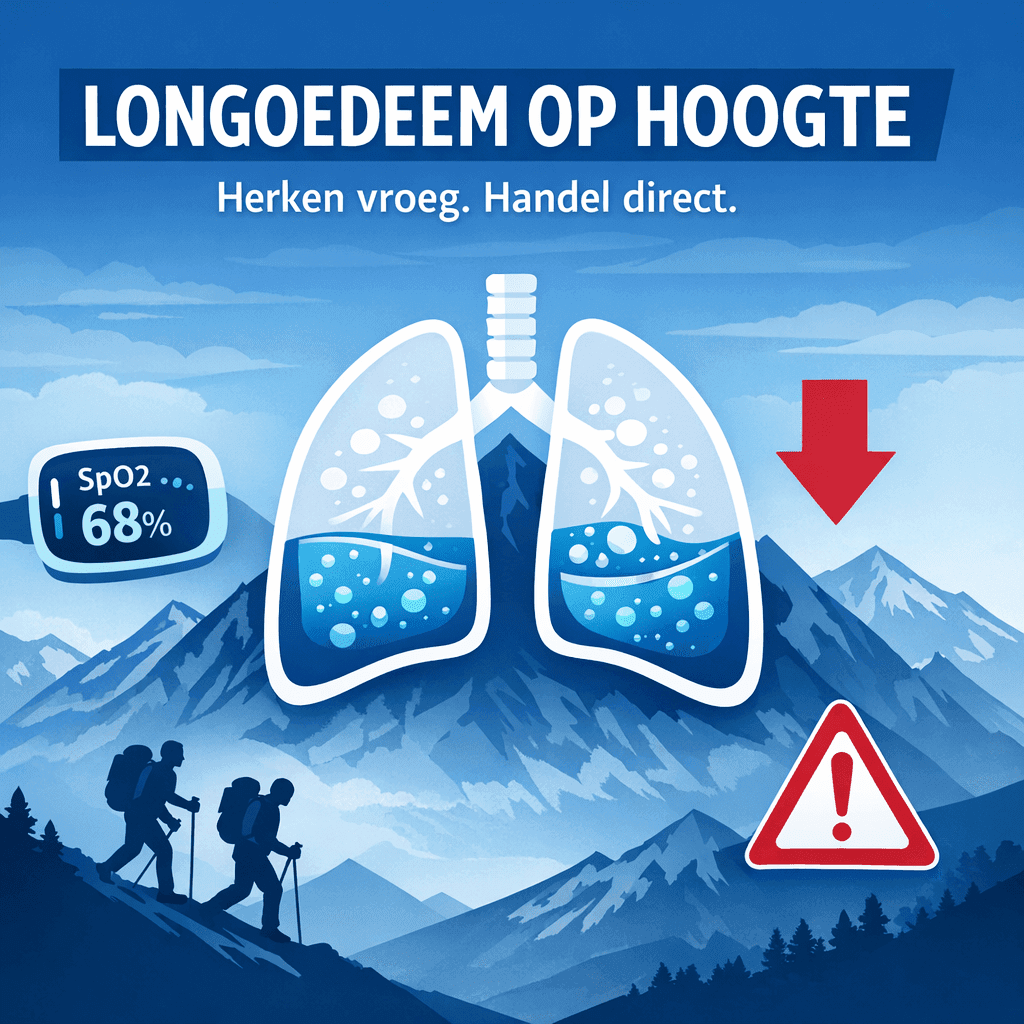
Pulmonary oedema altitude sickness is a rare but potentially life-threatening complication of staying at altitude. It occurs when fluid builds up in the lungs due to lack of oxygen. The good news: those who recognise the signs early and act in time can almost always prevent serious damage.
In this article, you will read exactly what altitude pulmonary oedema is, how it differs from ordinary altitude sickness and especially when you should descend immediately.
What exactly is pulmonary oedema altitude sickness?
Pulmonary oedema altitude sickness, also known as High Altitude Pulmonary Edema or HAPE, is a complication of altitude sickness. It usually occurs above 2,500 metres, but the risk increases markedly above 3,500 metres.
Lack of oxygen causes small blood vessels in the lungs to contract. This increases pressure in parts of the pulmonary circulation. This leads to leakage of fluid into the alveoli of the lungs. This fluid hinders oxygen uptake. This creates a dangerous vicious circle.
Important: HAPE is neither an infection nor heart failure. It is a response to hypoxia.
Why is pulmonary oedema altitude sickness often recognised too late?
Many mountain athletes first think of fatigue or colds. This is understandable. The first symptoms are subtle.
But this is precisely where the danger lies. Early recognition determines the outcome.
The first symptoms of HAPE
- Unusual shortness of breath on mild exertion
- Persistent dry cough
- Faster heart rate than expected
- Reduced exercise tolerance
- Declining SpO2 trend over several days
⚠️ An important signal is when someone suddenly cannot keep up at a pace that was not a problem before.
Advanced symptoms
- Shortness of breath at rest
- Wet or roaring breathing
- Pink frothy sputum
- Blue discolouration of lips or nails
- Extreme fatigue or confusion
This is a medical emergency. Immediate descent is then necessary.
What causes pulmonary oedema altitude sickness?
The core mechanism is uneven vasoconstriction in the lungs due to hypoxia. Some lung areas constrict more strongly than others. This locally increases pressure.
This increases the risk of leakage of fluid into the alveoli of the lung.
Risk factors:
- Rapid ascent without acclimatisation
- Previous HAPE episode
- Intense exertion shortly after arrival at altitude
- Cold or respiratory infection
- Cold exposure
Also read our comprehensive guide on altitude sickness symptoms and risks.
How is HAPE different from ordinary altitude sickness?
Ordinary acute altitude sickness causes headache, nausea and sleep problems. HAPE affects lung function.
When in doubt: breathing problems at altitude should always be taken seriously.
This is how you monitor this lens
Objective monitoring prevents underestimation.
- SpO2 trend: look at decline over 2-3 days, not one single measurement.
- Sleep quality: Suddenly worse sleep with nocturnal shortness of breath is a warning sign.
- Recovery feeling: increasing fatigue despite rest day requires alertness.
Decision rule: combination of decreasing SpO2 trend AND increasing shortness of breath on light exertion means descending.
You can read more about oxygen measurements here: oxygen saturation at altitude.
When should you act immediately?
Immediate descent at:
- Shortness of breath at rest
- Wet cough or frothy sputum
- Rapid deterioration within 24 hours
Supplementary oxygen or a pressure bag can stabilise temporarily. But descending remains the definitive treatment.
See also: how to deal with acute altitude sickness.
Can pre-acclimatisation reduce risk?
Yes, a structured pre-acclimatisation programme significantly reduces the risk.
An altitude tent works via normobaric hypoxia. You lower the oxygen percentage, not the air pressure. Sleep is the primary stimulus. By building up incrementally and adjusting SpO2-controlled, the body can adjust in a controlled way.
Important: an altitude tent is no substitute for acclimatisation on the mountain, but it significantly reduces the risk of altitude sickness.
Read more here acclimatising at home for mountain expeditions.
Who is at increased risk?
- Fast risers above 3,500 metres
- Participants in Kilimanjaro with short routes
- Expeditions above 5,000 metres
- People with previous HAPE
Decision aid at a glance
- Slight shortness of breath on exertion? Extra rest and monitors.
- Deterioration despite rest? Do not rise further.
- Shortness of breath at rest? Descend immediately.
In conclusion
Pulmonary oedema altitude sickness is rare but serious. The key is early recognition and rational action.
Those who invest in a good acclimatisation plan beforehand significantly increase their margin of safety.
Going above 5,000 metres?
View here Our pre-acclimatisation packages for 5000m.
Or read altitude tent experiences of other climbers: