What to do in case of acute altitude sickness?
Published 27 August 2014 · 3 min read
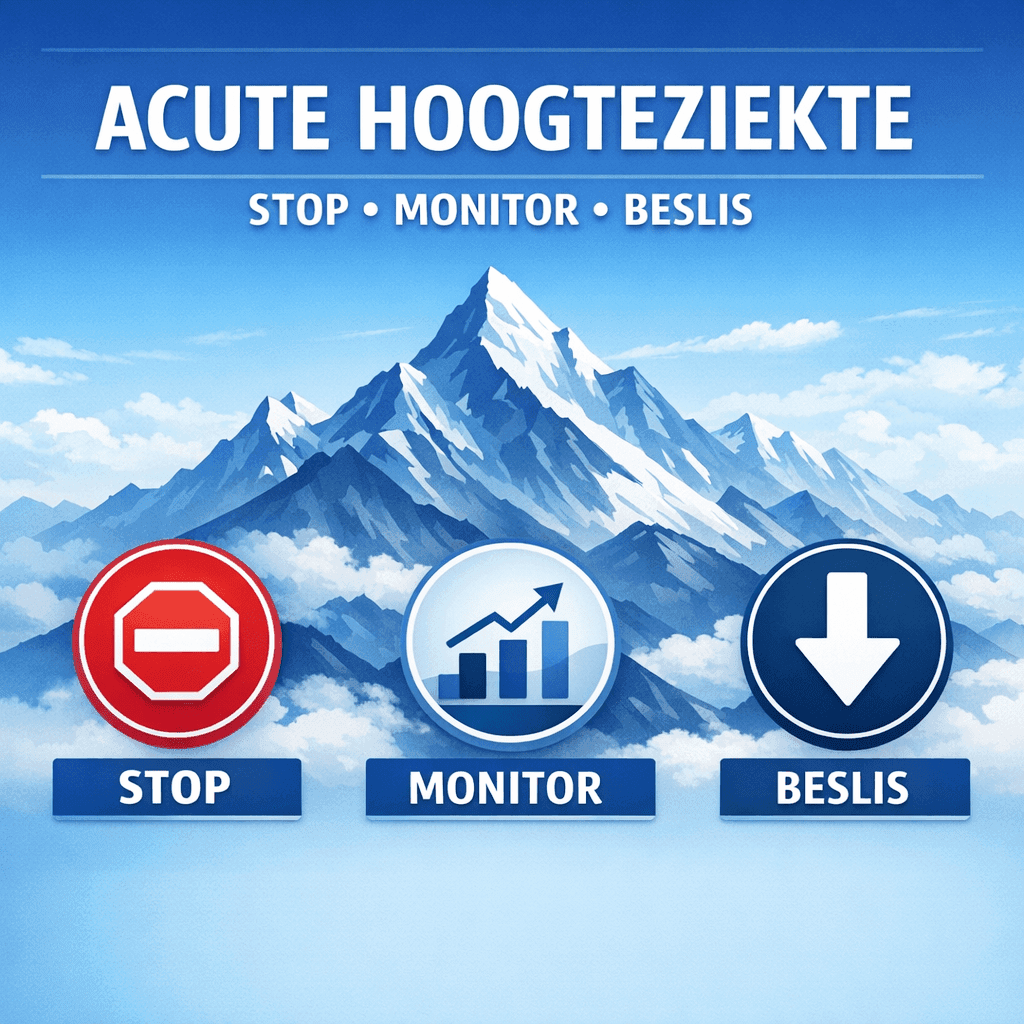
Acute altitude sickness requires immediate and correct action. Those who develop symptoms such as headaches, nausea or extreme fatigue above 2,500 metres should stop ascending and assess their situation objectively. Waiting too long or minimising symptoms is the biggest mistake mountain hikers make.
In this article, you will read step by step what to do in case of acute altitude sickness, when descent is mandatory and how to significantly reduce risks in advance.
What exactly is acute altitude sickness?
Acute altitude sickness, also known as AMS, results from rising to altitude too quickly, giving the body insufficient time to adjust to lower oxygen pressure.
You can read more background on physiology in our comprehensive guide on altitude sickness.
The gist: the body receives less oxygen, ventilation increases, but compensation lags. As a result, symptoms arise.
The essentials in 30 seconds
- Stop rising further immediately
- Assess complaints objectively
- Improve hydration and rest
- Are complaints not dropping within 24 hours? Descend
- Do symptoms worsen? Descend immediately
Continuing to rise with complaints is never justified.
Symptoms of acute altitude sickness
Most common symptoms:
- Headache
- Nausea or decreased appetite
- Sleep disorders
- Dizziness
- Unusual fatigue
More details can be found in our page on altitude sickness symptoms and risks.
Important: headache in combination with at least one other symptom is diagnostic for AMS.
Why people respond late
Many climbers underestimate early signs. They attribute headaches to dehydration or fatigue. Group pressure also plays a role. No one wants to be the reason that schedules have to be changed.
But acute altitude sickness is not a mental issue. It is physiology.
Step by step: this is how to act in case of acute altitude sickness
1. Stop rising
Stay at the same altitude for at least 24 hours.
2. Rest and optimise basic factors
Hydration, sufficient calories and warmth are essential.
3. Monitor objective
Use a saturation gauge, but always look at trends. An isolated value says little.
4. Decide on descent in good time
No improvement within 24 hours or deterioration? Descend at least 500 to 1,000 metres.
When is it dangerous?
Warning signs of more serious forms such as HACE or HAPE:
- Confusion
- Ataxia
- Extreme shortness of breath at rest
- Pink frothy sputum
These are medical emergencies. Immediate descent is mandatory.
This is how you monitor this lens
Decisions at altitude must be measurable.
- SpO2 trend: Does the saturation drop structurally or does it remain stable?
- Sleep quality: multiple nights of poor sleep predict deterioration
- Recovery feeling: does your energy level improve after rest day?
Decision rule: Two parameters deteriorate at the same time? Don't ascend. Consider descending.
Also read how oxygen saturation behaves in our explanation of oxygen saturation at altitude.
How do you reduce the risk of acute altitude sickness in advance?
Slow ascent remains the gold standard. But pre-acclimatisation can strengthen your preparation.
An altitude tent works via normobaric hypoxia. You sleep in a controlled low-oxygen environment so ventilatory adaptation starts even before departure.
Important: an altitude tent does not replace acclimatisation, but it significantly reduces the risk of altitude sickness.
- Sleep is the primary stimulus
- Building up step by step
- SpO2 controlled adjustment
Read more in our guide on acclimatising at home for mountain expeditions.
Conclusion
Acute altitude sickness requires sober, objective action. Stop rising. Monitor trends. Is improvement dropping out or worsening? Descend.
Height is wonderful. But only if you respect physiology.