Preventing altitude sickness: symptoms by altitude zone (2000-3000-4000 m)
Published 15 January 2026 · 4 min read
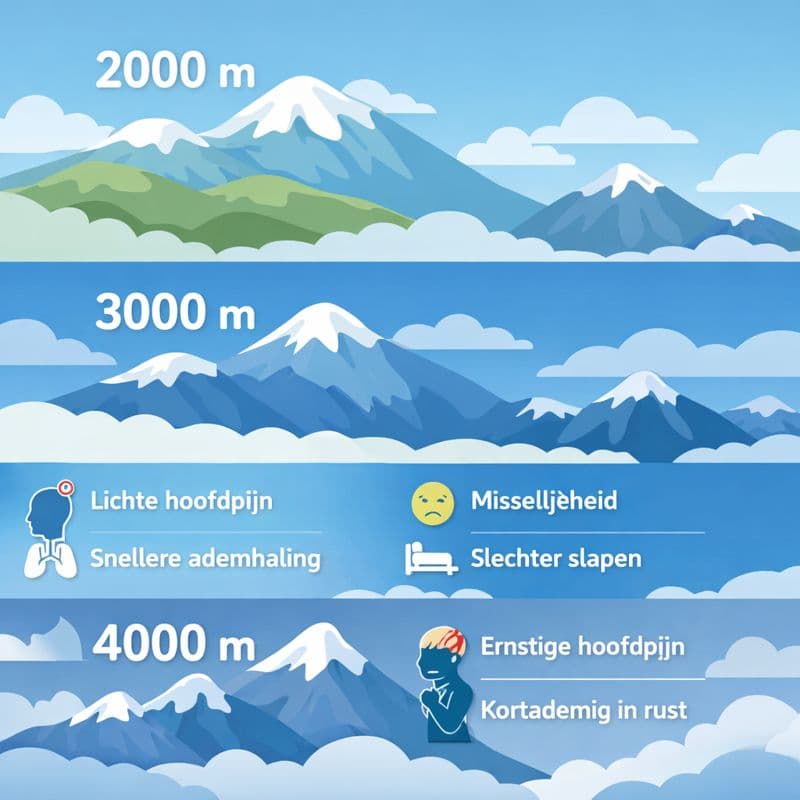
Preventing altitude sickness starts with recognising what your body is doing at altitude. Many athletes and mountain travellers experience subtle to obvious symptoms as early as between 2000 and 4000 metres, often without realising that these are early signs of altitude sickness. By understanding for each altitude zone which symptoms are normal, which warning signs require attention and how to practically anticipate them, you significantly reduce the risk of serious problems.
In this article, you will read how altitude sickness develops per altitude zone, the physiological processes behind it and what you can do concretely to prevent altitude sickness. The focus is on insight, nuance and applicability for anyone who wants to go to altitude safely and well prepared.
What is altitude sickness and why does it occur?
Altitude sickness, also known as Acute Mountain Sickness (AMS), occurs when the body cannot adjust sufficiently to lower oxygen pressure. With increasing altitude, available oxygen decreases, causing organs and muscles to absorb less oxygen. This requires adjustments in breathing, heart rate and blood production.
When this adjustment has to take place too quickly, a mismatch between oxygen supply and demand occurs. The result is a range of symptoms that vary from person to person and altitude zone to altitude zone. You can read more background on this process in the extensive pillar article on preventing altitude sickness.
Symptoms of altitude sickness by altitude zone
2000 metres: the beginning of physiological stress
Around 2000 metres, the acclimatisation process starts for almost everyone. Most people still function smoothly here, but subtle signs are not uncommon.
- Slightly short of breath on exertion
- Faster heart rate at rest
- Slight headache at the end of the day
- Restless sleep
These symptoms are usually harmless and often disappear after one or two days. However, they are an important signal that the body needs to shift gears. Understanding oxygen availability by altitude helps with this. Consult the height-to-oxygen table.
3000 metres: clear acclimatisation requirements
Above 3,000 metres, the strain increases noticeably. This is where mild altitude sickness occurs more often, especially during rapid ascent.
- Persistent headache
- Nausea or decreased appetite
- Dizziness
- Sleep problems with frequent waking
- Faster fatigue on light exertion
This is the point where rest days, hydration and controlled elevation become crucial.
4000 metres: increased risk and vigilance
From 4,000 metres, the risk of more severe forms of altitude sickness increases. Symptoms can quickly worsen if signals are ignored.
- Severe, throbbing headache
- Braken
- Coordination problems
- Extreme fatigue or apathy
- Shortness of breath at rest
At this altitude, it is essential to take complaints seriously. If they worsen, descending is often the only right decision. Solid preparation, including acclimatisation at home, significantly reduces the likelihood of this scenario.
What is happening physiologically in your body?
At the heart of altitude sickness lies oxygen deprivation. The body responds with:
- Increased breathing rate
- Accelerated heart rate
- Increase in red blood cells
- Changes in acid-base balance
These adjustments take time. Those who rise faster than the body can keep up are at risk. You can read more in depth about this in acclimatising at home, where the difference between natural and simulated acclimatisation is clearly explained.
5 practical tips to prevent altitude sickness
1. Ascend gradually
Above 3,000 metres, plan for a maximum of 300 to 500 metres of sleep altitude per day.
2. Take rest days seriously
Rest days are not wasted time but active investments in acclimatisation.
3. Eat and drink enough
Sufficient carbohydrates and hydration support oxygen transport.
4. Monitor your body
Pay conscious attention to headaches, sleep quality and fatigue. Doubt is a signal.
5. Consider pre-acclimatisation
More and more mountain travellers are choosing to prepare in advance at home with simulated altitude in an altitude tent.
Preventing common mistakes with altitude sickness
- Rising too fast because the schedule “allows” it”
- Pushing away symptoms with painkillers
- No extra rest for mild symptoms
- Thinking good fitness protects against altitude sickness
Preparing for treks above 4,000 metres
Those planning treks or expeditions above 4000 metres would do well to take a structural approach to acclimatisation. Pre-acclimatisation with an altitude tent can be supportive here.
At Altitude Dream, we typically work with:
- Minimum: 4 weeks' preparation
- Optimal: 5 weeks of preparation
- Maximum: 6 weeks of preparation
The set altitude is built up individually and incrementally based on measured oxygen saturation (SpO₂), always as guidance and not as a guarantee.
For those preparing for treks above 4,000 metres, this package fits best:
View the preparation package for >4000 metres
Experiences of other mountain travellers
Many mountain hikers and climbers share their experiences of preparation and acclimatisation. These real-life stories provide additional context to the theory and help form realistic expectations.
Read experiences of travellers towards 4000 metres
Summary
Preventing altitude sickness is not about one trick, but about understanding, planning and listening to your body. By understanding which symptoms are normal and where the limit lies in each altitude zone, you significantly increase your chances of having a safe and enjoyable trip.
For those looking to prepare properly for altitude, Altitude Dream offers guidance and solutions to suit individual goals and plans.