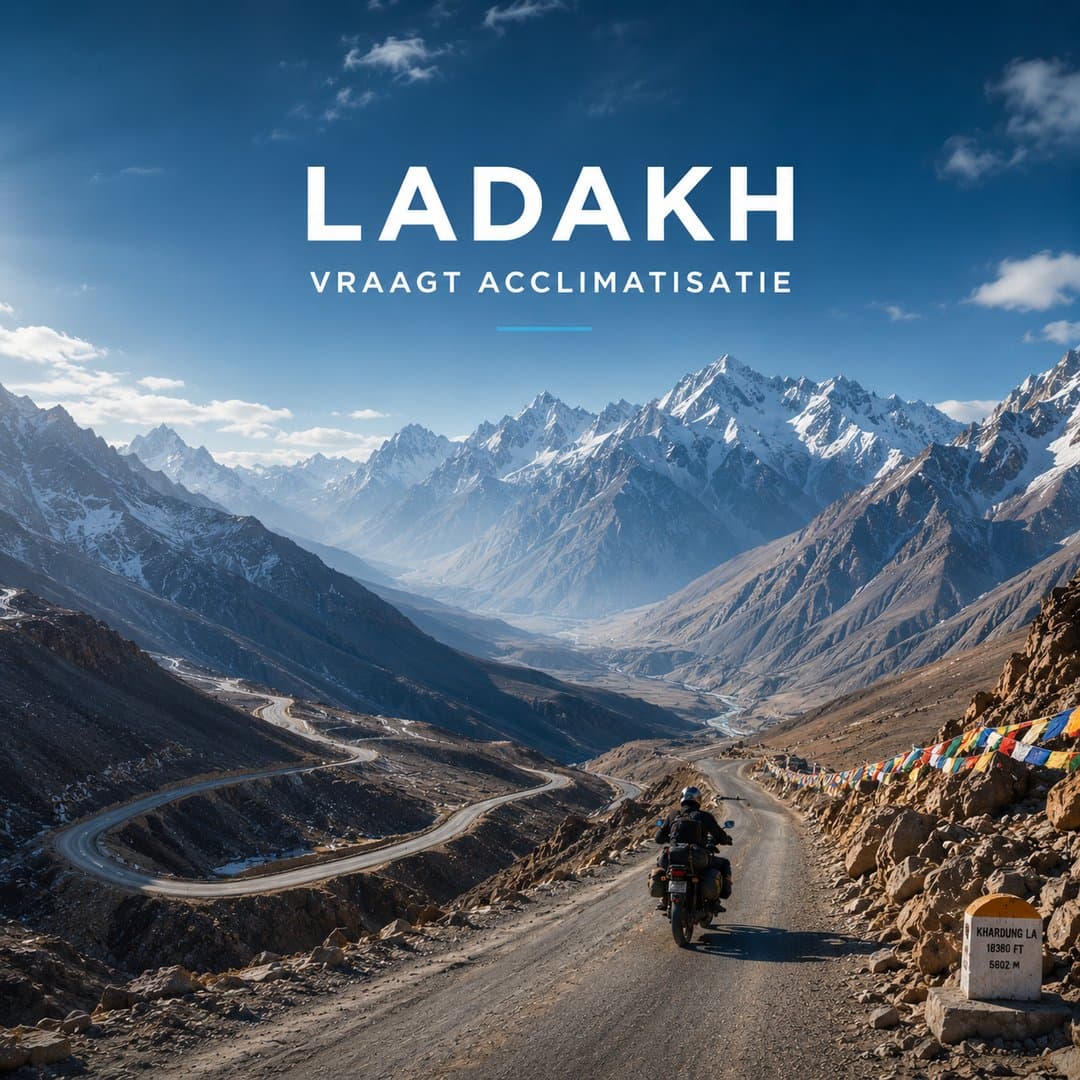
Never again altitude sickness during your mountain vacation
Published 7 September 2012 · 4 min read
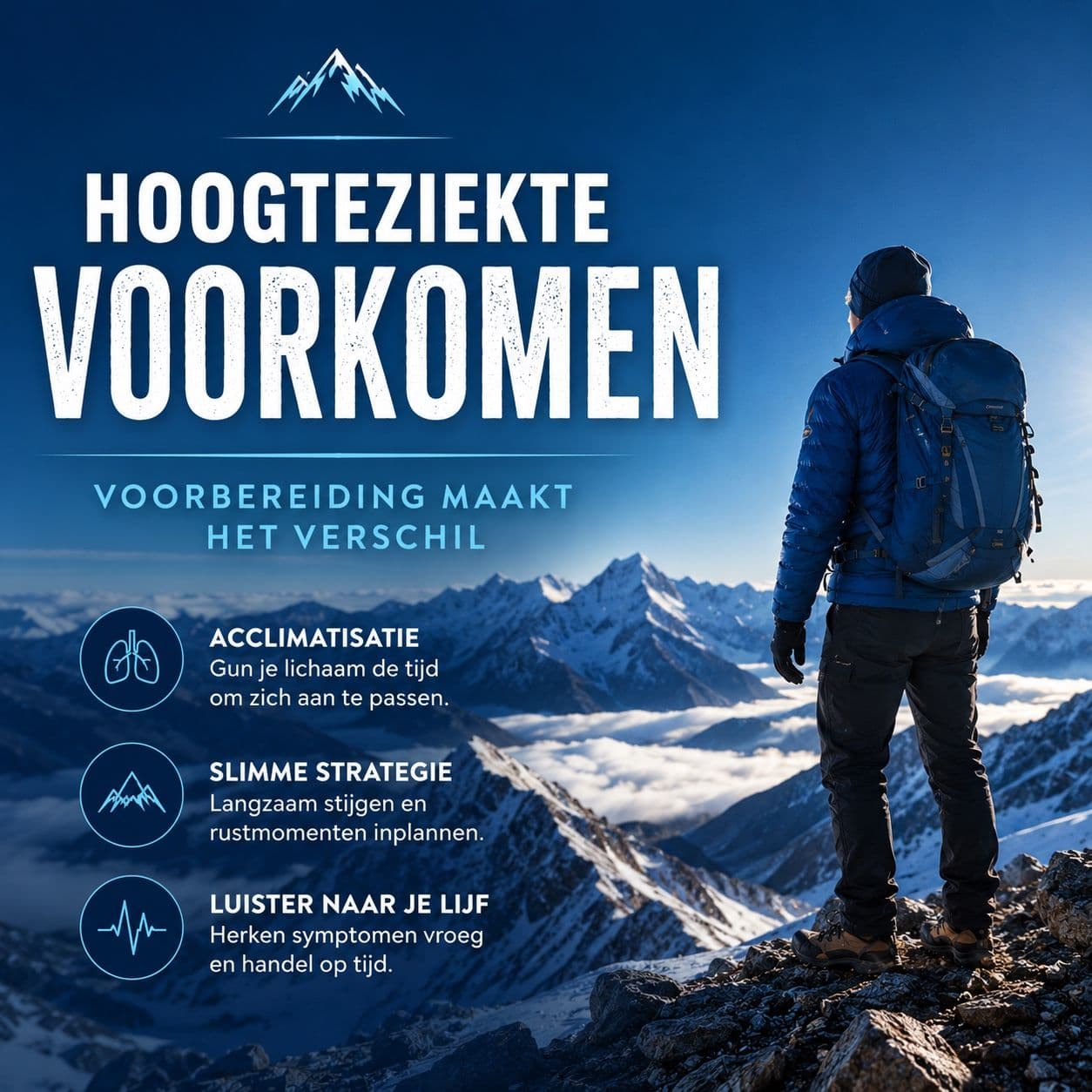
Short answer: Altitude sickness occurs because your body doesn't have enough time to adjust to the lower oxygen availability at altitude. Ascending slowly, acclimatising properly, and possibly acclimatising at home beforehand are the most effective ways to prevent altitude sickness.
Conclusion: Altitude sickness can often be prevented with a good acclimatisation strategy.
Nuance: sensitivity varies greatly from person to person.
Practical: Begin your preparations weeks before departure.
Why altitude sickness occurs
Many people think that altitude sickness is caused by a lack of fitness. In reality, fitness only plays a limited role. The real cause is the decreasing oxygen supply as you ascend.
Although the oxygen percentage in the air remains roughly the same, air pressure decreases. As a result, each breath contains less usable oxygen. Your body must adapt to this new situation.
Those who ascend too quickly to greater heights run the risk of this acclimatisation not happening quickly enough. This can lead to altitude sickness.
From what altitude do you get altitude sickness?
There is no exact threshold. Some people develop symptoms around 2,500 metres, while others stay above 4,000 metres without any problems.
In practice, the risk clearly increases from around 3,000 metres. From 3,500 metres, a good acclimatisation strategy becomes increasingly important.
| Height | Risk of complaints | Practical significance |
|---|---|---|
| 0 – 2,500 m | Low | Usually no problems |
| 2,500 – 3,500 m | Moderate | First symptoms possible |
| 3,500 – 5,000 m | High | Acclimatisation strongly recommended |
| 5,000+ m | Very high | Preparation is essential |
Risk: low
Significance: usually no problems
Risk: moderate
Significance: first possible symptoms
Risk: high
Significance: acclimatisation recommended
Risk: very high
Significance: essential preparation
Recognising the first symptoms of altitude sickness
Early recognition often prevents more serious problems. The most common complaints are:
- Headache
- Nausea
- Reduced appetite
- Poor sleep
- Dizziness
- Unusual fatigue
- Reduced exercise tolerance
You can find more information about this in our article on symptoms of altitude sickness.
⚠️ Reality check
Many travellers attribute early altitude sickness to travel fatigue. As a result, the first signs are sometimes recognised too late.
Normal acclimatisation versus altitude sickness
Not every physical reaction to altitude is immediately a problem. Your body undergoes various normal adaptations.
Normal acclimatisation:
- Faster breathing
- Slight fatigue
- Waking up more often during the night
- Strange or vivid dreams
- Temporary decrease in sports performance
Possible altitude sickness
- Persistent headache
- Nausea
- Increasing dizziness
- Clear deterioration despite rest
These physiological adaptations form the basis for acclimatisation. Ultimately, this leads, among other things, to changes in oxygen transport and blood production.
How can you prevent altitude sickness?
The most effective strategy consists of a combination of gradual exposure and sufficient recovery time.
Anyone who wants to know more about acclimatisation beforehand can read our comprehensive article on acclimatising at altitude to consult.
Practical step-by-step plan
- Start preparing early.
- Avoid a too rapid ascent above 3,000 metres.
- Plan rest days during the trip.
- Drink plenty, but don't overdo it.
- Listen for early symptoms.
- Descend when symptoms worsen.
Acclimatise at home before departure
For many mountain travellers, time on location is limited. This often means you arrive directly at altitudes your body isn't ready for.
More and more climbers, trekkers and expedition travellers are therefore opting for acclimatising at home in the weeks leading up to departure.
This uses normobaric hypoxia. The oxygen percentage is controlled and reduced while the air pressure remains the same. This provides the body with an acclimatisation stimulus even before departure.
A height tent does not replace proper acclimatisation in the mountains. However, it makes the process controlled, measurable, and plannable, which can significantly reduce the risk of altitude sickness.
This is how you monitor this lens
Good preparation isn't just about putting in the hours, but also about measuring.
| Parameter | What to look out for? | Action |
|---|---|---|
| SpO₂ trend | Gradual stabilisation | Normal progress |
| Sleep quality | Improvement after a few days | Maintain protocol |
| Recovery | Normal energy levels | Continue construction |
| Symptoms | Increase in complaints | Reduce tax |
Interpretation: gradual stabilisation
Action: Normal progress
Interpretation: Improvement
Action: maintain protocol
Interpretation: sufficient energy
Action: Continue construction
Interpretation: Complaints are increasing
Action: Reduce tax
When is extra preparation wise?
Extra preparation is especially interesting when:
- you travel above 4,000 metres;
- you have little time to acclimatise on site;
- you've had altitude sickness before;
- planning a trek or expedition where you gain altitude directly.
Frequently asked questions
Can you prevent altitude sickness completely?
No. The risk can be significantly reduced, but there is no 100% guarantee.
Does good fitness help against altitude sickness?
Not automatically. Even very fit athletes can develop altitude sickness.
At what altitude does acclimatisation become important?
For most people from about 3,000 metres.
Is acclimatising at home effective?
For many travellers, it can be a valuable addition to their preparation.
Do you want to minimise the chances of getting altitude sickness?
For travel at altitudes of 4,000 metres and above, many mountain walkers and expedition travellers opt for a preceding acclimatisation programme using a height tent. This way, you'll set off towards the mountains better prepared.
Conclusion
Altitude sickness is one of the most common problems during mountain holidays and treks. However, the risk can often be significantly reduced. Understanding how acclimatisation works, recognising symptoms early and preparing in good time can make all the difference. Anyone travelling higher than 3,500 metres would be wise not to leave acclimatisation to chance.
Read our disclaimer on altitude and health information
Sources
- Dehnert C et al. (2014). Can patients with coronary heart disease go to high altitude? / Pre-acclimatisation reduces acute mountain sickness. Wilderness Environ Med 25:263-271.
- Fulco CS et al. (2011). Effectiveness of preacclimatization strategies for high-altitude exposure. Am J Physiol Regul Integr Comp Physiol 300(2):R428-436.
- Wille M et al. (2012). Short-term intermittent hypoxia reduces the severity of acute mountain sickness. Scand J Med Sci Sports 22(5):e79-85.
- Fulco CS, Beidleman BA, Muza SR (2013). Effectiveness of preacclimatization strategies for high-altitude exposure. Exerc Sport Sci Rev 41(1):55-63.