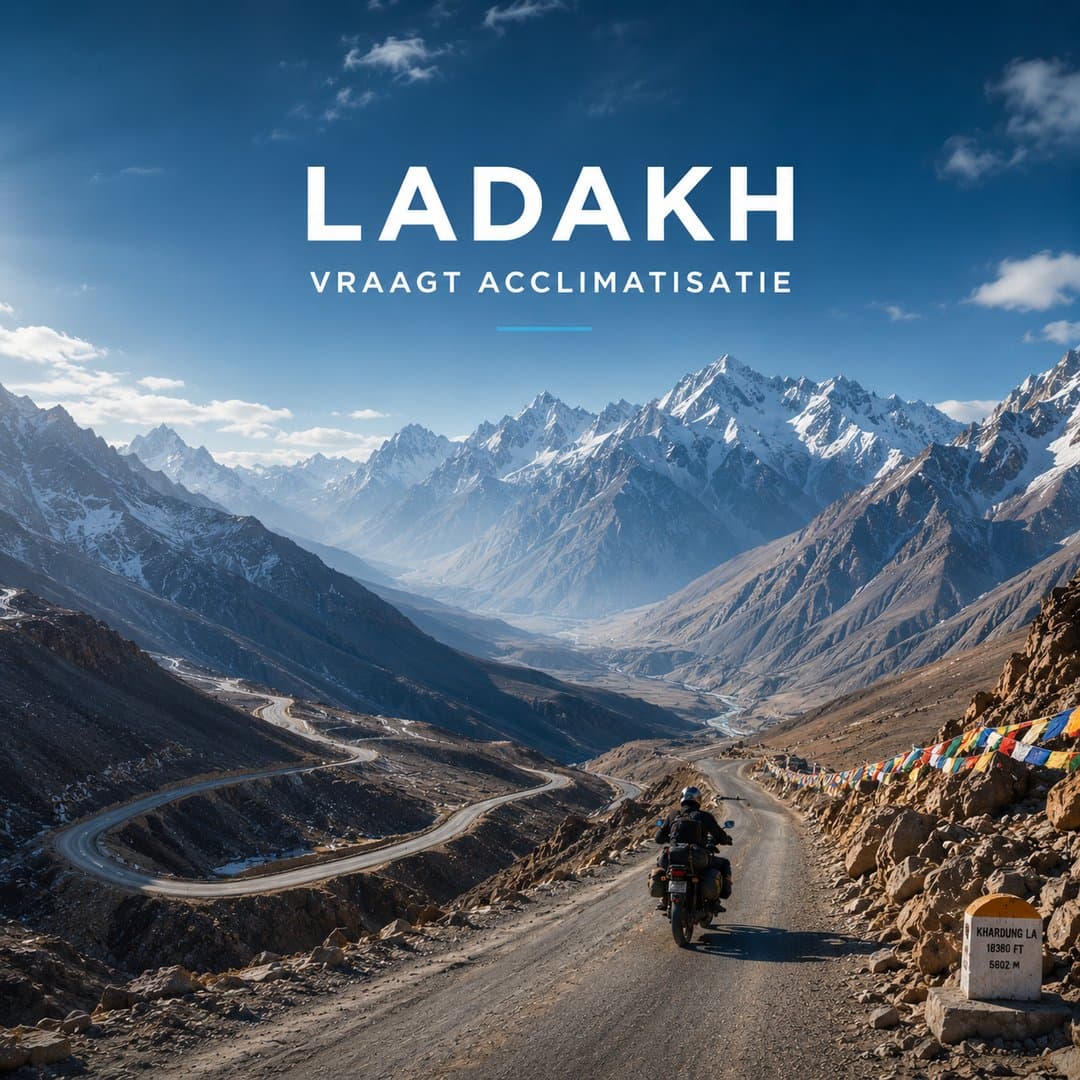
Advantages of a pre-acclimatization program.
Published 20 September 2019 · 4 min read
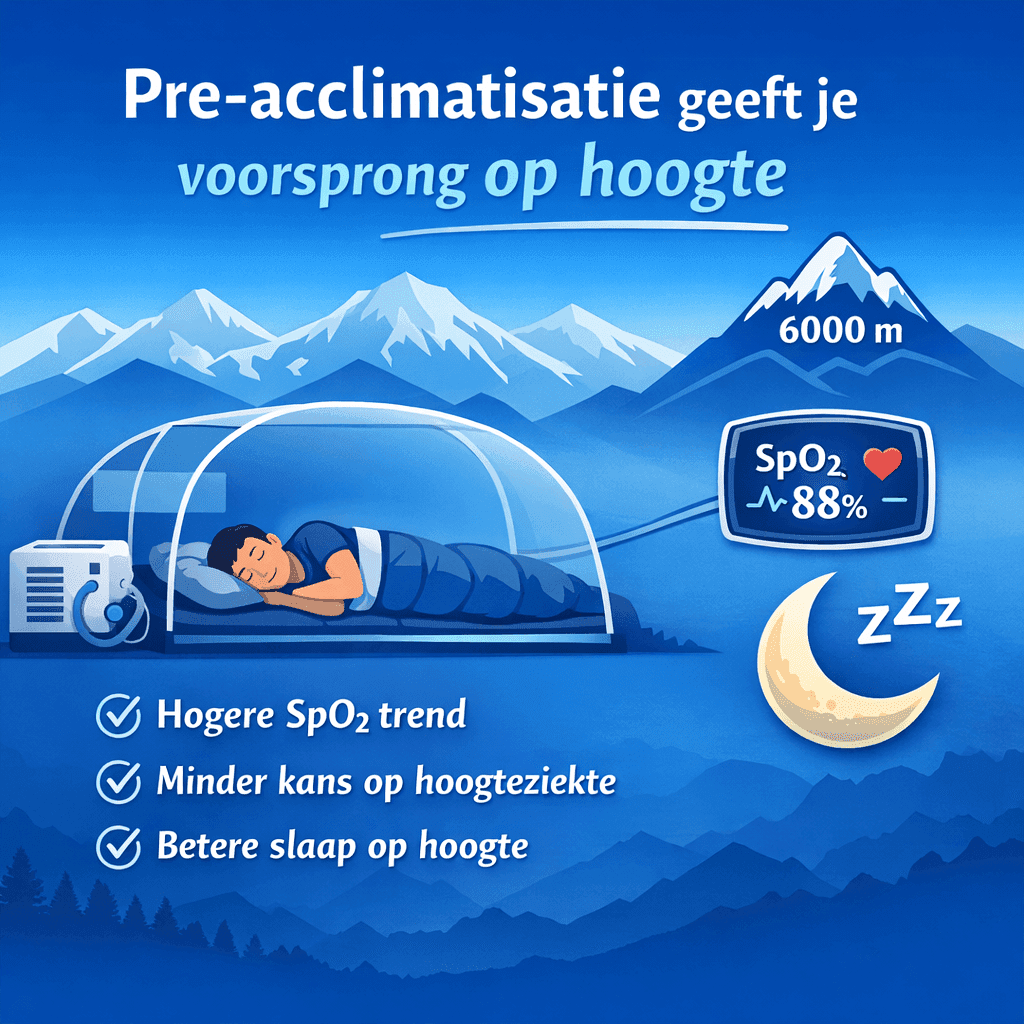
A pre-acclimatisation programme has been shown to lower the risk of altitude sickness, speed up your adaptation to altitude and increase your safety during expeditions above 4000 metres. Those who already start controlled exposure to normobaric hypoxia at home arrive with a head start. That means fewer headaches, better sleep and more energy during the first days at altitude.
Yet pre-acclimatisation is often misunderstood. Some see it as a luxury. Others think it completely replaces acclimatisation. Both assumptions are wrong. In this article, we clearly explain what a pre-acclimatisation programme really does, how to monitor it objectively and when it makes strategic sense.
What exactly is a pre-acclimatisation programme?
A pre-acclimatisation programme is a structured preparation where your body is pre-exposed to lower oxygen concentrations via normobaric hypoxia. This is usually done at home with an altitude tent or hypoxia system. The aim is not to simulate the mountain, but to already activate the body's adaptation mechanism.
Those who want to understand how this works physiologically can first read the basics in how altitude training works.
Important to stress: an altitude tent is no substitute for acclimatisation on the mountain. It does, however, make the process controlled, measurable and planable. This significantly reduces the risk of altitude sickness.
Why acclimatisation is often misunderstood
Many mountain athletes think acclimatisation starts only upon arrival at altitude. In reality, the adaptation process starts as soon as your body detects less oxygen. That process can already be gently activated at home.
In addition, the focus is often on a single oxygen measurement. But acclimatisation is not a snapshot in time. It is a trend over days and weeks. Therefore, understanding oxygen saturation at altitude essential.
So pre-acclimatisation does not work magically. It works biologically. And biology requires time and progressive incentives.
The physiological benefits of a pre-acclimatisation programme
1. Faster ventilatory adaptation
Your respiratory centre reacts faster to oxygen deprivation. As a result, your breathing rate rises earlier and more efficiently upon arrival at altitude.
2. Enhanced EPO stimulation
The hypoxic stimulus activates natural Epo production. This supports oxygen transport adaptation. You can read more about this in how altitude training increases your EPO levels.
3. Less sleep disruption in the early nights
The first nights at altitude are often restless. By sleeping in hypoxia beforehand, your respiratory regulation is already learning to cope with lower oxygen levels.
4. Lower risk of acute altitude sickness
A gradually built programme significantly reduces the risk of acute altitude sickness. Yet knowledge about altitude sickness crucial.
What does an effective pre-acclimatisation programme look like?
A good programme contains four pillars:
- Sleep as a primary stimulus
- Increasing simulated height incrementally
- At least 2 to 3 weeks of preparation
- SpO2-controlled adjustment
Sleep is the key. Eight hours a night in normobaric hypoxia provides a stable and safe adaptation stimulus.
This is how you monitor this lens
A pre-acclimatisation programme must be measurable. Otherwise, you are steering blind.
1. SpO2 trend
Measure daily at rest, preferably in the morning. Don't look at one number. Look at the trend over 7 to 10 days. A slight stabilisation or lesser decline indicates adaptation.
2. Sleep quality
Note falling asleep time, nighttime awakening and subjective sleep score. Improvement or stabilisation is a positive sign.
3. Recovery feelings and symptoms
Observe headache, resting heart rate and general fatigue. No progressive symptoms means the altitude load is appropriate.
Decision rule: If SpO2 drops progressively over several days and sleep quality deteriorates, temporarily lower the simulated altitude.
When does pre-acclimatisation make strategic sense?
Pre-acclimatisation is especially valuable at:
- Rapid ascent profiles above 4000 metres
- Limited acclimatisation time on site
- Expeditions above 5,000 metres
- Past susceptibility to altitude sickness
For those planning a climb above 5,000 metres, for example, structured preparation can make the difference between a difficult start and a steady build-up.
What pre-acclimatisation does not do
It does not prevent altitude sickness with 100 per cent guarantee. It does not replace rest days on the mountain. And it does not make up for poor climbing pace.
What it does do is improve your starting position.
Practical decision aid
Ask yourself three questions:
- Do I have less than 5 acclimatisation days on location?
- Am I going to sleep above 4500 metres?
- Have I suffered from altitude sickness before?
If you answer yes to two questions, then a pre-acclimatisation programme is highly recommended.
Trust and control
The big advantage of a pre-acclimatisation programme is control. You don't start blank. You have measured your response. You know how your body responds to hypoxia.
That gives peace of mind. And peace at altitude is golden.
Preparing for your expedition?
Planning an expedition higher than 4,000 metres? Then a structured pre-acclimatisation programme is a logical step.
Check out the options of our pitch tent rental service of read here experiences from other mountain athletes who have used an altitude tent in their preparation.