
High altitude tour Livigno: complete guide for cyclists and runners
Published 3 March 2026 · 4 min read
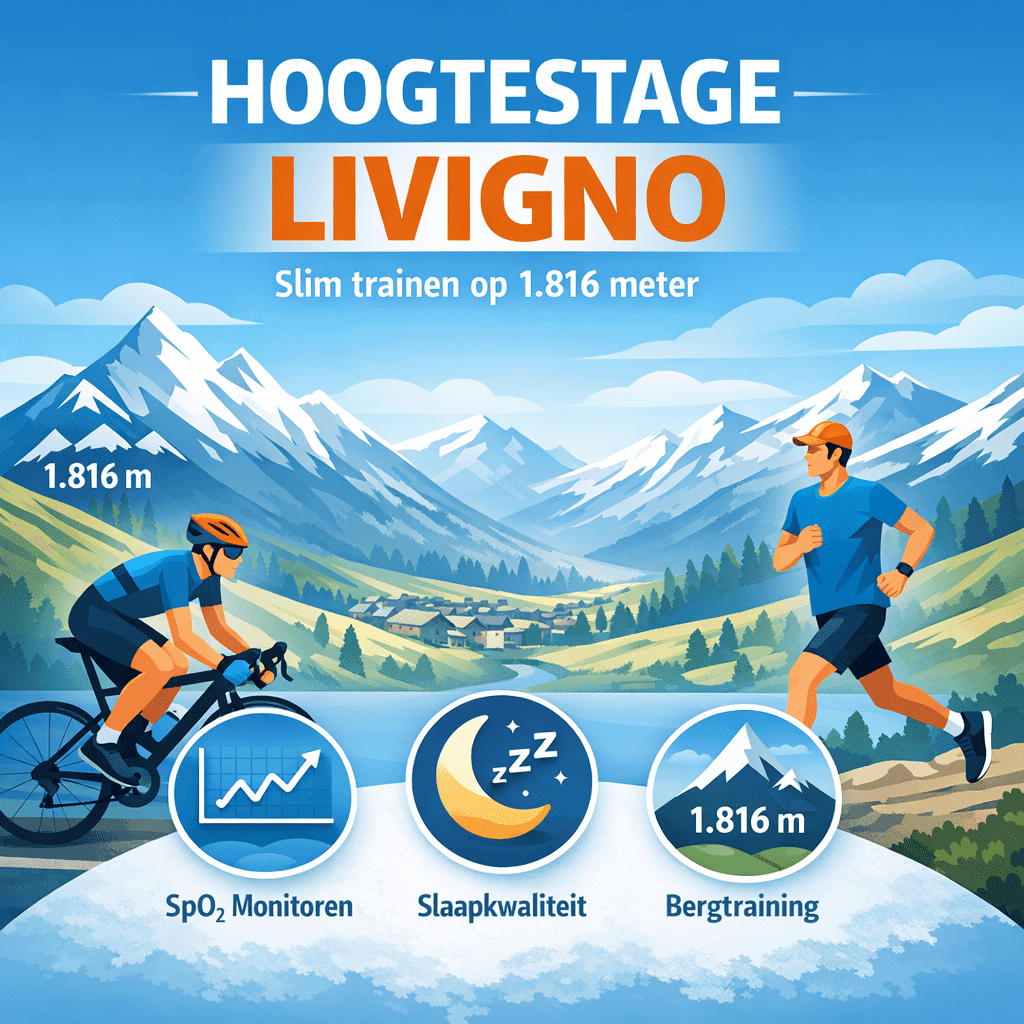
For many cyclists and runners, an altitude training course Livigno is the ideal combination of training at altitude and European accessibility. At 1,816 metres above sea level, Livigno offers a powerful but controllable stimulus for performance improvement. In this guide you will read what an altitude training in Livigno does physiologically, how to prepare, how to monitor objectively and when extra pre-acclimatisation with an altitude tent is wise.
Want to know right away whether an altitude training Livigno makes sense for you? Then the short answer is: yes, provided you stay at least 14 to 21 days, dose your load smartly and actively monitor your recovery.
Why do athletes choose altitude training Livigno?
Located in the Italian Alps, Livigno combines altitude with excellent infrastructure. The village lies at 1,816 metres and the surrounding passes go well above 2,000 metres. For cyclists, that means long climbs with constant oxygen boost. For runners, there are flat valley routes as well as trails at altitude.
Physiologically, the following happens:
- Slight drop in oxygen pressure boosts EPO production
- Increase in red blood cells with sufficient length of stay
- Improving oxygen transport capacity
- More efficient muscle adaptation
If you want to understand exactly how this mechanism works, also read how altitude training works.
What makes Livigno different from other altitude training locations?
Not every altitude trip is the same. Livigno offers a specific combination:
- Moderate altitude, so lower risk of acute altitude sickness
- Wide range of training routes
- Good accessibility by car
- Relatively stable summer climate
In comparison, Sierra Nevada is higher but often gives a heavier adaptation load. Livigno is therefore suitable for both elite athletes and ambitious amateurs.
How long should you stay on altitude training in Livigno?
This is often misunderstood. Many athletes go 5 to 7 days. That is too short for structural haematological adaptation.
Guidelines:
- At least 14 days before first adaptation
- Ideally 14 to 21 days for measurable effect
- Schedule match 7 to 14 days after return
For deeper physiological background read also sleep high train low.
Load structure during your altitude training Livigno
The first 3-5 days are all about adjusting. Intensity feels relatively heavier due to lower oxygen availability. This is normal.
Practical schedule:
- Days 1-3: gentle endurance training, 60-70% of sea level intensity
- Day 4-7: add light tempo blocks
- Week 2: targeted interval training possible
A common mistake is adding intensity too quickly. This creates overload instead of adaptation.
This is how you monitor this lens
An altitude trip Livigno should be measured, not gamed.
1. SpO2 trend
Measure your resting oxygen saturation daily. Not one single measurement, but look at the trend over several days. A slight drop in the first few days is normal. After that, you want to see stabilisation.
2. Sleep quality
Observe falling asleep, nighttime awakening and subjective freshness. Poor sleep is often the first signal of overwork.
3. Recovery feelings and symptoms
Watch for headache, decreased appetite or unusual fatigue. If symptoms persist, reduce load.
Decision rule: If your SpO2 trend drops further after day 5 and your sleep deteriorates, you should temporarily reduce your training intensity.
You can read more about oxygen saturation in oxygen saturation at altitude.
Is pre-acclimatisation necessary for Livigno?
For 1,816 metres, pre-acclimatisation is not mandatory. Nevertheless, it can be strategically advantageous if:
- You are only on site for 7 to 10 days
- You are prone to altitude complaints
- You want maximum training quality from day 1
With an altitude tent, you work via normobaric hypoxia. Air pressure stays the same, oxygen percentage drops. Sleep is the primary stimulus here. By building up incrementally and adjusting SpO2-controlled, you arrive better prepared.
Read more in the complete guide to using an altitude tent.
An altitude tent does not completely replace acclimatisation, but it makes the process controlled, measurable and planable. It significantly lowers the risk of complaints and you can do intensive training faster.
When does an altitude training Livigno pay off the most?
Timing is crucial.
- 3 to 5 weeks for main goal
- After a solid base period
- Not in combination with severe work stress
The biggest gains come from a combination of increased oxygen transport capacity and improved efficiency.
For whom is an altitude training Livigno less suitable?
- Athletes without basic fitness
- Recovering from injury
- With unstable iron status
Check your ferritin beforehand. Without sufficient iron, adaptation is limited. See also iron and nutrition during altitude training.
Conclusion: is altitude training Livigno the right choice?
An altitude training Livigno is a proven, accessible way to improve your aerobic capacity. Provided you stay long enough, build up smartly and monitor objectively, it delivers measurable gains for cyclists and runners alike.
Want to make the most of your altitude training or arrive optimally prepared beforehand?
Prepare your altitude training professionally
Sleep in an altitude tent for 2 weeks beforehand and start your internship with a head start.


