Mount Everest8,849 m
Tim ten KloosterZwolle, Netherlands
Ik heb in juli/augustus opnieuw gebruik gemaakt van jullie hoogtetent, om reden van de beklimming van de Manaslu in Nepal (poging 2) in september jl. Het heeft geresulteerd in de...

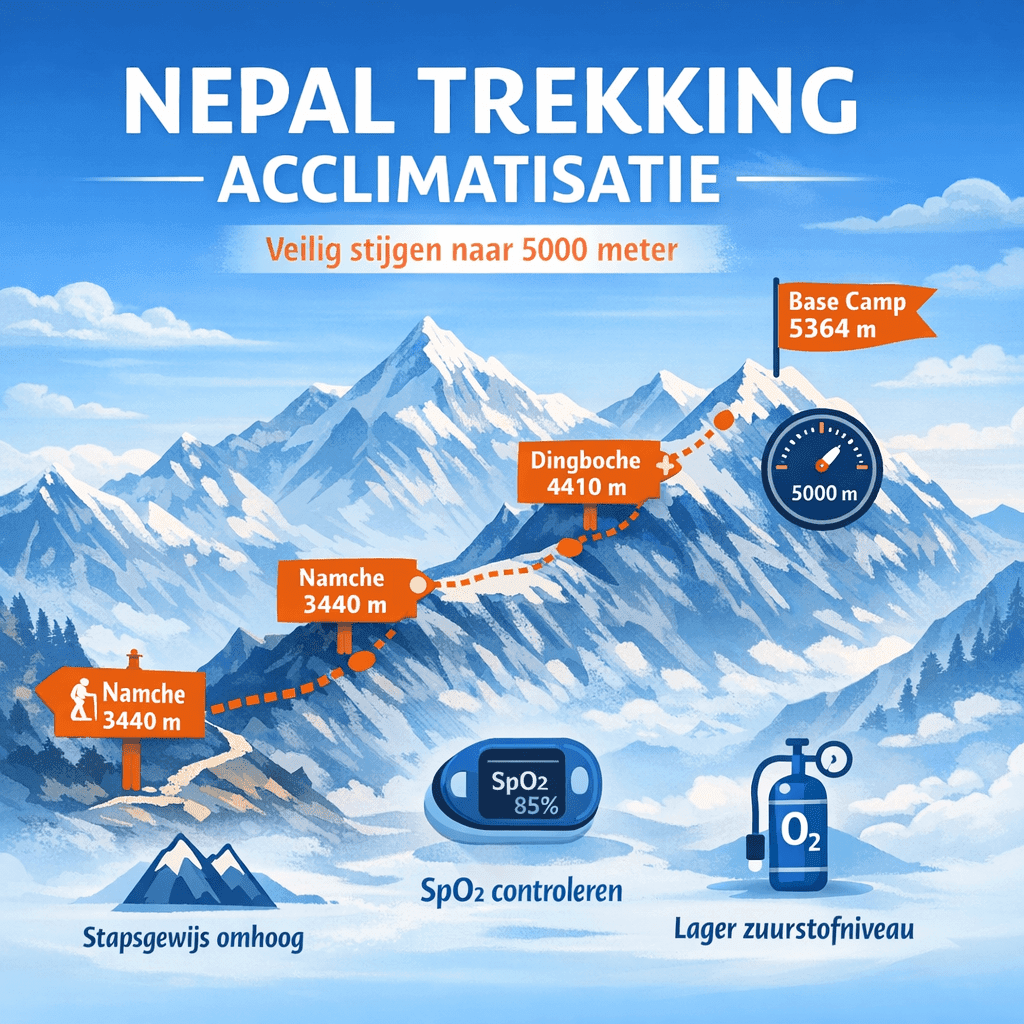
The trek to Everest Base Camp (5,364 m) keeps you above 3,500 m for two weeks. Those already acclimatised at home enjoy the trek from Namche Bazaar instead of surviving it.
Everest Base Camp (~5,182 m)
On Kala Patthar (5,550 m) and in Gorak Shep you sleep at an altitude where less than 11% oxygen is available. Altitude sickness is the main reason trekkers turn back. A six-week programme of sleeping at altitude, built up to about 3,500 m, gives your body a head start you feel from the first days.
Based on the summit altitude and controlled Altitude Dream protocols.
Example for a departure in 10 weeks. Enter your own departure date for a tailored plan.
4 experiences · 5 out of 5 on average
“Erg positief, goede instructies, professioneel advies en persoonlijke ervaringen. Ik heb dankzij jullie helemaal geen hoogteziekte gehad, dat doel is bereikt. Door een kuitblessure helaas niet de top gehaald.”

Ik heb in juli/augustus opnieuw gebruik gemaakt van jullie hoogtetent, om reden van de beklimming van de Manaslu in Nepal (poging 2) in september jl. Het heeft geresulteerd in de...
Positieve ervaring maar effect weet ik nog niet. Ik ben nu in de Alpen tot max. 3600 m; dat gaat goed. Hierna naar Nepal tot 8000+. Hoe dat gaat weet...
Classic trek from Lukla via Namche Bazaar and Gorak Shep to Everest Base Camp.

Expeditions
Planning a trek in Nepal? Discover the best routes for beginners, including Annapurna Base Camp, Langtang and Everest Base Camp.

Expeditions
Acclimatising for Everest Base Camp: complete schedule, timeline, tips and preparation to avoid altitude sickness.
Expeditions
The right acclimatisation schedule for Nepal trekking. Learn how to acclimatise safely for Everest Base Camp and Annapurna.
Yes. Only the oxygen percentage is lowered (normobaric hypoxia), not the air pressure. You build up gradually based on your SpO₂ values with personal guidance. An altitude tent is not a medical device. If you have a medical condition (heart, lungs) or are pregnant, consult your doctor first.
Count on 4 to 6 weeks for noticeable adaptation. For expeditions above 6,000 m we recommend 5 to 8 weeks. We match your rental period to your departure or race date: you choose the end date, we count back.
Tell us your destination and departure date. We advise you personally on preparation, altitude and system.
Uhuru Peak sits at 5,895 m, where only about 10% oxygen remains. Most climbers who miss the summit fail because of altitude sickness, not fitness. Six weeks of sleeping at altitude at home changes that.
The highest mountain outside Asia: 6,961 m, cold and dry. Every week of preparation counts here. Start five to seven weeks ahead and build up slowly.
The roof of the Alps at 4,808 m, often climbed in two or three days. That is exactly why acclimatising at home is so valuable: there is no time for it on the mountain.