Klein verbeterpuntje: iets duidelijker de maten vermelden, dit hadden wij over het hoofd gezien. We hebben het gehaald en zonder problemen, eerste dag geslapen op 3400 meter zonder noemenswaardige problemen....
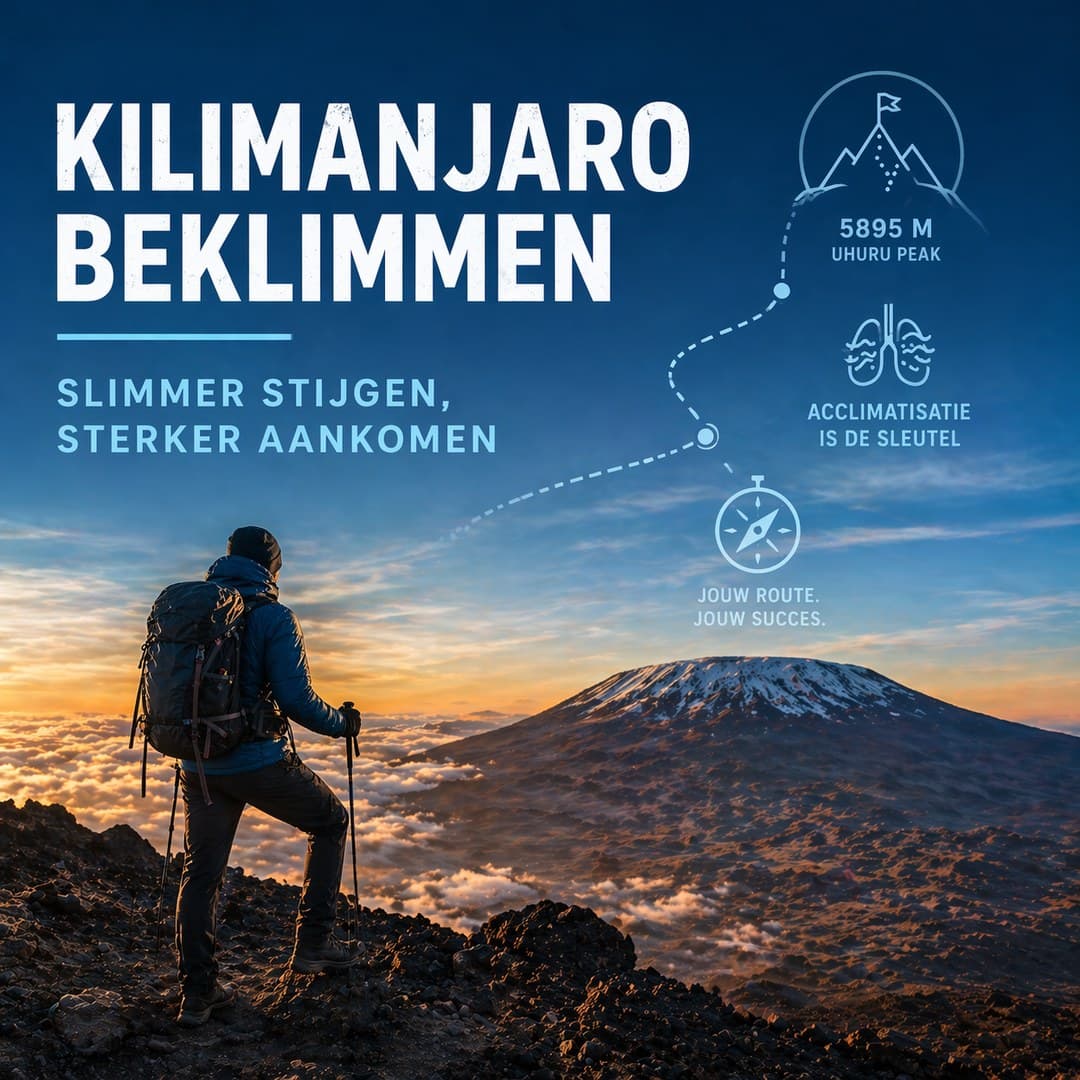
Uhuru Peak sits at 5,895 m, where only about 10% oxygen remains. Most climbers who miss the summit fail because of altitude sickness, not fitness. Six weeks of sleeping at altitude at home changes that.
Kilimanjaro (~5,791 m)
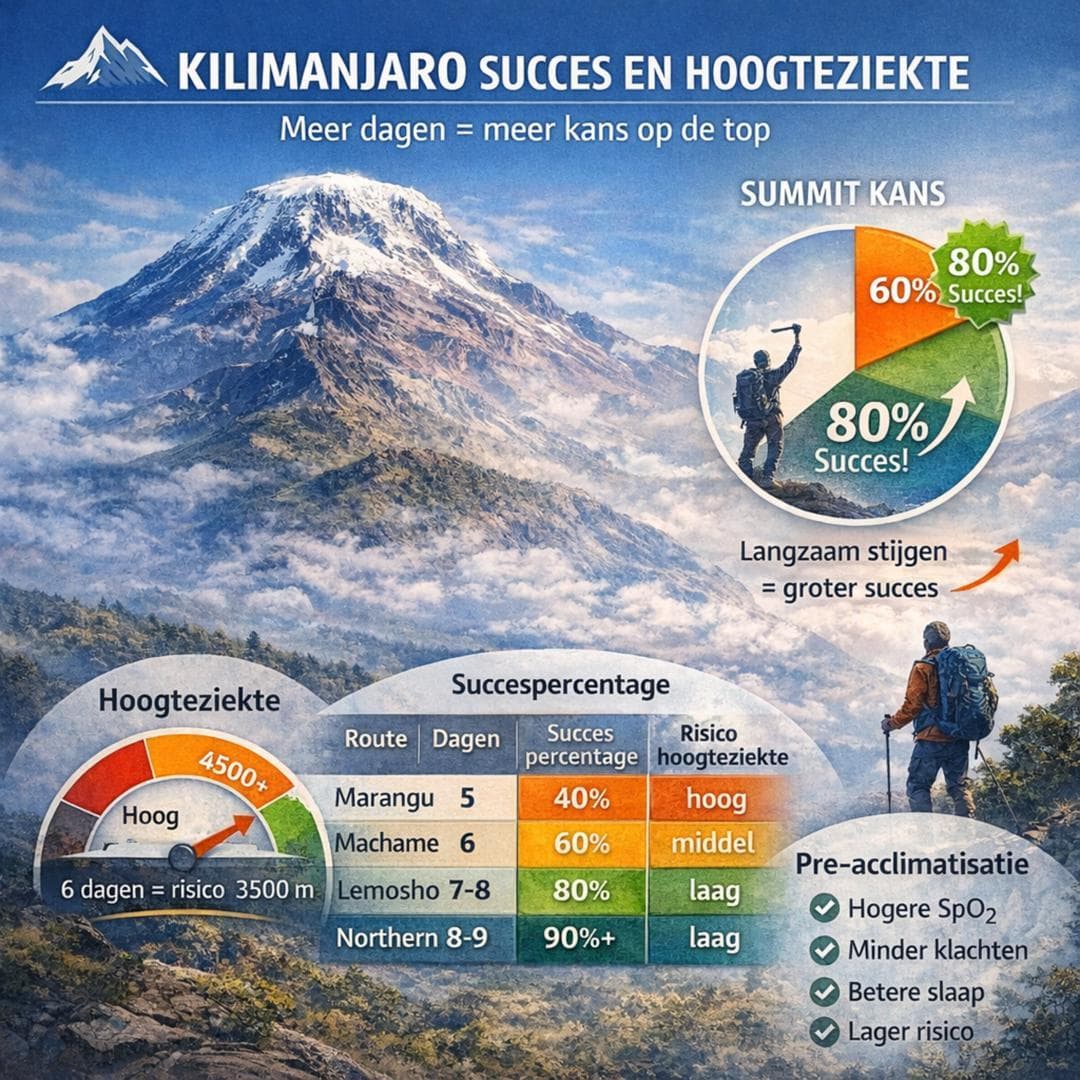
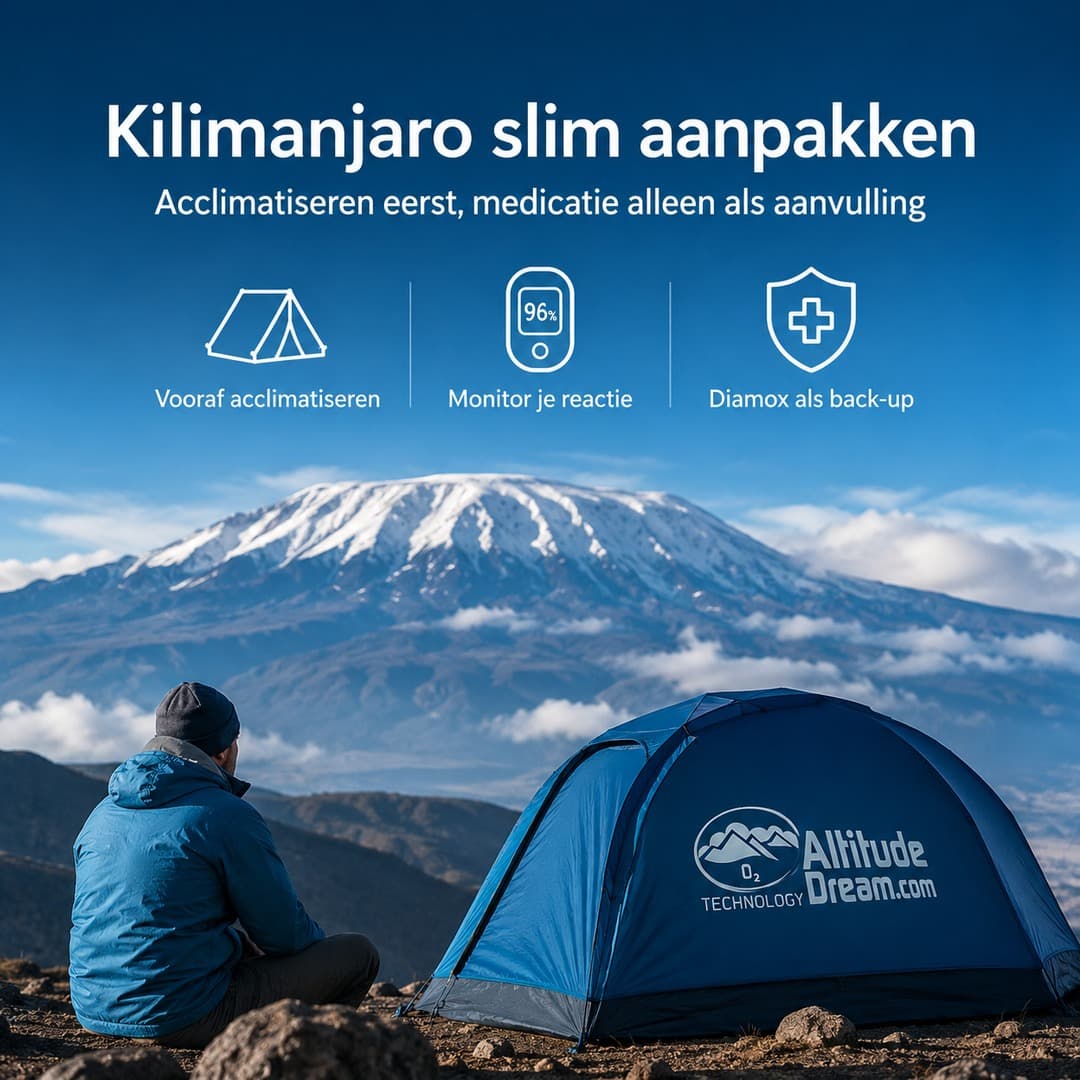
Kilimanjaro is technically a hike but physiologically a serious altitude challenge: in six to seven days you climb from 1,800 m to almost 6,000 m. That is too fast to fully acclimatise. Pre-acclimatisation at home, sleeping at altitude up to about 3,500 m for four to six weeks, demonstrably reduces the risk of acute mountain sickness and makes summit night considerably more comfortable.
Based on the summit altitude and controlled Altitude Dream protocols.
Example for a departure in 10 weeks. Enter your own departure date for a tailored plan.
108 experiences · 4.7 out of 5 on average
“Erg positief, goede instructies, professioneel advies en persoonlijke ervaringen. Ik heb dankzij jullie helemaal geen hoogteziekte gehad, dat doel is bereikt. Door een kuitblessure helaas niet de top gehaald.”


Klein verbeterpuntje: iets duidelijker de maten vermelden, dit hadden wij over het hoofd gezien. We hebben het gehaald en zonder problemen, eerste dag geslapen op 3400 meter zonder noemenswaardige problemen....

We hebben nauwelijks klachten gehad. Alleen lichte hoofdpijn en een verminderde eetlust. Ons looptempo lag bovengemiddeld. We hebben ons doel Basecamp Mount Everest met succes gehaald. Bedankt voor de duidelijke...
The "Whiskey route": 6 to 7 days, the most scenic, with a good acclimatisation profile (climb high, sleep low).
Quiet, long route of 7 to 8 days with the highest summit rate.
The "Coca-Cola route" with huts. Short, and therefore harder for acclimatisation.

Expeditions
Kilimanjaro with or without Diamox? Read what data, guides, and pre-acclimatisation with a high-altitude tent mean for altitude sickness.

Expeditions
Climbing Kilimanjaro without unnecessary risk? Discover the smartest tips on route choice, acclimatisation, preparation and equipment.

Expeditions
How likely is altitude sickness on Kilimanjaro? See dates, success rates by route and how to greatly reduce the risk of symptoms.
Cooperation and referral · BE
Belgian organiser of professionally guided Kilimanjaro expeditions for individuals and companies, with its own office in Arusha and English-speaking guides. The only Belgian organisation that is a member of KPAP, the Kilimanjaro Porters Association Project.
WebsiteCooperation and referral
Travel organiser for East and Southern Africa with its own offices in Africa. Staff who have climbed Kilimanjaro themselves advise on routes and preparation; they consider good preparation for the altitude essential.
Cooperation and referral
Travel specialist for Tanzania: safari, Zanzibar and climbing Kilimanjaro.
Yes. Only the oxygen percentage is lowered (normobaric hypoxia), not the air pressure. You build up gradually based on your SpO₂ values with personal guidance. An altitude tent is not a medical device. If you have a medical condition (heart, lungs) or are pregnant, consult your doctor first.
Count on 4 to 6 weeks for noticeable adaptation. For expeditions above 6,000 m we recommend 5 to 8 weeks. We match your rental period to your departure or race date: you choose the end date, we count back.
Athletes usually stop 7 to 10 days before their peak race so the body is fully recovered. Mountaineers keep sleeping at altitude until just before departure so the acclimatisation is as fresh as possible.
Tell us your destination and departure date. We advise you personally on preparation, altitude and system.
The trek to Everest Base Camp (5,364 m) keeps you above 3,500 m for two weeks. Those already acclimatised at home enjoy the trek from Namche Bazaar instead of surviving it.
The highest mountain outside Asia: 6,961 m, cold and dry. Every week of preparation counts here. Start five to seven weeks ahead and build up slowly.
The roof of the Alps at 4,808 m, often climbed in two or three days. That is exactly why acclimatising at home is so valuable: there is no time for it on the mountain.