Going to the mountains with heart problems: what cardiologists and mountain doctors advise
Published 30 May 2026 · 12 min read
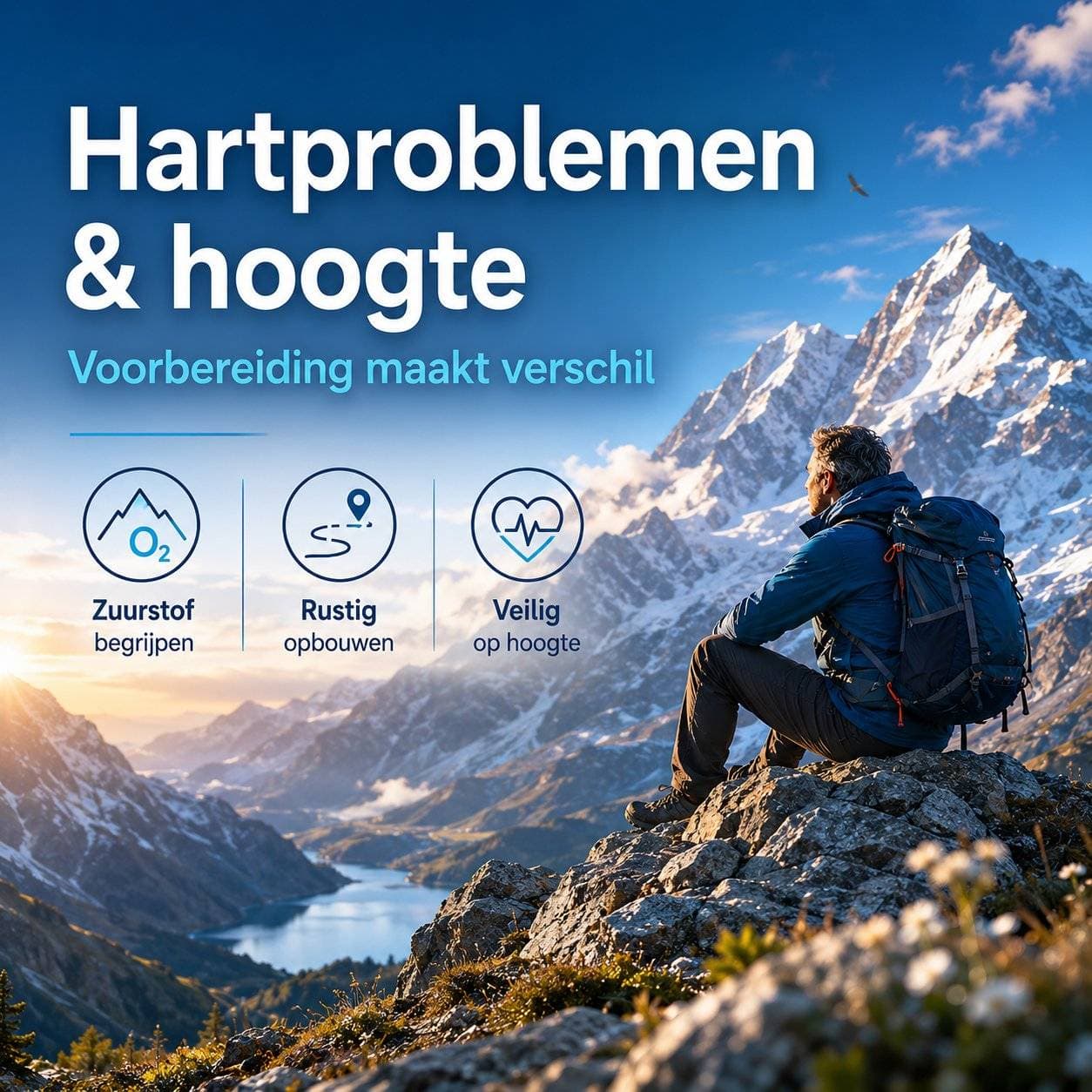
Going to the mountains with heart problems requires more preparation than a normal mountain trip. Not because altitude is automatically forbidden, but because thin air makes the heart work harder. Your heart rate rises faster, your oxygen saturation drops, and exertion feels heavier. For some people, this can be safely managed. For others, consulting a cardiologist or a mountain doctor first is necessary.
In this article, you'll read about when a mountain trip is usually advisable, when extra caution is necessary, and when it's best not to depart without a medical assessment. We also explain how acclimatising at home for mountain expeditions A sleep tent can help make the transition to altitude more controlled, measurable, and planned.
Short answer: When you have stable heart problems, it is sometimes possible to go to the mountains responsibly, but only if your symptoms are under control, you pace your exertion well, and you know in advance how your body reacts to altitude. With recent heart complaints, unstable angina, severe heart failure, arrhythmias or poorly controlled blood pressure, medical advice is necessary before travelling to high altitude.
Conclusion: Altitude is primarily a stress test for your heart, lungs, and recovery capacity.
Nuance: Not every heart patient runs the same risk; stability and exertion level are decisive.
Practical hook: Combine medical checks, a slow ascent, objective monitoring, and potential pre-acclimatisation.
Going to the mountains with heart problems starts with a risk assessment.
The most important question is not just how high you go. The better question is: how stable is your heart at sea level, and how much extra strain does that put on you at altitude?
As you ascend, the available oxygen pressure drops. This means your body has to work harder to achieve the same effort with less oxygen per breath. You breathe faster, your heart rate increases, and your body switches to a higher physiological state. In healthy individuals, this is usually temporary and manageable. However, for those with existing heart conditions, the same stimulus can trigger symptoms more quickly.
Therefore, cardiologists and mountain doctors primarily look at four things:
- the nature of your heart problem
- how stable your symptoms are
- how high and how fast you climb
- how much your effort is weighed at altitude
A tranquil holiday at 1800 metres is something different to trekking above 4000 metres. And a cable car ride to a viewpoint is different to several days of climbing with a backpack. It is precisely this combination of altitude, pace, cold, sleep deprivation and physical exertion that determines the real risk.
⚠️ Reality check
A stable heart condition does not automatically mean every altitude is safe. It primarily means your starting point is more predictable. The strain at altitude remains dependent on ascent speed, exertion, sleep, cold, medication, and individual response.
What altitude does to your heart
Altitude doesn't just affect your lungs. The cardiovascular system reacts immediately. With lower oxygen availability, your body tries to maintain oxygen supply to muscles and organs. This happens primarily through an increased breathing rate and a higher heart rate.
That is a normal adjustment. However, that adjustment comes at a price. The heart has to do more work per minute. At the same time, exertion at altitude can feel more strenuous because you have less oxygen available for the same movement. As a result, a pace that feels comfortable at home can suddenly become intense in the mountains.
In the case of heart problems, the primary focus is on the balance between oxygen demand and supply. If the heart requires more oxygen, but circumstances conversely make less oxygen available, the safety margin can be reduced.
This is particularly true for:
- Coronary suffering or narrowed coronary arteries
- heart attack
- Heart failure
- Heart rhythm disorders
- High blood pressure
- Valve abnormalities
- Pulmonary hypertension
In addition, altitude can have an indirect effect. You often sleep lighter, lose fluids faster, eat less, and recover more slowly. This means the total strain can be higher than you initially estimate. Those who manage this smartly significantly reduce the risk.
To the mountains with heart problems: when is it usually responsible?
Many people with a history of heart conditions can still enjoy the mountains. This is especially true when the condition is stable, medication is well-adjusted, and the trip is planned wisely. The word "stable" is important here.
Stable usually means that you haven't had a recent worsening of symptoms, aren't experiencing unexplained chest pain, don't have new arrhythmias, and can tolerate your normal daily activities well. Your blood pressure should also be reasonably under control.
Still, it remains sensible to discuss your plans concretely. Don't just say: “I'm going to the mountains.” Tell your doctor:
- to what maximum height you are going
- how fast you rise
- whether you go walking, skiing, climbing or resting
- or you sleep above 2500 metres
- and whether medical assistance or descent is possible
- What medication you are taking
This makes the advice much more focused. A cardiologist primarily assesses your cardiovascular stability. A mountain doctor additionally looks at altitude exposure, acclimatisation, and the risk of altitude sickness. Together, these perspectives provide the best overall picture.
| Situation | Interpretation | Practical significance |
|---|---|---|
| Low risk | Stable complaints, good condition, normal daily exertion possible. | A peaceful mountain journey is often possible with a slow ascent and monitoring. |
| Pay attention | Known heart problem, limited exercise tolerance or higher calling. | Prior consultation with a cardiologist or a mountain physician is advisable. |
| High risk | Recent complaints, unstable angina, severe heart failure, or unexplained arrhythmias. | Do not leave without a medical assessment and a clear safety plan. |
Interpretation: Stable complaints, good condition, normal daily exertion possible.
Practical significance: Relaxing mountain trip often possible with slow build-up and monitoring.
Interpretation: known heart problem, limited exercise tolerance or higher calling.
Practical significance: Pre-consultation with a cardiologist or a mountain doctor is advisable.
Interpretation: recent complaints, unstable angina, severe heart failure or unexplained arrhythmias.
Practical significance: Do not leave without a medical assessment and a clear safety plan.
When you need to be extra careful
There are situations where altitude becomes less predictable. This doesn't always mean mountains are off-limits. However, it does mean your plan needs to be more robust than “we'll see”.
Extra caution is needed when you've recently had new complaints, when your condition fluctuates significantly, or when your medication is still being adjusted. A recent angioplasty, bypass surgery, or hospital admission for heart failure also requires careful medical timing. Your body needs time to recover before you expose it to cold, exertion, and low-oxygen air.
High blood pressure also deserves attention. At altitude, blood pressure can react differently than at home. In some people, blood pressure rises, especially in the cold, with stress, poor sleep, and exertion. Therefore, it is wise to know your blood pressure well before you leave and to know which readings are abnormal for you.
If you have heart rhythm disorders, you must pay particular attention to triggers. Altitude, lack of sleep, alcohol, dehydration, and overexertion can increase sensitivity to rhythm disturbances. Therefore, pacing yourself is more important than proving you can still do everything.
Check before leaving:
- Have my symptoms remained stable in recent weeks?
- Do I know which altitude training is planned?
- Is my blood pressure set correctly?
- Do I have clear agreements about medication?
- Does my travel companion know which warning signs are important?
- Is it practically possible to descend if symptoms worsen?
This preparation aligns closely with general principles concerning acclimatising at altitude. The more you move, sleep better, and pace yourself intelligently, the more room you give your body to adapt.
The role of pre-acclimatisation with a height tent
Pre-acclimatisation with a height tent can be beneficial for individuals with heart problems, provided it is applied carefully and with medical guidance. The aim is not to eliminate medical risks, but to make the transition to altitude more controlled.
An altitude tent works with normobaric hypoxia. This means that the air pressure remains the same, but the percentage of oxygen in the inhaled air is reduced. You therefore simulate an altitude stimulus while sleeping at home. This allows you to get used to a lower oxygen supply without being directly exposed to cold, travel stress, physical exertion and poor accessibility.
That is precisely why pre-acclimatisation can be important. In the mountains, several stress factors come together at once. At home, however, you can build up exposure to hypoxia in an isolated, gradual and measurable way. This is a significant advantage, particularly for people who need to be extra cautious.
A good approach doesn't start high and hard. You build up gradually, follow your oxygen saturation as a trend, and look at sleep quality, recovery, and complaints. More stimulus is not automatically better. The art is to give enough stimulus without causing unnecessary stress.
🧭 In practice
A height tent does not replace a medical check or actual acclimatisation in the mountains. However, it makes the process controlled, measurable and plannable. As a result, the chance of altitude sickness can significantly decrease, without there ever being a full guarantee.
Those with little experience of heights would do well to first understand how to use a high altitude tent. In doing so, build-up, sleep duration, set altitude and saturation trend are more important than the highest possible number on the generator.
What cardiologists and mountain doctors usually want to know
Good medical advice begins with concrete information. The more specific your mountain plan is, the better a doctor can assess whether it is responsible.
You should therefore avoid general statements. “I’m going to Austria” doesn’t tell us much. “I’ll be staying for five nights at altitudes between 2,500 and 3,200 metres and want to go on hikes covering 600 metres of elevation gain per day” is much more useful.
Cardiologists usually look at your medical stability. Mountain doctors look at the altitude load and your acclimatisation plan. Together, this leads to a clearer decision: responsible, adapt, or postpone.
| Ask | Why this matters | What you are preparing |
|---|---|---|
| Maximum height | The higher you sleep, the greater the hypoxia stimulus. | Highest sleep height and highest daytime peak. |
| Rise rate | Rapid increases heighten the burden and risk of complaints. | Daily planning with sleep heights. |
| Effort | Cardiac load increases sharply with intensive exercise at altitude. | Type of activity, duration and difficulty. |
| Medication | Some medications affect heart rate, blood pressure, fluid balance, or exertion. | Full medication list and dosage. |
Why this matters: The higher you sleep, the greater the hypoxic stimulus.
What you are preparing: highest sleeping altitude and highest day point.
Why this matters: A rapid rise increases the burden and the chance of complaints.
What you are preparing: Daily planning with sleep peaks.
Why this matters: Heart load increases significantly with intensive exertion at altitude.
What you are preparing: Type, duration and intensity.
Why this matters: Some medications affect heart rate, blood pressure, fluid balance, or exertion.
What you are preparing: Full medication list and dosage.
This is how you monitor this lens
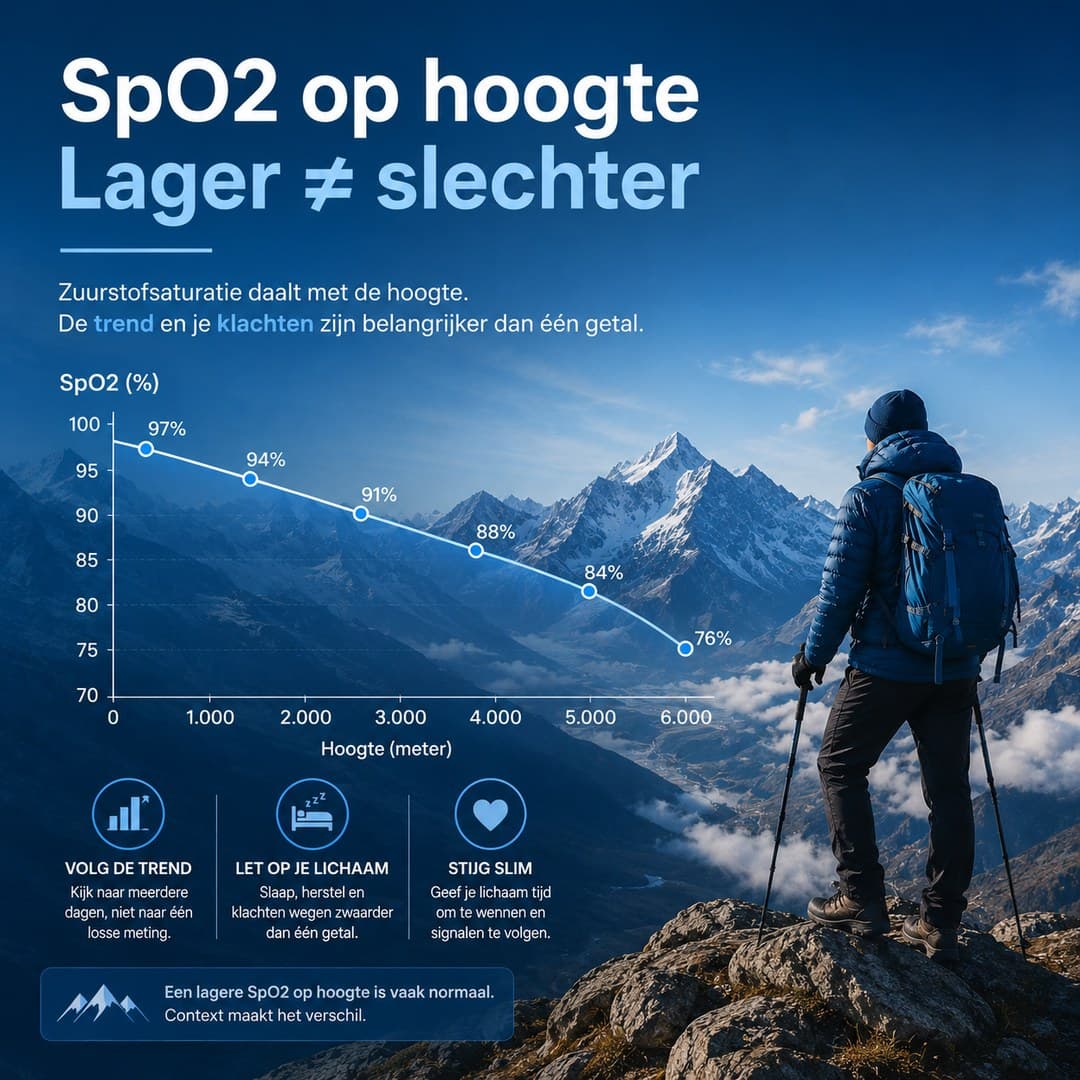
When dealing with heart problems at altitude, you don't want to rely on feeling alone. Fatigue, a poor night's sleep, or a gruelling hiking day can skew your interpretation. That's why mountain doctors prefer to work with trends rather than isolated measurements.
Important: a single anomalous value is rarely decisive. Always look at the whole picture.
| Parameter | What are you looking out for? | When to adjust |
|---|---|---|
| SpO₂ trend | Compare morning values over multiple days. | Clear downward trend along with complaints. |
| Heart rate | Unexpectedly higher resting heart rate. | Staying elevated despite rest. |
| Sleep quality | Sleeping through, recovery feeling, nocturnal restlessness. | Several bad nights in a row. |
| Symptoms | Shortness of breath, chest tightness, dizziness. | New or worsening symptoms. |
What do you pay attention to: Compare morning values over multiple days.
Adjustment: declining trend along with complaints.
What do you pay attention to: unexpectedly higher resting heart rate.
Adjustment: persistently elevated despite rest.
What do you pay attention to: recovery feeling and night's sleep.
Adjustment: Several bad nights.
What do you pay attention to: Shortness of breath, chest pressure, dizziness.
Adjustment: new or increasing complaints.
When pre-acclimatising at home, monitoring can be extra valuable. Because the environment is controlled, you often see more quickly how you react to a specific altitude setting or sleep duration.
This floor can help with the interpretation of saturation and altitude: Understanding oxygen saturation at altitude.
Common misconceptions about heart problems and altitude
“If I can exercise at home, I can also hike at altitude”
Not automatically. Altitude changes the load. An effort that feels comfortable at home can be surprisingly tough at 3,000 metres.
“My saturation is good, so everything is safe”
SpO₂ is useful as a trend, not as absolute truth. Symptoms, recovery, heart rate and perceived exertion remain important.
“A height tent is dangerous for people with heart problems.”
That depends on context and build-up. A controlled hypoxia stimulus at home is fundamentally different from unexpectedly arriving at altitude with travel stress, poor sleep, and physical exertion. Therefore, gradual build-up becomes important.
Those who start with this can delve into A gradual acclimatisation schedule for a height tent.
Decision rules: when to proceed, adjust, or descend?
Continuing:
Complaints stable, recovery normal, exertion feels manageable.
Adjust:
More fatigue, poorer sleep, falling SpO₂ trend or unexpectedly high heart rate.
Stop and seek medical attention
Chest pain, unusual breathlessness at rest, fainting, severe arrhythmia, or marked deterioration.
📊 Research shows
When carefully selected and stable cardiovascular patients are involved, controlled exposure to moderate altitude often proves more tolerable than many people expect. The greatest risks typically arise from ascending too quickly, overexertion, or insufficient preparation.
Practical preparation: the 7 days before departure
- Check medication and reserve stock.
- Test materials such as a home saturation meter.
- Travel well-equipped.
- Avoid strenuous training blocks late in the day.
- Drink normally, not excessively.
- Plan for arrival day.
- Work with pre-acclimatisation where relevant.
Do you want to acclimatise to altitude before departure?
For some mountain climbers, pre-acclimatisation at home can be a gentle way to better prepare for the transition to altitude. It is not a replacement for medical guidance or actual acclimatisation, but rather a controlled and measurable support.
Conclusion
Going to the mountains with heart problems doesn't automatically mean it's out of the question. The real question isn't whether you have a diagnosis, but how stable your condition is and how smartly you build up the exertion.
Those who take altitude seriously combine medical assessment, gradual ascent, objective monitoring, and realistic expectations.
Pre-acclimatisation in a height tent can be an interesting added layer. Not as a replacement for acclimatisation, but as a controlled preparation that can make the transition to altitude more predictable.
Is altitude dangerous if you have a heart condition?
Not automatically. Stability, altitude, rate of ascent, and effort determine the risk.
From what height do you need to be extra careful?
Often from around 2,500 metres, but individual differences are significant.
Can a sleep tent help?
Yes, in some situations, pre-acclimatisation can help to gradually get used to lower oxygen availability.
Should I inform my cardiologist?
Yes. Always provide your concrete itinerary.
Is SpO₂ sufficient to decide safely?
No. Use SpO₂ as a trend and combine with recovery, sleep, and symptoms.