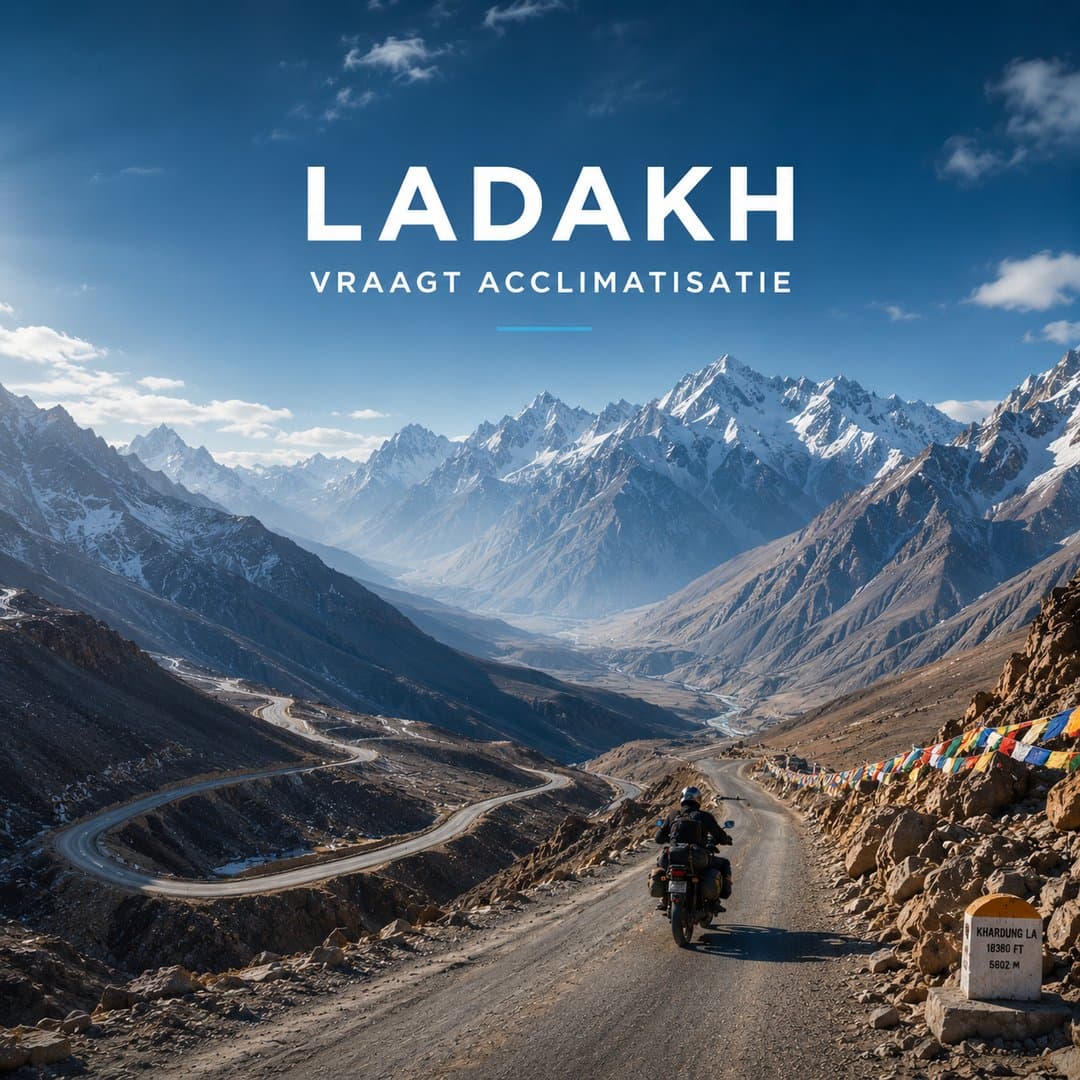
Acclimatising at home for mountain expeditions: how to prepare your body for high altitudes in a controlled manner
Published 11 January 2026 · 13 min read

Acclimatising at home for mountain expeditions means that your body learns to cope with less oxygen even before you leave. This usually happens by sleeping in a height tent for several weeks. For mountaineers heading for 4000, 5000 or 6000 metres and higher, this can significantly reduce the chance of altitude sickness, especially during the first few days of the trip.
The aim is not to completely rule out altitude sickness. The main benefit lies in control. Acclimatisation becomes more measurable, more planned and better managed. As a result, you don't start from scratch, but with a body already accustomed to the stimulus of low-oxygen air. You will also recognise more quickly along the way when it is sensible to make adjustments.
Short answer: Acclimatising at home before mountain expeditions is particularly useful when your journey quickly reaches over 3,000 metres, involves few acclimatisation days, or reaches a sleeping altitude above 4,000 metres. A period of 4 to 6 weeks sleeping in a high-altitude tent is usually the most practical. This allows for a gradual build-up, monitoring of SpO2 trends, and using sleep quality, recovery, and symptoms as guiding information.
Conclusion: Sleeping beforehand in a height tent significantly reduces the chance of altitude sickness, especially when travelling to 4000 metres and higher.
Nuance: A high-altitude tent does not provide a guarantee and does not replace sensible acclimatisation on location.
Practical hook: Ideally, start 4 to 6 weeks before departure and focus on morning values, sleep, and recovery.
Why acclimatising at home can make so much difference for mountain expeditions
Many altitude-related problems don't just appear on the summit day itself. They often start earlier, for example, during the first nights above 2500 to 3500 metres. At this point, your body suddenly receives less oxygen. This changes your breathing, makes your sleep more restless, and lowers your oxygen saturation.
That is why acclimatising at altitude no detail in your planning. It is one of the most important success factors of your expedition. Whoever ascends too quickly builds up a deficit early on. With a controlled preparation, you usually start more calmly.
The physiological stimulus behind an altitude tent
An altitude tent works with normobaric hypoxia. This means that the air pressure at home remains the same, while the oxygen percentage in the air is reduced. So, you are not simulating lower air pressure, but rather lower oxygen availability. As a result, your body receives a comparable oxygen stimulus to that experienced at altitude, but in a safe and controlled home environment.
For mountain expeditions, the night is especially important. During sleep, you spend many hours in a hypoxic environment. This makes the stimulus consistent. Moreover, you quickly notice how your body reacts, as sleep quality, morning feeling, and SpO2 trend provide daily feedback.
In practice: The altitude tent is not extra training that you have to force. It is mainly a sleep stimulus. That is precisely why a gradual build-up often works better than quickly going to a high setting. The best preparation feels manageable, repeatable, and easy to monitor.
For which mountain trips is acclimatising at home advisable?
Not every trip requires the same approach. A hut-to-hut trek around 2500 metres requires less preparation than Kilimanjaro, Aconcagua or a Nepalese trek with high passes. However, the choice isn't just about maximum altitude. Equally important are the rate of ascent, sleeping altitude, recovery time, and previous sensitivity to altitude.
Acclimatising at home becomes particularly interesting when several risk factors converge. Consider a rapid ascent to altitude, a route with limited rest days, a first night above 3,000 metres, or a summit goal above 5,000 metres. In addition, previous headaches, nausea, poor sleep, or unexplained fatigue at altitude are clear signals.
Altitude Dream advice per target altitude
The overview below helps to better align preparation with the type of trip. Consider it as guidance, not a fixed medical protocol. The correct progression remains dependent on departure date, route profile, previous altitude experience and personal response.
| Target height | When relevant? | Altitude Dream Advice | Review context |
|---|---|---|---|
| 4000 m | Mont Blanc, Alps, rapid ascent, short acclimatisation | Usually 4 weeks, with an emphasis on sleep quality and a gradual build-up. | In keeping with experiences of Mont Blanc and Alpine travellers |
| 5000 m | Kilimanjaro, Everest Base Camp, Andes, high treks | Usually 4 to 5 weeks, with SpO2-guided build-up | To accompany reviews of Kilimanjaro and 5000m trips |
| 6000 m | Aconcagua, Huayna Potosi, Island Peak, Mera Peak | Usually 5 to 6 weeks, with more attention to recovery and symptoms | In line with experiences from 6000-metre expeditions |
| 7000 m+ | Peak Lenin, Denali, Himalaya, extreme altitude | Individual journey, often part of broader expedition planning | Relevant for experienced climbers with previous altitude history |
When relevant? Mont Blanc, Alps, rapid ascent, short acclimatisation.
Altitude Dream Advice Usually 4 weeks, with an emphasis on sleep quality and a gradual build-up.
Review context Matching experiences of Mont Blanc and Alpine travellers.
When relevant? Kilimanjaro, Everest Base Camp, Andes, high trekking.
Altitude Dream Advice Usually 4 to 5 weeks, with SpO2-guided build-up.
Review context To Match reviews for Kilimanjaro and 5000-metre trips.
When relevant? Aconcagua, Huayna Potosi, Island Peak, Mera Peak.
Altitude Dream Advice Usually 5 to 6 weeks, with more attention to recovery and symptoms.
Review context Fitting with experiences from 6,000-metre expeditions.
When relevant? Peak Lenin, Denali, Himalayas, extreme altitude.
Altitude Dream Advice Individual trip, often part of broader expedition planning.
Review context Relevant for experienced climbers with previous altitude history.
When travelling to Kilimanjaro, the route profile is particularly important. If the route contains few acclimatisation days, preparation deserves extra attention. The choice between routes and sleeping altitudes is discussed in more detail in our guide on Kilimanjaro route and acclimatisation.
How does sleeping in a height tent at home work?
When acclimatising at home, you sleep in a height tent while the generator supplies air with a lower oxygen percentage. This means you continue to sleep in your own bed, but with a controlled hypoxic stimulus. During the day, you live and train normally at low altitude.
This principle aligns with sleep high train low. The night is used for the altitude stimulus, while you can function normally during the day. This is often more practical for expedition-goers than training in low-oxygen air. The goal is not a short, intensive stimulus, but acclimatisation, sleep, recovery, and stable responses to less oxygen.
Why building up slowly is more important than setting high
A good build-up starts low. Then you gradually increase the setting step by step. Because higher is not automatically better. Your body needs time to process the stimulus. If you build up too quickly, sleep can deteriorate and extra stress can arise. Then the preparation loses some of its value.
Example of a calm build-up
The schema below is indicative. The correct build-up depends on the target altitude, departure date, previous altitude experience and personal response.
| Phase | Target | What to look out for? | Adjust when |
|---|---|---|---|
| Week 1 | Getting used to sleeping with less oxygen | Sleep, morning feeling, slight headache | Sleep is clearly getting worse |
| Week 2 | Increase stimulation gently | SpO2 trend and recovery throughout the day | Morning readings dropping sharply or symptoms worsening |
| Week 3-4 | Building stability | Consistency, all-nighters, no forcing | Herstel of humeur duidelijk achteruitgaat |
| Week 5-6 | Working specifically towards a target height | Balance between stimulation and departing well-rested | Fatigue builds up as departure approaches |
Target Getting used to sleeping with less oxygen.
What to look out for? Sleep, morning feeling, slight headache.
Adjust when Sleep is clearly getting worse.
Target Increase the stimulation gradually.
What to look out for? SpO2 trend and recovery during the day.
Adjust when Morning values dropping sharply or symptoms worsening.
Target Building stability.
What to look out for? Consistency, late nights, no forcing.
Adjust when Her recovery or mood is clearly deteriorating.
Target Specifically working towards the target height.
What to look out for? Balance between stimulation and leaving rested.
Adjust when Fatigue builds as departure approaches.
Acclimatising at home for mountain expeditions starts with measurement, not guesswork.
A sleep tent works best when feeling is combined with objective data, as this combination shows more quickly whether the stimulus is well-dosed. Naturally, your own experience remains important. However, feeling can sometimes be slow or misleading. That's why we always look at the combination of measurements, sleep quality, recovery, and complaints.
The most important metric is your oxygen saturation. Therefore, SpO2 is never a standalone absolute truth. A single reading can be inaccurate due to cold fingers, movement, poor sensor placement, or a restless night. The trend over several days is therefore more important than a single isolated number.
This is how you monitor this lens
Daily checkpoints
- SpO2 trend: Preferably meet in the morning, sitting calmly and always in a similar way.
- Sleep quality: Note whether you sleep through the night, wake up often, or sleep remarkably restlessly.
- Recovery: Watch for fatigue, muscle sensation, concentration, and desire to move.
- Symptoms: Take headaches, nausea, dizziness, and shortness of breath seriously.
- Consistency Assess multiple days together and don't draw conclusions from a single night.
| Signal | Interpretation | Practical action |
|---|---|---|
| Stable | SpO2 trend, sleep and recovery remain predictable | Continue building calmly |
| Pay attention | Sleep becomes more restless or the morning feeling deteriorates | Do not increase and stabilize for 1 to 2 nights |
| Adjust | Complaints are increasing or recovery is clearly decreasing. | Lower setting and take extra recovery |
| Stop | Serious complaints, shortness of breath or persistent deterioration | Stop hypoxic stimulation and seek medical advice |
Interpretation SpO2 trend, sleep and recovery remain predictable.
Practical action Continue building steadily.
Interpretation Sleep becomes more restless or morning feeling deteriorates.
Practical action Do not increase and stabilise for 1 to 2 nights.
Interpretation Complaints are increasing or recovery is clearly declining.
Practical action Lower setting and take extra recovery.
Interpretation Serious complaints, shortness of breath or persistent deterioration.
Practical action Stop hypoxic stimulus and seek medical advice.
Wie metingen beter wil leren interpreteren, kan zich verdiepen in oxygen saturation at altitude. This helps to better place values along the way, especially when effort, cold, or altitude have an impact.
Common misconceptions about settling in at home
Misconception 1: Higher settings are always better
A high setting sounds attractive, but is not automatically more effective. The correct setting provides sufficient stimulus without putting sleep and recovery under too much pressure. Therefore, a stable progression is usually more valuable than an aggressive leap upwards.
Misunderstanding 2: the expedition itself becomes less important
A high-altitude tent strengthens preparation, but it doesn't negate the basic rules on location. You still need to ascend wisely, respect rest days, eat well, drink enough, and take complaints seriously.
Misconception 3: only untrained people get altitude sickness
Even fit athletes and experienced hikers can experience problems. Fitness helps with exertion, but does not automatically protect against altitude sickness. This is precisely why acclimatisation remains important, even when you are physically strong.
What to do and not to do during acclimatisation at home
Good preparation is usually simple, but it does require discipline. Dosage, sleep quality, and monitoring in particular determine whether the stimulus turns out well. Therefore, it helps to be clear beforehand about which behaviour strengthens your preparation and which behaviour adds unnecessary risk.
Doing versus not doing
| Do well | Don't do it | Why this matters |
|---|---|---|
| Start gently and build up gradually | Move to a high setting as quickly as possible | Sleep and recovery determine whether the stimulus remains usable. |
| Tracking SpO2 as a trend | Decide on one loose measurement | Trends provide more reliable steering information |
| Depart with margin | To stimulate maximally until the last night. | You want to start the journey refreshed. |
| Remaining conservative while progressing | Thinking that preparation solves everything | Pre-acclimatisation reduces risk, but offers no guarantee |
Do well Start gently and build up gradually.
Don't do it Move to a high setting as quickly as possible.
Why this matters Sleep and recovery determine whether the stimulus remains usable.
Do well Monitor SpO2 as a trend.
Don't do it Decide on a single loose measurement.
Why this matters Trends provide more reliable steering information.
Do well Depart with margin.
Don't do it Stimulate maximally until the last night.
Why this matters You want to start the journey refreshed.
Do well Remaining conservative while on the move.
Don't do it Thinking that preparation solves everything.
Why this matters Pre-acclimatisation reduces risk, but offers no guarantee.
When acclimatising at home is particularly advisable
This is especially relevant when
- you sleep or move above 4000 metres;
- the route contains few quiet acclimatisation days;
- I have previously suffered from headaches, nausea, or poor sleep at altitude;
- the expedition is relatively short compared to the maximum altitude;
- you want to leave with more certainty and less physiological surprise.
Be more careful when
- Your medical history requires a doctor's advice.;
- you sleep poorly with any form of extra stimulation;
- you're already exhausted just before departure;
- Complaints are being ignored because the trip is important.
For specific 6,000-metre goals, preparation is often even more important. Consider a first high-altitude Andean expedition, a Nepalese trekking peak, or a mountain where you sleep at high altitude quickly. In that case, in-depth study of acclimatising for 6000 metres a logical next step.
Practical tips for the final week before departure
The final week is not about forcing extra gains. This phase is primarily about stabilising. You want to leave with confidence, not with a body that is still recovering from too heavy a stimulus.
Last week checklist
- Keep your sleep hours high and consistent.
- Do not increase the setting any more aggressively.
- Let's talk about morning feeling, appetite and recovery.
- Plan travel stress, packing and workload away.
- Use measurements as a trend, not as an exam.
- On the way, stay up to date, be conservative and honest about complaints.
A simple rule of thumb helps. When preparation leads to better sleep, a calmer start, and more objective adjustments, the stimulus has been chosen well. If fatigue, restlessness, or complaints increase, the build-up was probably too ambitious.
Preparing for an expedition up to 6000 metres?
Altitude Dream helps you acclimatise in a controlled way at home with a plan that suits your target altitude, schedule, and personal response. You sleep beforehand in a high-altitude tent, monitor your SpO2 trend, and leave with measurable preparation for the mountains.
Conclusion: checked prepared departure
Acclimatising at home before mountain expeditions is particularly valuable because it reduces uncertainty. The body becomes accustomed to lower oxygen levels even before departure. This often makes the first phase of your mountain journey more predictable, calmer, and easier to monitor.
The main gain lies in control. You build up gradually, measure your response and see how sleep and recovery react. You then leave with a body that already recognises the hypoxic stimulus.
At the same time, it is important to keep things in perspective. An altitude tent is no substitute for acclimatisation on site and does not offer a 100% guarantee against altitude sickness. However, this approach does make the process controlled, measurable and predictable. For many mountaineers, this significantly reduces the risk of altitude sickness. What’s more, it increases the likelihood that the expedition will start just as you want it to: calmly, with a clear head and well prepared.
Frequently asked questions about acclimatising at home for mountain expeditions
How long do you need to acclimatise at home before a mountain expedition?
For most mountain expeditions, 4 to 6 weeks is a practical guideline. At 4,000 metres, 4 weeks is often sufficient. At 5,000 to 6,000 metres, 5 to 6 weeks is usually more sensible.
Does sleeping in a high-altitude tent reduce the risk of altitude sickness?
Yes, sleeping in a hyperbaric (altitude) tent before going to altitude can significantly reduce the chance of altitude sickness. It's not a guarantee, but it makes acclimatisation more controlled, measurable, and plannable.
Should you train in a tent or mostly sleep?
For mountain expeditions, the emphasis is usually on sleeping. The night provides a long, consistent stimulus. During the day, you can recover, work, and train normally.
What should my SpO2 be during preparation?
There is no universally ideal number. Look primarily at the trend, along with sleep quality, recovery, and complaints. A single measurement says less than multiple days combined.
Does a height tent replace acclimatisation on the mountain?
No. An altitude tent does not replace actual acclimatisation on-site. It aids preparation and reduces risk, but you still need to ascend gradually during your trip.