Altitude sickness and Diamox: when and how to use it?
Published 16 March 2026 · 3 min read
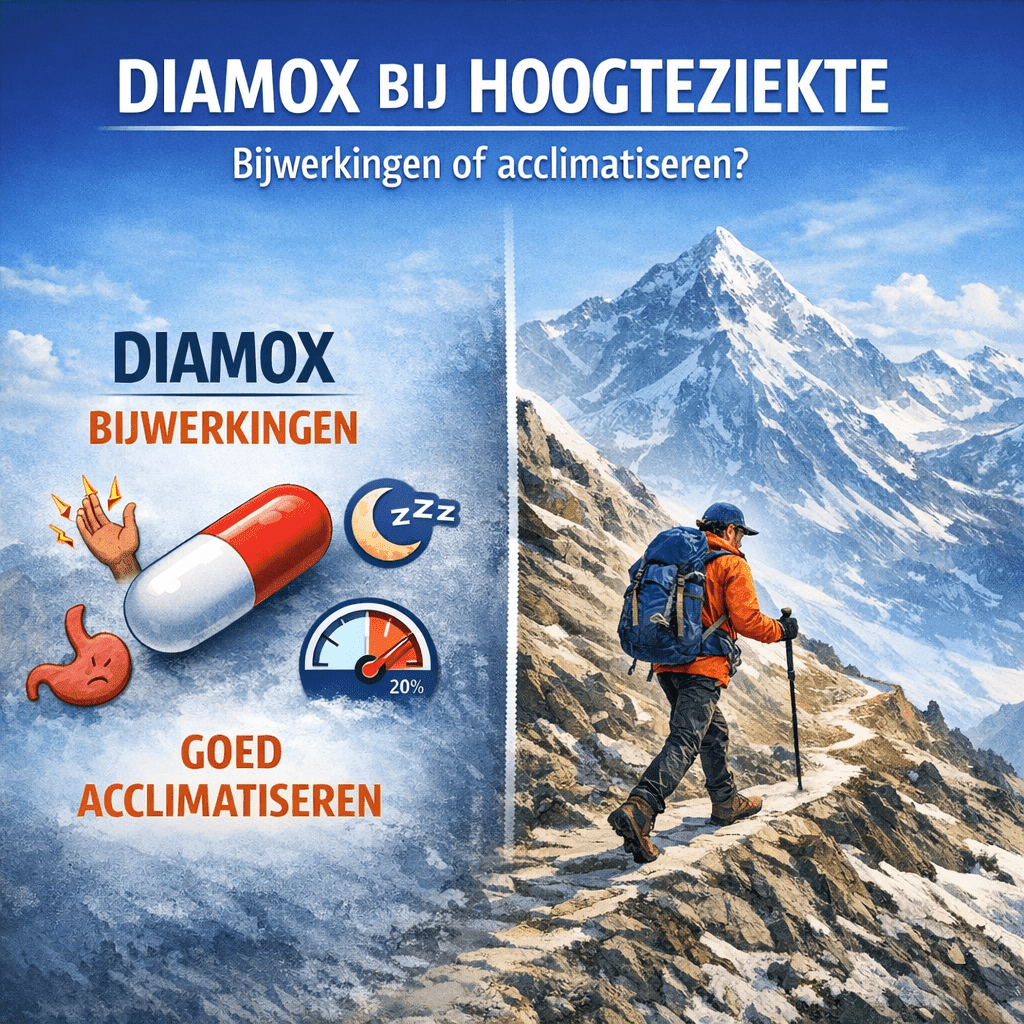
Have doubts about acetazolamide Diamox altitude sickness? Then you are not the only one. Many trekkers, climbers and expeditioners wonder whether Diamox is wise, when to start using it and whether it really helps prevent altitude sickness. That makes sense. You don't want to use unnecessary medication, but you also don't want to discover at 4200 or 5200 metres that your body is insufficiently acclimatised.
Diamox can help support acclimatisation, but it is not a panacea. The most important protection against altitude sickness remains a sensible ascent schedule, adequate rest and good preparation. In this article, you will read about when Diamox makes sense, when it does not, how it works, what side effects are common and how to make a choice that suits your trek.
Also first read the basics about altitude sickness and the complete explanation of preventing altitude sickness.
📌 The essentials in 30 seconds
- Diamox supports acclimatisation but does not completely prevent altitude sickness
- Especially useful for rapid ascent or little acclimatisation time
- Side effects occur regularly
- Proper acclimatisation remains more important than medication
- Pre-acclimatisation can often prevent the use of Diamox
🧭 When is Diamox usually wise?
- Rapid rise above 3,000 metres
- Sleeping altitude above 3500 metres
- Previous altitude sickness
- Tight shipping schedule
- Climbs above 4000 metres
- Little time for quiet acclimatisation
⚠️ When is Diamox often not needed?
- Quiet ascent schedule
- Sufficient rest days
- Altitude below 3000 metres
- Good preparation
- Pre-acclimatisation done in an altitude tent
🏔️ What is Diamox?
Diamox is the brand name of acetazolamide. The drug affects the acid-base balance in the body, stimulating breathing. This increases oxygen uptake and allows the body to adjust to altitude faster.
📊 How does Diamox work?
| Impact | Result |
|---|---|
| More ventilation | Better oxygen intake |
| Faster acclimatisation | Less chance of AMS |
| More puddles | Moisture balance changes |
| Other pH balance | Breathing stimulus stronger |
⚠️ Side effects of Diamox
- frequent urination
- tingling
- taste changes
- drowsiness
- gastrointestinal complaints
- thirsty
- fatigue
- dizziness
These complaints can be disruptive during a trek, though. Especially at altitude, you want to sleep well, recover and maintain energy.
🧭 Why many climbers would rather not depend on Diamox
Medication can help, but does not replace acclimatisation. The safest strategy remains ascending slowly and giving the body time to adjust.
🏕️ How pre-acclimatisation can reduce Diamox use
Acclimatising beforehand will reduce the transition to altitude. This can be done at home with an altitude tent where the oxygen percentage is reduced while the air pressure remains the same.
As a result, acclimatisation begins before departure and medication is often less necessary.
📊 Equation
| Method | Advantage | Disadvantage |
|---|---|---|
| Diamox only | Faster ventilation | Side effects |
| Quiet acclimatisation | Natural | Costs time |
| Pre-acclimatization | Smaller transition | Preparation needed |
| Combination | Biggest margin | Planning required |
🏔️ Do you need Diamox for Kilimanjaro?
| Route duration | Risk | Diamox |
|---|---|---|
| 5 days | High | Often |
| 6 days | Moderate | Sometimes |
| 7 days | Bearing | Sometimes not |
| 8 days | Bearing | Often not |
🏔️ Do you need Diamox for Everest Base Camp?
| Situation | Opinion |
|---|---|
| Quiet schedule | Often not needed |
| Quick draw | Sometimes |
| Previous AMS | Regular |
| Pre-acclimatization | Less needed |
📊 This is how you monitor objectively
- SpO2 trend
- Sleep quality
- Symptoms
- Recovery
Read also: oxygen saturation at altitude
❓ FAQ
When to start taking Diamox?
Often 24-48 hours before rising.
Is Diamox safe?
For most people, yes.
Should everyone take Diamox?
No.
Is acclimatising better?
Yes.
🎯 In doubt about Diamox?
When you acclimatise better beforehand, medication often becomes less necessary.