Altitude training in obesity: what does scientific research show?
Published 5 September 2012 · 8 min read
Altitude training for obesity is an interesting research area within hypoxia, metabolism, and weight regulation. While altitude training is usually linked to athletic performance or acclimatisation, researchers are also looking into what happens when people with obesity are exposed to a low-oxygen environment.
This article is deliberately intended as a scientific in-depth study. If you primarily want to know practically whether altitude training can help with weight loss, please read our guide on Weight loss with altitude training. Below, we primarily look at the physiological mechanisms behind obesity, hypoxia, and metabolic adjustment.
Short answer: Research suggests that altitude training in obesity can influence body weight, BMI, adipose tissue distribution, and metabolic processes. The effects appear to be mainly due to mild hypoxia, where the body must adapt to less available oxygen.
- Hypoxia can affect metabolic processes
- Research shows a drop in weight and BMI
- HIF-1 alpha plays a central role
- The application remains supplementary to diet and exercise
Conclusion: Hypoxia research in obesity demonstrates interesting physiological effects.
Nuance: Altitude training is not a standalone treatment for obesity.
Practical hook: Prolonged, controlled exposure seems more relevant than isolated training stimuli.
Why altitude training is scientifically interesting in the context of obesity
Obesity is more than just a matter of body weight. It is related to energy balance, hormones, adipose tissue, inflammatory processes, insulin sensitivity, and mobility. This is precisely why it is interesting to investigate how the body reacts when oxygen availability changes.
At altitude training the body is exposed to less oxygen. This can happen at real altitude, but also at home through normobaric hypoxia. In this case, the air pressure remains the same, while the oxygen percentage is reduced.
This controlled oxygen stimulus activates various adaptation mechanisms. These mechanisms are known from sports physiology, but they can also be relevant for people with overweight or obesity.
What did the research on altitude training in obesity show?
A study involving Prof. Igor Mekjavic, Prof. Ola Eiken, and Prof. Ian MacDonald investigated the effects of continuous simulated altitude exposure and training in mild hypoxia.
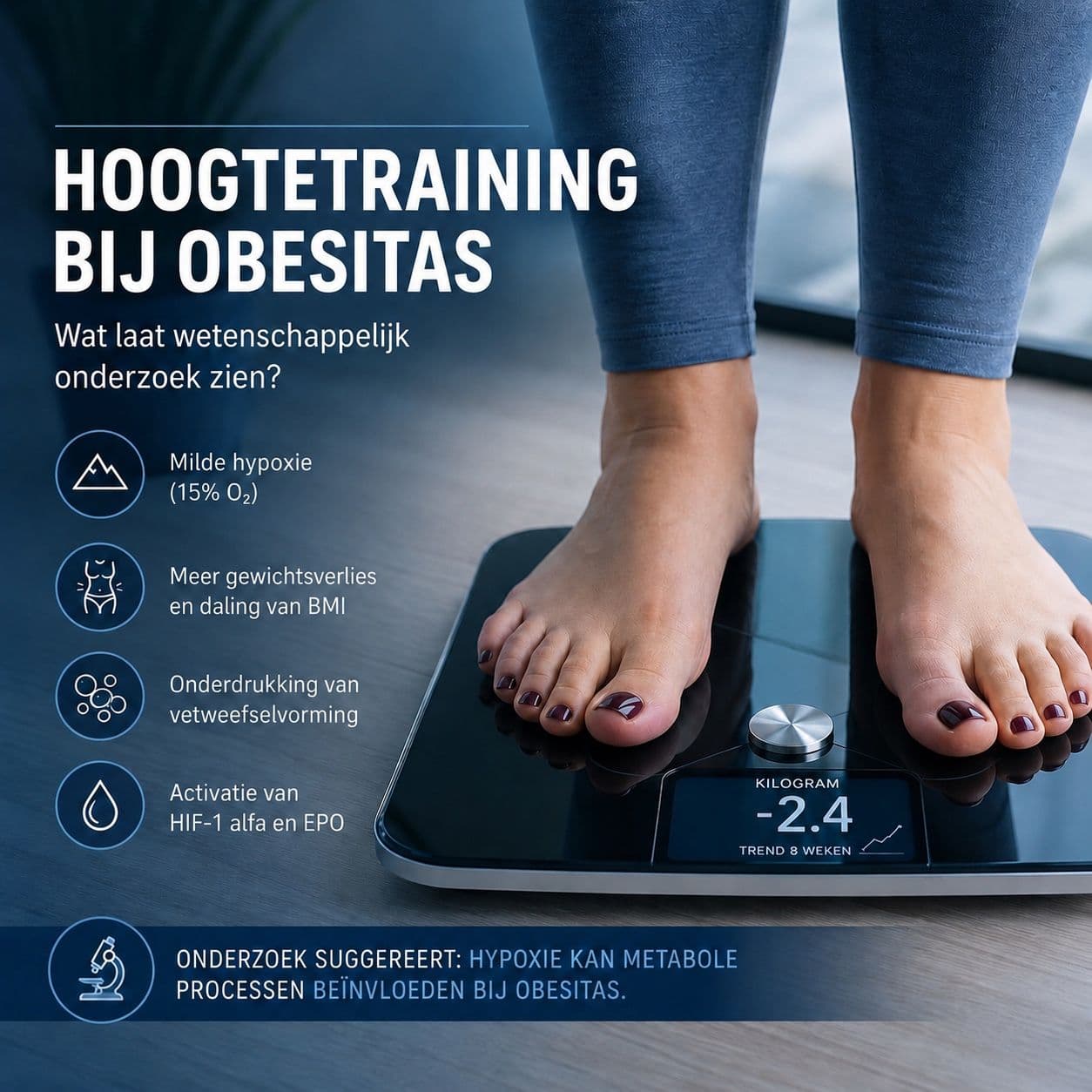
The study compared healthy non-obese and healthy obese subjects. The participants exercised at low intensity, at approximately 60% of their maximum heart rate. One group did this under normal conditions. The other group trained in mild hypoxia, with approximately 15% oxygen.
The outcome was striking. The group that trained under hypoxic conditions showed more weight loss and a greater decrease in Body Mass Index than the group that performed the same exertion without an oxygen stimulus.
This suggests that not only the training counts, but also the environment in which that training takes place.
📊 Research shows that the same low training intensity can have different effects when the body has less oxygen available. This makes hypoxia interesting as a metabolic stimulus.
Welke processen veranderen onder hypoxie?
When the body receives less oxygen, it doesn't simply take a back seat. Instead, it activates a series of adaptive processes. These processes are designed to allow cells to function better in an environment where oxygen is scarcer.
HIF-1 alpha as an oxygen sensor
One of the most important mechanisms is HIF-1 alpha. HIF stands for Hypoxia Inducible Factor. This system functions as a type of oxygen sensor in the body.
When oxygen availability decreases, HIF-1 alpha becomes more active. As a result, processes related to energy metabolism, glucose utilisation, blood flow, and cell metabolism change.
Erythropoietin and oxygen transport
Erythropoietin, better known as EPO, can also be activated by hypoxia. EPO stimulates the production of red blood cells. That is one of the reasons why altitude training is known among athletes as a performance enhancer.
Those who wish to understand how this works in more depth can read further about Increase EPO naturally.
Adipose tissue and metabolic regulation
The study also looked at adipose tissue. The results suggest that hypoxia can influence the formation and regulation of adipose tissue. This does not mean that fat disappears on its own, but it does mean that the body may handle energy and storage processes differently under oxygen deprivation.
Altitude training for obesity is not the same as weight loss with altitude training.
This distinction is important. The practical article on losing weight with altitude training focuses on what someone can concretely expect from weight loss. This article is precisely about the underlying science.
Therefore, the emphasis here is not on kilograms, diets, or training plans. The core question is: what physiological processes are affected when people with obesity are exposed to hypoxia?
Both articles complement each other.
- Weight loss with altitude training: Practical explanation, expectations and application.
- Altitude training for obesity: Research, mechanisms and physiological deepening.
- Together a stronger content cluster around hypoxia, weight, and health.
Why sleeping in a height tent beforehand can be extra relevant
A single hypoxic training session provides a brief stimulus. Sleeping in a altitude tent provides a longer stimulus, often several hours per night. This gives the body more time to adapt.
This principle has long been known to athletes and mountaineers. The oxygen percentage is deliberately lowered during sleep in a high-altitude tent. This makes the stimulus predictable, measurable, and gradually buildable.
Further research is needed for weight regulation. Nevertheless, it is physiologically logical that prolonged exposure can have different effects than a short session. Especially when the exposure is consistently built up and well monitored.
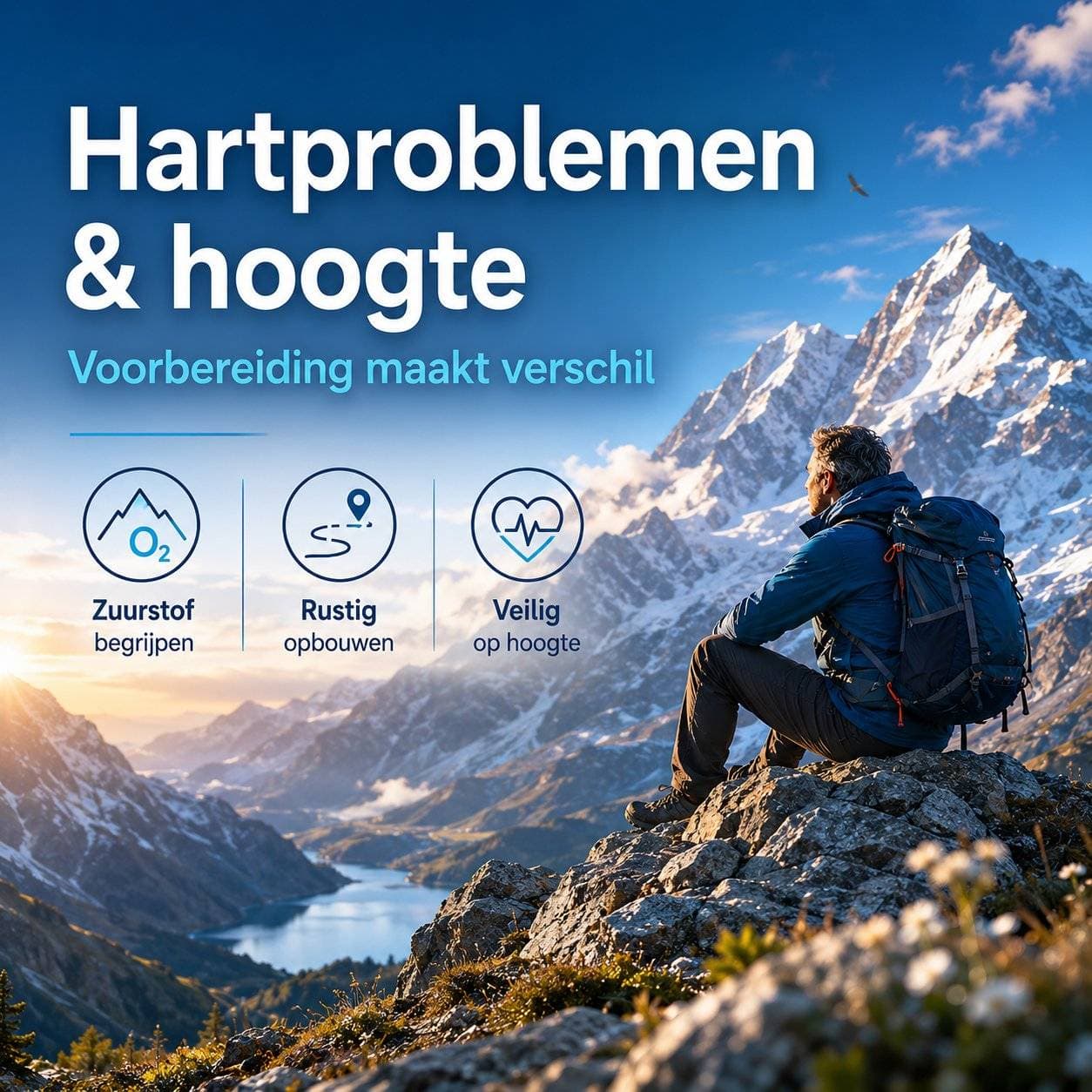
For mountain travellers, there is a second benefit. Sleeping in a high-altitude tent beforehand helps the body acclimatise to lower oxygen levels. This can significantly reduce the risk of altitude sickness. Whilst it is by no means a 100% guarantee, it does make acclimatisation more controlled and predictable.
Read more in our guide on acclimatising at home for mountain expeditions.
What can and cannot be concluded from this research?
| Section | Interpretation | Practical significance |
|---|---|---|
| Weight | Died in the hypoxia group | Interesting, but not to be seen in isolation from lifestyle |
| BMI | Significant drop reported | Supports further research |
| Adipose tissue | Formation seems to be influenced | Relevant for metabolic health |
| Application | No standalone treatment | Only makes sense within a broader approach |
Interpretation: Decline seen in hypoxia group
Practical significance: Interesting, but not to be seen in isolation from lifestyle
Interpretation: Significant drop reported
Practical significance: further research
Interpretation: formation appears to be influenced
Practical significance: Relevant for metabolic health
Interpretation: No standalone treatment
Practical significance: only make sense within a broader approach
This is how you monitor this lens
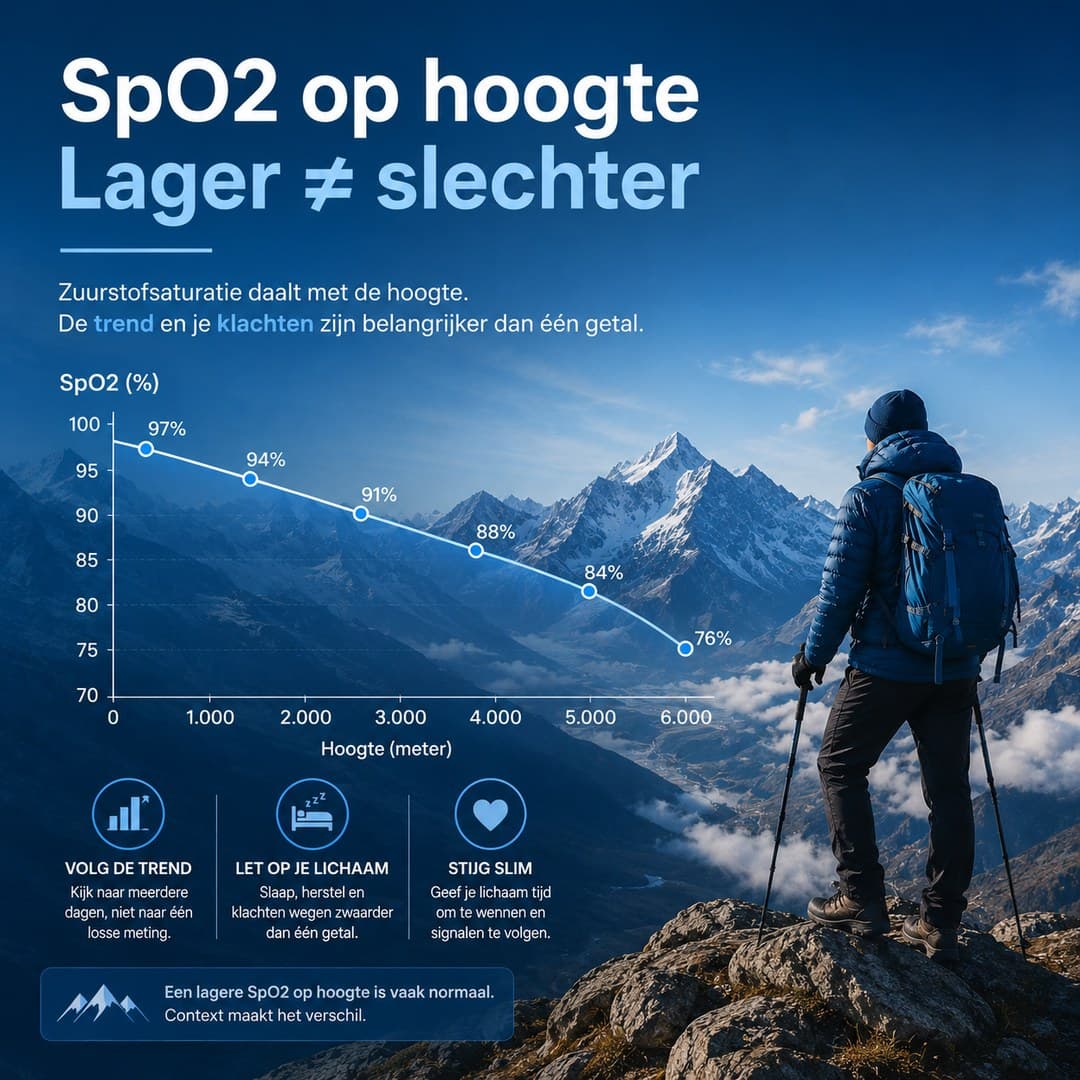
Altitude training isn't about isolated measurements. It's about trends. This is certainly true when the application isn't sports-related, but rather physiological or health-oriented.
- SpO2 trend: monitor oxygen saturation over several mornings, not as a single reading.
- Sleep quality: Note rest, sleeping through and morning feeling.
- Recovery: monitor fatigue, muscle sensation and energy levels.
- Symptoms: Note any headache, dizziness, shortness of breath or unusual complaints.
- Body weight view weekly averages instead of daily fluctuations.
A good progression feels controlled. If sleep quality deteriorates significantly or clear complaints arise, the stimulus is likely too high. In that case, reducing or temporarily stabilising is wiser than continuing to increase.
Decision rules: when is this relevant?
Altitude training in obesity can be interesting when:
- you want to understand the subject scientifically
- you are already working on exercise, nutrition and lifestyle
- You want to know what hypoxia does to metabolism
- you are simultaneously preparing a trip to altitude
- you are looking for extra stimulation under supervision
Be cautious when:
- whether there are heart problems or lung problems
- you have severe sleep apnoea
- you are taking medication that affects breathing or oxygen transport
- you experience complaints with mild exertion
Common misunderstandings
Hypoxia is the same as training more intensely
Not entirely. The external load can remain low while the internal load increases. This can make walking or cycling at a gentle pace in hypoxia feel physiologically more demanding than the same exertion at sea level.
Altitude training is a weight loss method.
No. Altitude training is a physiological stimulus. It can possibly offer support, but it doesn't replace nutrition, exercise, sleep, and medical guidance.
Higher is always better
No. Too strong a stimulus can disrupt sleep, recovery and resilience. Gradual progression is what makes hypoxia useful.
An altitude tent completely prevents altitude sickness
No. A height tent can significantly reduce the chance of altitude sickness, but doesn't offer an absolute guarantee. It remains important to acclimatise slowly on the mountain as well.
FAQ
What is the difference between altitude training for obesity and weight loss with altitude training?
Altitude training for obesity is primarily about research and physiology. Losing weight with altitude training is more about practical application and expectations around weight loss.
Kan hypoxie verhogen vetverbranding?
Hypoxia can affect the processes involved in energy utilisation and adipose tissue regulation. The effect varies from person to person and is related to lifestyle.
Is altitude training safe with obesity?
This depends on the health situation. Medical advice is recommended for heart problems, lung problems, sleep apnoea, or medication use.
Why is sleeping in a height tent relevant?
Sleeping in an altitude tent provides a longer, controlled hypoxic stimulus. This allows the body to gradually adapt to lower oxygen levels.
Does an altitude tent help against altitude sickness?
Sleeping in a hypobaric tent beforehand can significantly reduce the chance of altitude sickness. It is not a guarantee, but it makes acclimatisation more predictable.
Do you want to make the practical translation?
This article explains the science behind hypoxia and obesity. For practical application regarding weight, training, and expectations, read the complete guide to weight loss with altitude training.
Read the practical guide to losing weight with altitude training
Conclusion
Altitude training in obesity is particularly interesting because it shows how strongly the body reacts to less oxygen. Research suggests that hypoxia can influence weight, BMI, adipose tissue formation, and metabolic processes.
This means it is neither a miracle cure nor a substitute for nutrition, exercise, or medical guidance. However, it forms a valuable research direction within health, metabolism, and controlled physiological stimuli.
For mountain travellers and athletes, the practical relevance is particularly clear. Sleeping in a high-altitude tent beforehand can make the acclimatisation process measurable and plannable. This can significantly reduce the chance of altitude sickness, while the body adjusts more calmly to less oxygen.