Altitude training for people with diabetes: what’s worth knowing, what’s been proven, and what should you bear in mind?
Published 13 August 2012 · 11 min read
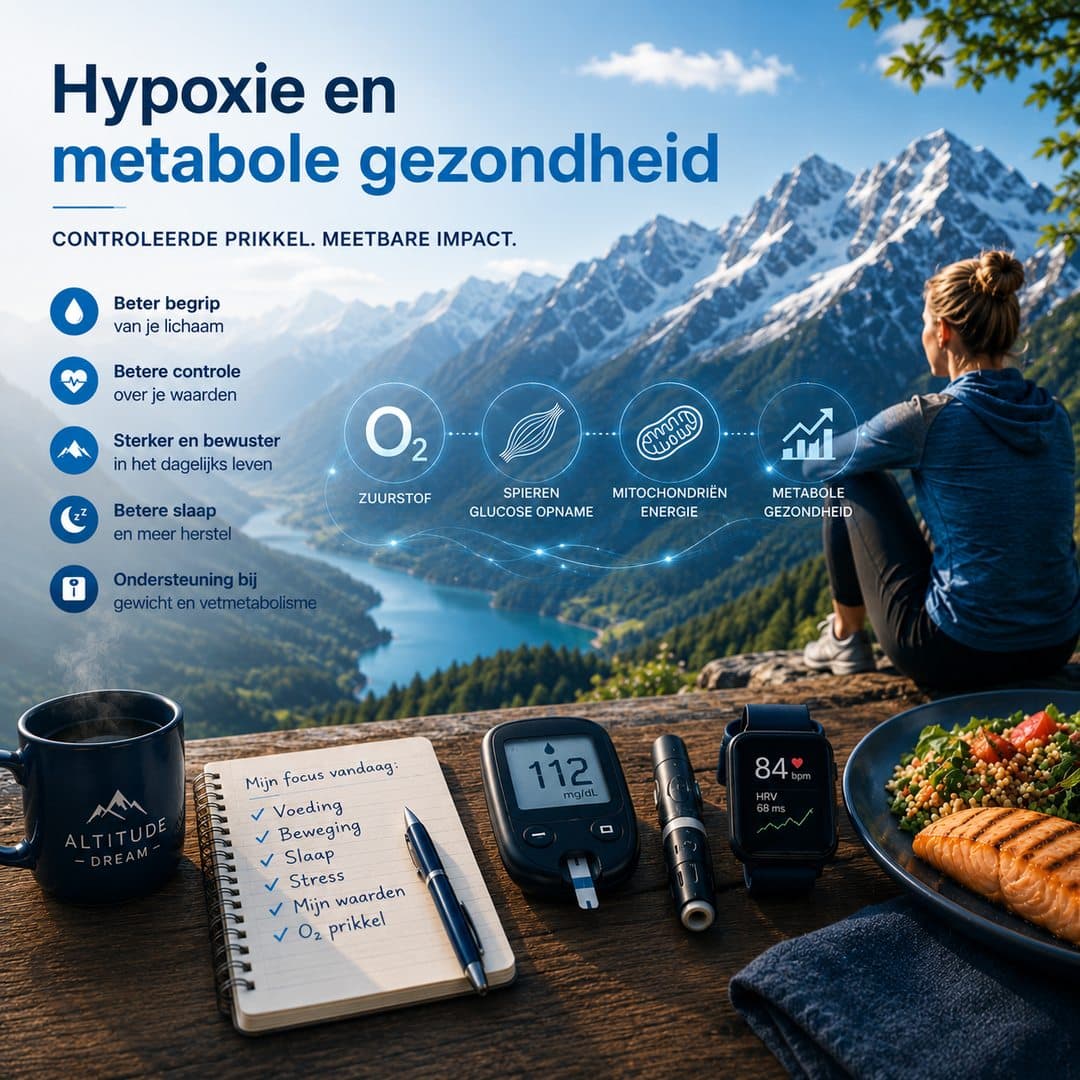
Altitude training for diabetes is an interesting, but sensitive topic. More and more people with insulin resistance, being overweight, or type 2 diabetes are looking for additional ways to improve their metabolic health. Not as a replacement for diet, exercise, sleep, or medical guidance, but as a potential additional stimulus. The core question is therefore not: does altitude training work as a treatment for diabetes? The better question is: can controlled hypoxia influence glucose uptake, energy expenditure, fat metabolism, and fitness, and for whom is that safe enough to consider?
The short answer: science is interesting, but not yet definitive. Studies on hypoxia, hypoxic training, and metabolic health show potential effects on glucose regulation, insulin sensitivity, body composition, and fitness. At the same time, the studies are heterogeneous, relatively small, and not always directly applicable to home use with an altitude tent. Therefore, this topic deserves a calm, mature approach.
Short answer: Altitude training for diabetes may potentially be interesting as an additional lifestyle stimulus, particularly in cases of insulin resistance, obesity, and low exercise tolerance. It is not a proven diabetes treatment and should never replace medication, diet, exercise, or medical follow-up. Anyone considering this should monitor glucose levels, sleep, recovery, symptoms, and SpO2 as trends.
Conclusion: Controlled hypoxia can stimulate metabolic processes, but it is not a miracle cure for diabetes.
Nuance: The research is promising, but not strong enough to make definitive medical claims.
Practical hook: See it as an additional, measurable stimulus alongside lifestyle and medical guidance.
Why altitude training is being researched for diabetes at all
Type 2 diabetes and obesity often revolve around a combination of insulin resistance, low muscle activity, inflammation, fat accumulation, reduced fitness, and disrupted energy metabolism. Muscles play a significant role in this. Active muscle mass can absorb glucose, consume energy, and improve metabolic flexibility.
This is why exercise is so important for type 2 diabetes. However, exercise is not easy for many people who are overweight, tired, have joint problems, or are unfit. This is precisely where scientific interest in hypoxia arises. When the body temporarily receives less oxygen, it has to manage energy more efficiently. This can influence glucose uptake, mitochondria, blood vessels, fat burning, and the training stimulus.
At altitude training It's not always about training hard. The stimulus can also consist of sleeping or staying calmly in air with a lower oxygen percentage. With a hypobaric tent, this is achieved through normobaric hypoxia. The air pressure remains normal, but the oxygen percentage is reduced. This allows the system to simulate a certain altitude.
This distinction is important. For athletes, altitude training is often linked to performance improvement. For people with insulin resistance or diabetes, it's more about a gentle metabolic stimulus. The question then is: can the body, under controlled conditions, learn to better manage energy and oxygen?
Reality check: The old article stated that altitude training is a good remedy for diabetes and obesity. That phrasing is too definitive today. It's better to say: hypoxia is an interesting additional stimulus within metabolic health, but not a recognised treatment for diabetes or obesity.
Bij gecontroleerde hypoxie ondergaat je lichaam een reeks aanpassingen om de verminderde zuurstofbeschikbaarheid te beheren. Deze aanpassingen kunnen zowel onmiddellijk als adaptief zijn. **Onmiddellijke reacties:** * **Verhoogde ademhaling (hyperventilatie):** Je ademhalingsfrequentie neemt toe om meer lucht (en dus zuurstof) in te ademen en koolstofdioxide af te voeren. * **Verhoogde hartslag:** Je hart gaat sneller kloppen om zuurstofrijker bloed sneller door je lichaam te transporteren. * **Verhoogde bloeddruk:** De bloedvaten kunnen vernauwen om de bloeddruk te verhogen en zo de doorbloeding naar vitale organen te verbeteren. * **Verschuiving van zuurstofbinding aan hemoglobine:** Hemoglobine, het eiwit in rode bloedcellen dat zuurstof transporteert, geeft zuurstof gemakkelijker af aan weefsels waar de zuurstofconcentratie lager is. Dit wordt beïnvloed door factoren zoals de pH en de concentratie van 2,3-DPG. * **Vasoconstrictie in minder essentiële gebieden:** Bloedvaten in minder vitale gebieden, zoals de huid en het maagdarmkanaal, kunnen vernauwen om bloed te herverdelen naar vitale organen zoals de hersenen en het hart. * **Verhoogde energieproductie via anaërobe glycolyse:** Als er niet genoeg zuurstof is voor aerobe celademhaling, begint het lichaam met anaërobe glycolyse. Dit proces produceert minder energie, maar kan toch ATP (energie) leveren. Bijproduct is lactaat. **Adaptieve reacties (bij langdurige of herhaalde blootstelling):** * **Productie van rode bloedcellen (erytropoëse):** Je nieren detecteren de lage zuurstofniveaus en scheiden het hormoon erytropoëtine (EPO) af. EPO stimuleert het beenmerg om meer rode bloedcellen te produceren, wat de zuurstoftransportcapaciteit van het bloed verhoogt. * **Angiogenese:** Er worden nieuwe bloedvaten gevormd om de zuurstoftoevoer naar weefsels te verbeteren. * **Verhoogde dichtheid van mitochondriën:** Cellen kunnen meer mitochondriën ontwikkelen, de "energiecentrales" van de cel, om efficiënter zuurstof te gebruiken. * **Meer enzymen voor anaërobe metabolisme:** Het lichaam kan de productie van bepaalde enzymen verhogen die betrokken zijn bij anaërobe energiewinning. * **Verbeterde buffering van lactaat:** Het lichaam wordt beter in het omgaan met en verwerken van lactaat dat wordt geproduceerd tijdens anaërobe metabolisme. Het effect van gecontroleerde hypoxie hangt sterk af van de mate van zuurstoftekort, de duur ervan en hoe snel het optreedt. Het kan gebruikt worden als trainingsstimulus voor atleten (bijvoorbeeld door te trainen op hoogte), als therapeutische interventie (bijvoorbeeld bij bepaalde longaandoeningen), of als onderdeel van medische procedures. Ernstige en ongecontroleerde hypoxie kan echter schadelijk zijn en leiden tot weefselschade en orgaanfalen.
During controlled hypoxia, the body is temporarily supplied with less oxygen. This results in several reactions. Breathing may slightly increase, heart rate and blood flow can change, and cells adjust their energy usage. With repeated exposure, adaptations can also occur in oxygen transport, capillarisation, mitochondrial function, and metabolic regulation.
For people with diabetes or insulin resistance, the relationship with muscle tissue is particularly interesting. Muscles are a major storage and consumption site for glucose. When muscle cells become more active, they can absorb more glucose. Training amplifies that effect. Hypoxia can potentially add an extra stimulus to that, although that effect is not the same for everyone.
An important nuance: hypoxia is not automatically beneficial. Chronic, uncontrolled, or pathological oxygen deficiencies, such as in untreated sleep apnoea, are actually linked to metabolic dysregulation. The difference lies in dosage, context, duration, recovery, and monitoring. Controlled hypoxia is different from repeated breathing stops or structurally poor oxygen supply during the night.
Therefore, altitude training for diabetes should not be viewed as “the less oxygen, the better”. The right question is: which mild, well-tolerated stimulus provides sufficient physiological stimulation without disrupting sleep, glucose control, or recovery?
Altitude training and diabetes: what does the research say?
Research into hypoxia and metabolic health presents a mixed but interesting picture. A systematic review on hypoxia and glucose homeostasis in individuals with metabolic dysfunction concluded that hypoxia exposure may have beneficial or neutral effects on glucose homeostasis, but that results are difficult to compare due to differences in study design and population. The authors emphasise that caution remains necessary during interpretation.
The results of hypoxic training are also not conclusive. Some studies show improvements in glucose metabolism, body composition, or exercise capacity. Other research finds no clear additional effect beyond normal training under normal oxygen conditions. For example, a recent review of hypoxic training in people with type 2 diabetes found no significant additional effect on blood glucose, insulin, or insulin sensitivity.
This makes the practical conclusion clear. Altitude training should not be marketed as a proven treatment for diabetes. However, it is justifiable to discuss it as an area of research and a potential additional lifestyle incentive. This is certainly the case when the emphasis is on safety, monitoring, gradual progression and medical supervision.
Research context: Studies into hypoxia, obesity and glucose metabolism are promising, but the findings are not yet consistent. A 2021 review mainly describes favourable or neutral effects, whilst other reviews find that hypoxic training offers no clear added benefit over conventional training. [oai_citation:2‡link.springer.com](https://link.springer.com/article/10.1007/s11154-021-09654-0?utm_source=chatgpt.com)
Where might the potential value lie?
For the reader with diabetes or who is overweight, the practical translation is particularly important. What could controlled hypoxia add, if everything is set up correctly?
The first potential benefit lies in metabolic stimulation. The body needs to manage oxygen and energy more efficiently. This can be relevant for glucose uptake and energy expenditure. The second potential benefit lies in fitness. Those who become fitter often move more easily. This can indirectly help with weight, blood pressure, sleep, and glucose control.
The third potential benefit lies in raising awareness. A measurable protocol can help people monitor their sleep, recovery, oxygen saturation and symptoms more objectively. This fits in with a broader lifestyle approach. People who learn to measure these factors often notice more quickly whether their body is responding well.
Yet the foundation remains unchanged. Nutrition, exercise, strength training, sleep, weight management, and medical follow-up remain the main route. Altitude training is not above that. At most, it sits alongside it, as an additional layer for people who want to experiment carefully and receive good guidance.
What to expect and what not to expect
| Expectation | Realistic interpretation | Practical significance |
|---|---|---|
| Possibly | Additional physiological stimulus besides lifestyle | Interesting with good monitoring and a calm build-up |
| Unproven | No recognised treatment for diabetes | Never use as a substitute for care or medication |
| Important | Reactions vary from person to person | Glucose, sleep, recovery and complaints remain leading |
Interpretation: extra-physiological stimulus alongside lifestyle.
Significance: Interesting with good monitoring and a calm build-up.
Interpretation: no recognised treatment for diabetes.
Significance: Never use as a substitute for care or medication.
Interpretation: Responses vary from person to person.
Significance: Glucose, sleep, recovery and complaints remain paramount.
Who is this subject relevant to?
Altitude training is particularly relevant for individuals who actively wish to improve their metabolic health and are already engaged in lifestyle changes. This includes people with insulin resistance, prediabetes, type 2 diabetes, or obesity who want to better understand their bodies. Those who find it difficult to train intensively may also be interested in an additional stimulus that is relatively low in exertion.
Nevertheless, this is not a matter to be taken lightly. Diabetes requires medical precision. Particularly with medication that can cause hypoglycaemia, such as insulin or sulphonylureas, any new stimulus must be carefully adjusted. Consultation with a doctor is also essential in cases of cardiovascular disease, sleep apnoea, lung problems, severe hypertension or complications.
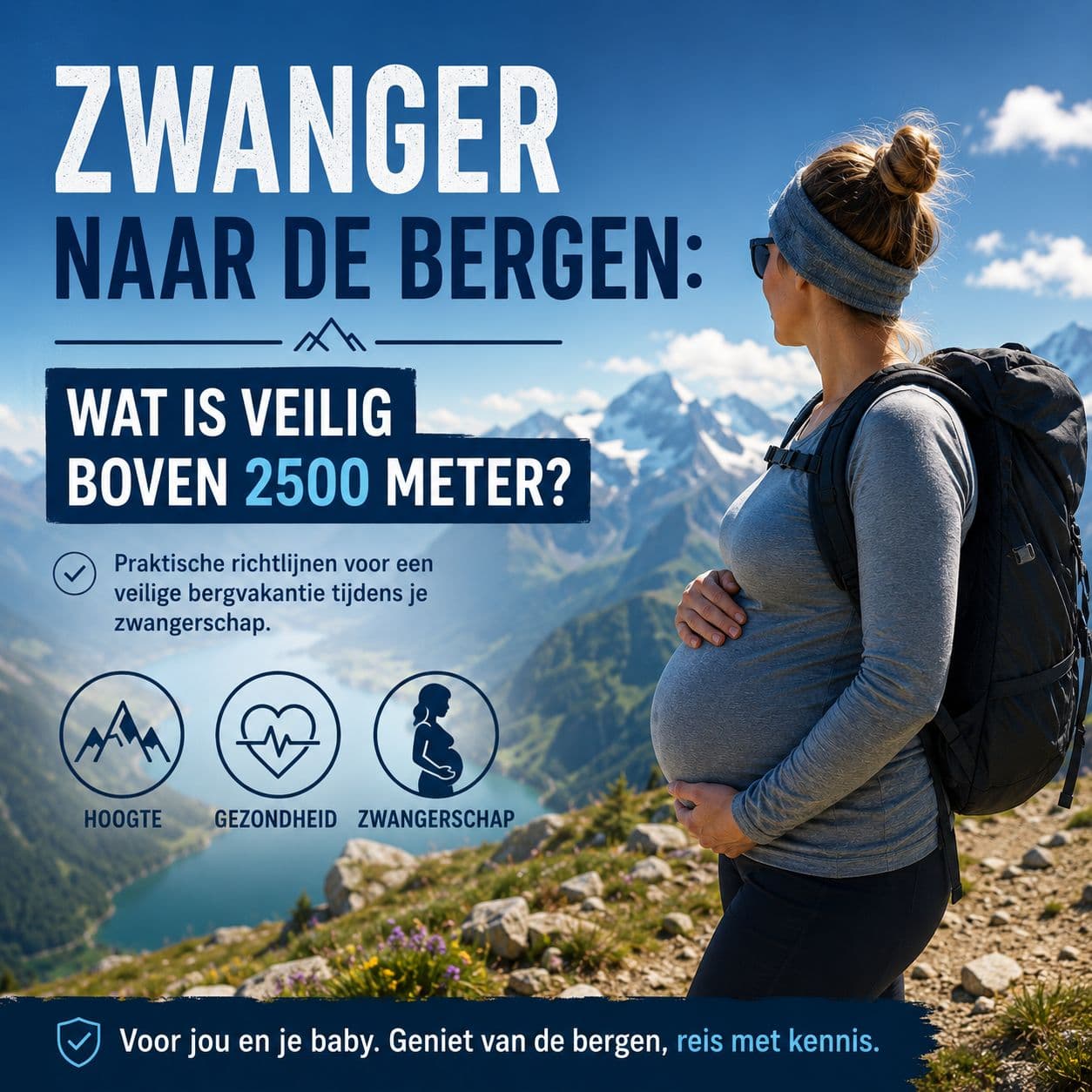
Anyone travelling to altitude on top of this should bring an extra layer of safety. Diabetes can make preparation for mountain travel more complex. Think about medication, glucose monitoring, appetite, cold, exertion and altitude sickness. For that specific context, there is a separate guide about Diabetes and altitude.
When is extra caution needed?
- When using insulin or are prone to hypos.
- When you have nocturnal hypos or your glucose fluctuates significantly.
- When you have or suspect you have sleep apnoea.
- When you have heart, circulation or lung problems.
- When you have diabetic complications affecting your eyes, kidneys, nerves, or feet.
- When you don't know how your glucose reacts to exercise, lack of sleep, or stress.
A safer way of thinking: stimulus, not treatment
The most mature way to approach this topic is simple: treat controlled hypoxia as a stimulus. Not as therapy. Not as a shortcut. Not as an alternative to medical care.
This also changes the way you use it. You don't start high. You don't build up aggressively. You don't just look at one saturation value. You follow trends. You look at sleep, recovery, glucose, mood, headaches, shortness of breath, and energy. Only when the pattern remains stable do you potentially increase the stimulus.
This way of working aligns with how Altitude Dream also views athletes and mountain adventurers. A high-altitude tent makes acclimatisation controlled, measurable, and plannable. The same principle applies to metabolic health, but with more medical caution. The tent is not a medical treatment; it is an environment in which you can administer a physiological stimulus.
Anyone who wants to understand more about the physical side of oxygen deprivation can delve into the physical reactions to oxygen deprivation. That helps to ensure that hypoxia isn’t treated as some kind of mystery. It’s still physiology, and physiology needs to be measured.
This is how you monitor this lens
Objective monitoring is not optional with this subject. Precisely because people with diabetes react differently, you should not rely on feeling alone. The goal is not to achieve the lowest possible values. The goal is a well-tolerated stimulus that does not disrupt sleep, glucose control, and recovery.
| What should be measured? | What are you paying attention to? | When to adjust? |
|---|---|---|
| SpO2 trend | Morning values and pattern over multiple nights | In case of a clear decline, complaints or poor sleep |
| Glucose | Fasting glucose, overnight trend, hypos and peaks | With more fluctuations or nocturnal hypos |
| Sleep | Time taken to fall asleep, sleeping through the night, feeling of calm and headaches | If you’ve had several bad nights in a row |
| Recovery | Energy, resting heart rate, HRV (if available) | In cases of fatigue that is clearly getting worse |
| Symptoms | Shortness of breath, dizziness, nausea, chest pressure | If you experience clear symptoms: reduce the dose or stop taking it |
Note: morning readings and the pattern over several nights.
Adjustment: with clear decline, complaints or poor sleep.
Note: Fasting blood glucose, overnight trend, hypos and spikes.
Adjustment: in the event of greater fluctuations or night-time hypoglycaemia.
Note: time taken to fall asleep, sleeping through the night, feeling of calm and headaches.
Adjustment: after several bad nights in a row.
Note: energy, resting heart rate, HRV if available.
Adjustment: in cases of fatigue that is clearly getting worse.
Note: shortness of breath, dizziness, nausea, chest tightness.
Adjustment: With clear symptoms: taper or stop.
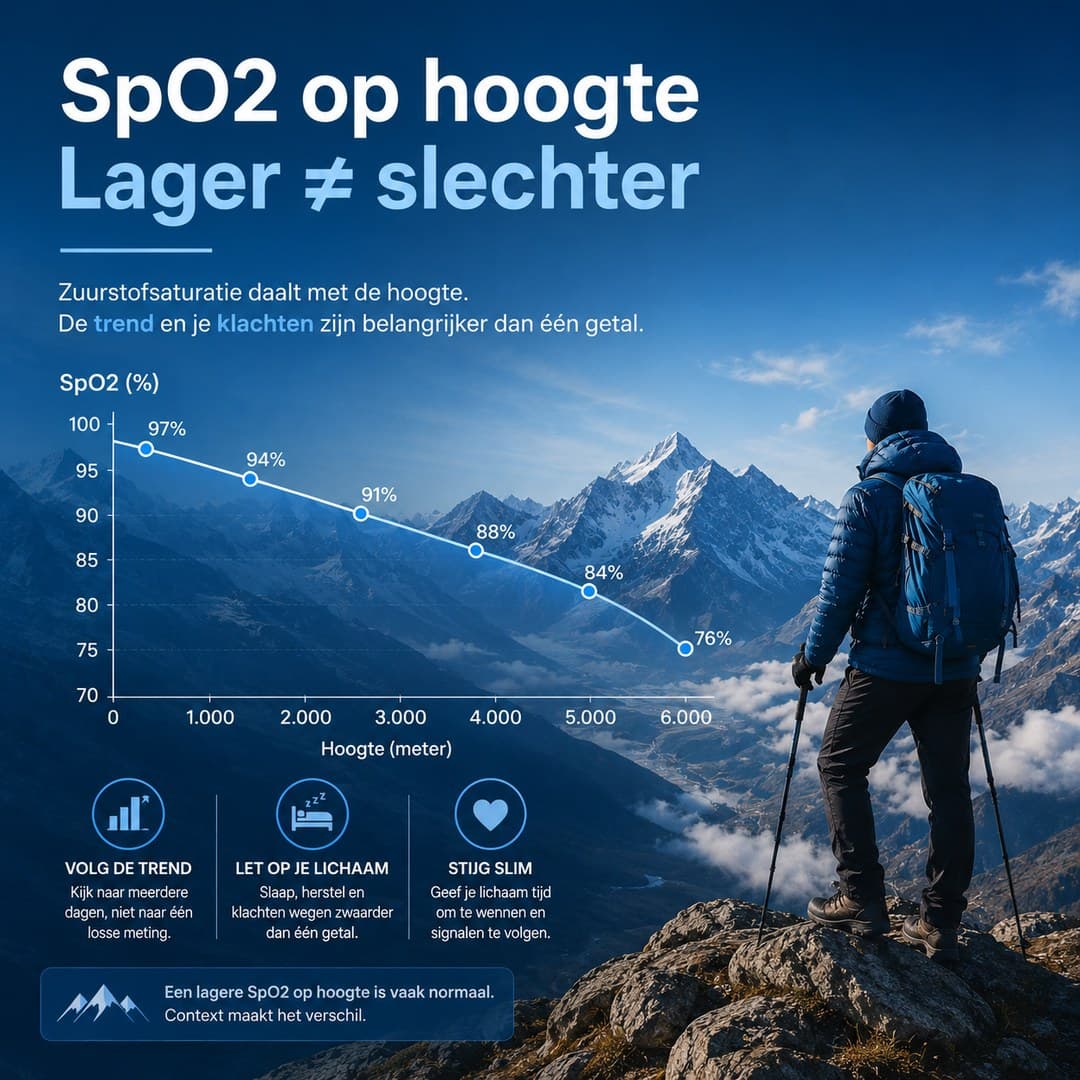
When using a sleep tent at altitude, SpO2 is primarily a trend value. A single reading tells you little. Measure at fixed times, preferably in the morning, and combine that value with sleep quality and any symptoms. For more background, see