Oxygen tent: what do people actually mean by that?
Published 9 March 2013 · 13 min read
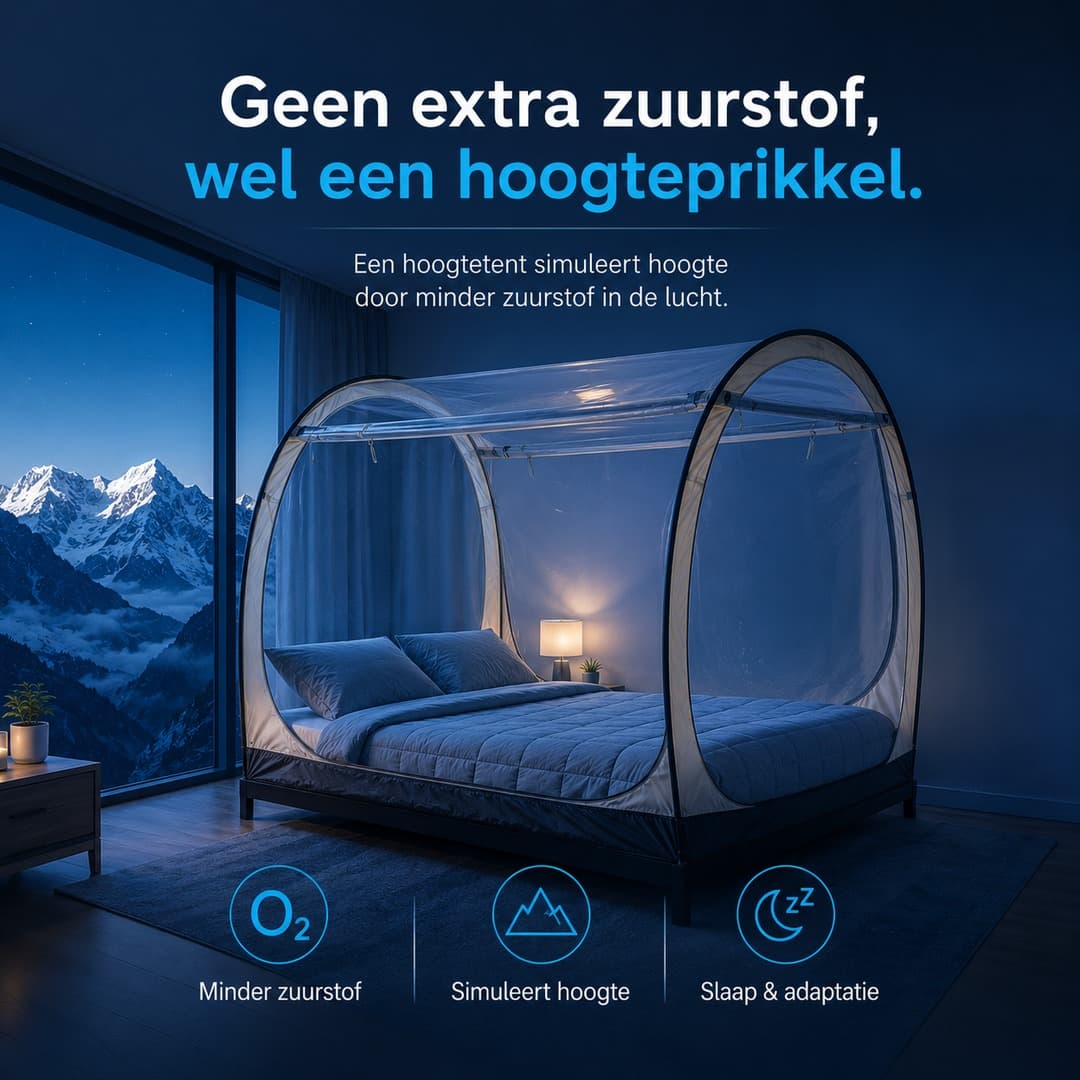
A oxygen tent is in practice usually not a tent with extra oxygen, but a high-altitude tent in which less oxygen is available. The term is often used by athletes, mountain climbers and people who are orienting themselves on sleeping in an altitude tent, but technically it's not entirely correct. Therefore, it is important to first clarify what you are looking for: extra oxygen, or a controlled stimulus with less oxygen.
In this article, we explain what an oxygen tent is, why the term is confusing, how a height tent works, and when such a system might make sense. This will help you better assess if it's suitable for sports performance, recovery, pre-acclimatisation, or altitude preparation.
Short answer: With an oxygen tent, people usually mean a altitude tent. This doesn't add oxygen, but lowers the oxygen percentage in the air. This gives your body a controlled hypoxic stimulus. This can be relevant for altitude training, pre-acclimatisation, and getting used to altitude, provided you build up gradually and monitor objectively.
Conclusion: An oxygen tent is usually a misnomer for a high-altitude tent.
Nuance: An altitude tent reduces oxygen availability, while medical oxygen systems provide extra oxygen.
Practical hook: Therefore, don't just look at the name, but particularly at the objective, establishment, monitoring, and guidance.
Atsu-tent is a place, often a tent or a small room, that contains a higher concentration of oxygen than normal air.
The term oxygen tent It sounds as if extra oxygen is being pumped into a tent. However, most people mean something else. In the context of sport and mountain training, it usually refers to an altitude tent. This simulates high altitude by reducing the oxygen content in the air you breathe.
Normal air at sea level contains approximately 20.9 percent oxygen. In a high-altitude tent, the oxygen percentage is lowered. This creates normobaric hypoxia: less oxygen per breath, while the air pressure in the chamber remains the same. So, you are not literally at altitude, but your body does experience a similar oxygen stimulus.
That distinction is important. A medical oxygen tent or oxygen supply is used to administer extra oxygen. An altitude tent does the opposite. It reduces the oxygen content of the air to allow the body to acclimatise in a controlled manner to lower oxygen levels.
Reality check: Are you looking for an oxygen tent because you need more oxygen, for example due to a medical condition? Then this article is not about the right system. Are you looking for a tent that simulates altitude for sports or mountain preparation? Then you probably mean an altitude tent.
Why the term ‘oxygen tent’ is confusing
The term ‘oxygen tent’ is understandable, but an unfortunate choice of words. It suggests that oxygen is being added. In altitude training, however, the exact opposite happens. The availability of oxygen is reduced, so that the body is prompted to adapt.
This confusion can lead to false expectations. Some people think that sleeping in an altitude tent is relaxing or restorative because there is supposedly more oxygen available. In reality, an altitude tent places a strain on the body. A controlled strain, but still a stimulus to which your body must respond.
This is why Altitude Dream prefers the terms altitude tent, altitude generator, normobaric hypoxia or pre-acclimatisation. These words better describe what is actually happening. For a broader explanation of the principle behind this method, you can also look at altitude training.
How does a height tent work, technically speaking?
An altitude tent works in conjunction with an altitude generator. The generator produces oxygen-depleted air and blows it into the tent via a hose. The tent is sufficiently sealed to control the oxygen level, but it is not completely airtight. The air is continuously refreshed. This ensures a flow of air and allows exhaled air to escape.
So the technology is mainly in the generator, not in the tent itself. The tent creates the sealed sleeping environment. The generator determines the simulated altitude. Depending on the system and setting, you can usually start at a mild altitude stimulus and then gradually increase it.
For athletes, the classic live high, train low approach is often around 2,000 to 2,500 metres. This means sleeping under a hypoxia stimulus, but training normally during the day. For mountaineers, the process can be different. It is less about performance and more about acclimatising to lower oxygen availability before departure.
| Term | What is happening? | Practical significance |
|---|---|---|
| Oxygen tent | A commonly used but confusing term. | It usually means a sleeping tent for altitude. |
| Altitude tent | The sleeping environment contains less oxygen. | Used for altitude training or pre-acclimatisation. |
| Medical oxygen | Extra oxygen is being administered. | This is a different exercise and not altitude training. |
| Normobaric hypoxia | The oxygen percentage falls, whilst the air pressure remains the same. | This is the principle behind a height tent at home. |
What is happening? A commonly used but confusing term.
Practical significance: It usually means a sleeping tent for altitude.
What is happening? The sleeping environment contains less oxygen.
Practical significance: Used for altitude training or pre-acclimatisation.
What is happening? Extra oxygen is being administered.
Practical significance: This is a different exercise and not altitude training.
What is happening? The oxygen percentage falls, whilst the air pressure remains the same.
Practical significance: This is the principle behind a height tent at home.
When is an oxygen tent appropriate?
A oxygen tent, or rather an altitude tent, is useful if you want to help your body adapt to lower oxygen levels in a targeted way. This may be of interest to athletes, but also to mountaineers heading for high altitudes. How you use it depends very much on your goal.
For athletes, it’s often about a controlled altitude stimulus. Think of runners, cyclists, triathletes or other endurance athletes who want to capitalise on the benefits of ‘sleep high, train low’. This allows them to continue training at their usual intensity, whilst their sleeping environment provides an altitude stimulus.
For mountain travellers, the focus is different. In that case, the aim is usually pre-acclimatisation. You try to get your body used to lower oxygen levels before you set off. This can be particularly useful when travelling to destinations where you quickly reach altitudes above 3,000 metres, or where the itinerary leaves little scope for gradual acclimatisation.
A high-altitude tent is no guarantee against altitude sickness. However, a well-structured protocol can help ensure you are better prepared before setting off. This is particularly true when combined with a realistic itinerary, a gradual ascent and careful monitoring.
What is happening in your body?
When your oxygen intake decreases, your body reacts in several ways. Your breathing may become slightly faster. Your heart rate may be higher at first. Your sleep may become temporarily more restless. Over time, your body may adapt to cope more efficiently with the reduced oxygen supply.
When talking about altitude.
That's why it's sensible to see a height tent not as a gimmick. It's a physiological stimulus. That stimulus must be strong enough to have an effect, but not so strong that sleep, recovery or health are compromised.
In practice: The best setting is not necessarily the highest one. A stable acclimatisation process involving good sleep, a normal response to symptoms and an appropriate SpO2 trend is usually more valuable than reaching a high simulated altitude as quickly as possible.
Oxygen tent or altitude tent: what’s the difference?
The main difference lies in the direction of the oxygen stimulus. A medical oxygen solution increases the available oxygen. An altitude tent, on the other hand, reduces it. As a result, its purpose, risks and supervision are completely different.
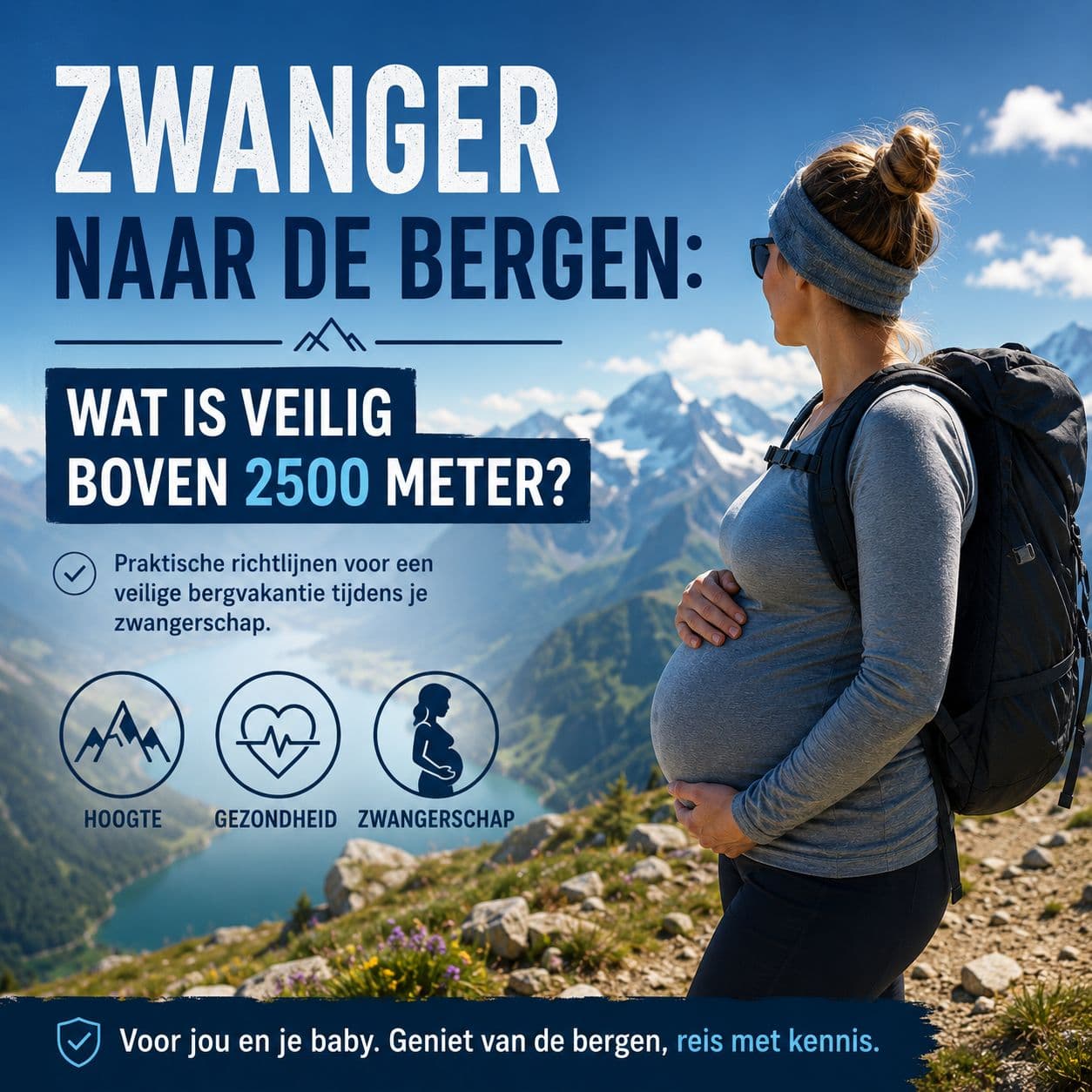
Anyone with underlying health conditions should take this distinction particularly seriously. An altitude tent is not intended to treat oxygen deprivation. In fact, the system creates a controlled form of oxygen deprivation. If you have heart problems, lung problems, sleep apnoea, are pregnant or have any other medical conditions, it is advisable to consult a doctor before using hypoxia therapy.
For an English-speaking or international context, searches are also often made for "oxygen tent" or "altitude tent". This difference is further explained in Oxygen Tent versus Altitude Tent.
The essence in a single equation
An oxygen system provides support when someone needs more oxygen.
An altitude tent provides a training stimulus by reducing oxygen availability.
The right choice depends on the purpose: treatment, training, or acclimatisation.
How do you build up usage sensibly?
A good build-up starts gently. The aim is not to shock your body, but to provide a stimulus that you can process. Especially in the first few nights, sleep quality should remain the priority. If you sleep poorly, get a lot of headaches, or wake up noticeably tired, the stimulus may be too intense.
A gentle build-up usually works better than an aggressive start. Many users begin with a lower simulated altitude and then gradually increase it. The exact approach depends on your goal, experience, travel date, exercise load, and reaction to the first few nights.
For a concrete construction framework, it makes sense to read further about a altitude tent construction diagram. In it is explained how you can gradually steer the stimulus.
| Phase | Target | What are you paying attention to? | Practical choice |
|---|---|---|---|
| Start | Getting used to the stimulus. | Sleep, heart rate, morning feeling. | Start slowly and don't increase too quickly. |
| Construction | Gradually increase stimulus intensity. | SpO2 trend, complaints, recovery. | Increase only on stable response. |
| Stabilisation | Consistent exposure. | Sleep duration and recovery quality. | Keep the setting if the response is good. |
| Adjust | Avoid overloading. | Headache, poor sleep, low trend. | Reduce stimulation or rest. |
Objective: Getting used to the stimulus.
What are you paying attention to? Sleep, heart rate, morning feeling.
Practical choice Start slowly and don't increase too quickly.
Objective: Gradually increase stimulus intensity.
What are you paying attention to? SpO2 trend, complaints, recovery.
Practical choice Increase only on stable response.
Objective: Consistent exposure.
What are you paying attention to? Sleep duration and recovery quality.
Practical choice Keep the setting if the response is good.
Objective: Avoid overloading.
What are you paying attention to? Headache, poor sleep, low trend.
Practical choice Reduce stimulation or rest.
This is how you monitor this lens
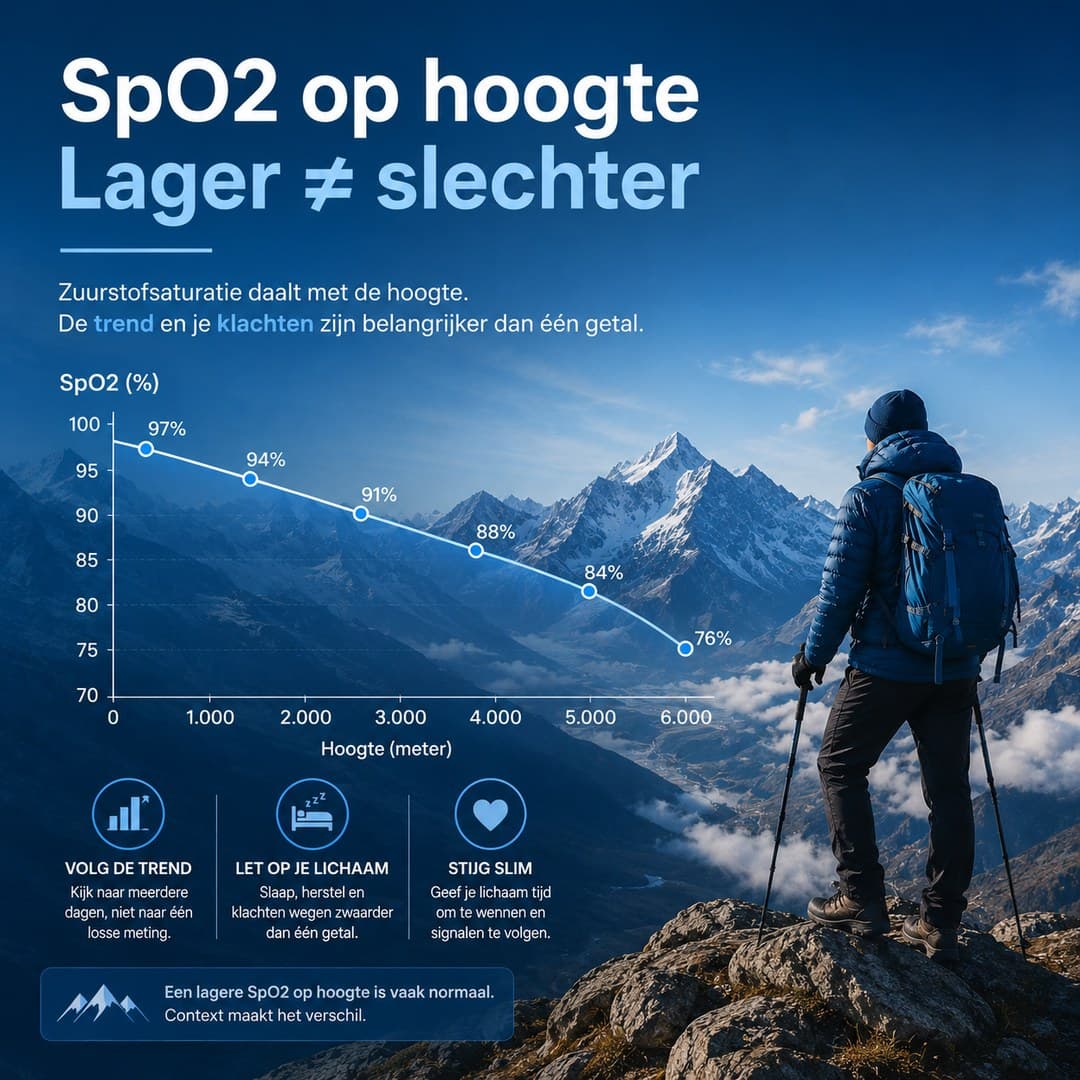
You don't use an altitude tent purely on feel. Your body sends signals, but they aren't always sharp enough. That's why objective monitoring is important. The trend, in particular, counts. One isolated measurement says less than several mornings in a row.
It is preferable to take measurements at fixed times. The morning is practical, as it allows you to see how your night has gone. Look at oxygen saturation, sleep quality, recovery feeling, and complaints. Combine this data. A lower SpO2 is not automatically wrong, but a declining trend together with poorer sleep or headaches requires adjustment.
For a deeper understanding of normal values and interpretation, you can look at saturation in an altitude tent.
| Parameter | What are you following? | Meaning | Decision rule |
|---|---|---|---|
| SpO2 trend | Morning values over multiple days. | Show how strong the hypoxia stimulus is. | Increase only with a stable trend and few complaints. |
| Sleep quality | Falling asleep, restlessness, waking up. | Poor sleep can indicate overstimulation. | Reduce or stabilise with multiple bad nights. |
| Recovery | Morning feeling, fatigue, training response. | Recovery determines whether the stimulus remains processable. | No increase with apparent fatigue. |
| Symptoms | Headache, nausea, shortness of breath. | Complaints are more important than the set height. | In case of clear complaints: reduce or stop the stimulus. |
What are you following? Morning values over multiple days.
Significance: Show how strong the hypoxia stimulus is.
Decision rule: Increase only with a stable trend and few complaints.
What are you following? Falling asleep, restlessness, waking up.
Significance: Poor sleep can indicate overstimulation.
Decision rule: Reduce or stabilise with multiple bad nights.
What are you following? Morning feeling, fatigue, training response.
Significance: Recovery determines whether the stimulus remains processable.
Decision rule: No increase with apparent fatigue.
What are you following? Headache, nausea, shortness of breath.
Significance: Complaints are more important than the set height.
Decision rule: In case of clear complaints: reduce or stop the stimulus.
Common misunderstandings about an oxygen tent
A large part of the confusion arises because the word oxygen sounds positive. More oxygen intuitively feels like better. But altitude training isn't about more oxygen. It's about a temporary, controlled reduction in oxygen availability.
A second misconception is that higher is always better. That's not true. A higher setting gives more stimulation, but also more strain. If sleep quality decreases, the net effect can actually be worse. The best stimulation is the stimulation your body can process.
A third misunderstanding is that a sleeping altitude tent completely replaces proper acclimatisation. That is too strongly put. An altitude tent can help you depart prepared, but true acclimatisation to altitude remains complex. Your daily schedule, ascent rate, hydration, cold, exertion, and individual sensitivity remain important.
Checklist: Is your expectation correct?
- You understand that a height tent provides less oxygen, not more.
- You gradually build up the stimulus.
- You use SpO2 as a trend, not as an isolated absolute truth.
- You adjust sleep, recovery, and complaints.
- You see the system as support, not a guarantee.
Oxygen tents are less suitable for whom?
A hypobaric chamber is not something for everyone. Caution is important in cases of medical doubt. People with heart problems, lung problems, severe sleep disorders, or unexplained shortness of breath should seek medical advice first. Extra caution is also needed during pregnancy.
Furthermore, a height tent is less logical when you don't have a clear goal. Without a sporting objective, mountain trip, or concrete preparation, the incentive is often hard to pinpoint. Then it becomes experimenting with hypoxia, without a clear reason to undertake the strain.
Timing also plays a role. Those who start just a few days before departure usually don't get the most out of the method. A planned progression is important for pre-acclimatisation. For athletic performance, the balance between training load, sleep, and recovery is decisive.
Decision rules
Do consider: when you are specifically working on altitude training, preparing for an expedition, or want to acclimatise to altitude in a controlled manner.
Caution: in cases of medical history, poor sleep, symptoms or an unclear objective.
Don't force it: If you have a headache, shortness of breath, severe fatigue, or a falling SpO2 trend with symptoms.
Practical tips for home use
A wysokości tent works best when the practical setup is correct. Preferably, place the generator outside the bedroom or at a sufficient distance if possible. Ensure that the air inlet and outlet remain unobstructed. Do not place equipment in a cupboard and prevent heat build-up.
Comfort also counts. A tent that ventilates poorly, becomes too warm, or feels restless makes consistent use more difficult. And consistency is exactly what's important. Several good nights on a suitable setting are more valuable than a few very difficult nights that disrupt your sleep.
Additionally, use a saturometer in a consistent manner. Don't measure continuously out of uncertainty, but choose a rhythm that supports decisions. Often, morning measurements, combined with sleep and symptoms, are the most useful.
Frequently asked questions about an oxygen tent
Is an oxygen tent the same as a high-altitude tent?
In most sports and mountain contexts, yes. However, the term oxygen tent is technically confusing. A high-altitude tent reduces oxygen availability. A medical oxygen solution, on the other hand, increases it.
Do you get extra oxygen in an oxygen tent?
No, not when a hypobaric chamber is meant. Then the oxygen percentage is actually lowered to simulate altitude. That provides a controlled hypoxic stimulus.
How long should you sleep in an altitude tent?
That depends on the goal, timing and individual response. In practice, it's about sufficient hours per night, a gradual build-up and stable monitoring. Sleep quality remains key.
Is an oxygen tent safe?
For healthy users, a well-guided protocol can be safe. Nevertheless, it remains a hypoxic stimulus. In cases of medical doubt, complaints, or abnormal trends, adjustment or consultation is advisable.
Can you completely avoid altitude sickness with an altitude tent?
No. An altitude tent can help reduce the risk and improve preparation, but it offers no guarantees. At true altitude, ascent rate, rest, hydration, and monitoring for symptoms remain important.
Do you want to know if a height tent is suitable for your goals?
Don't use a hypobaric tent based on its name, but on its purpose, timing, and measurable response. Start with the practical guide, and then determine if a sports or mountain preparation protocol makes sense.
Conclusion: oxygen tent is usually not the right word
A oxygen tent is in most cases an altitude tent. That difference may seem small, but it is important in terms of content. An altitude tent does not provide extra oxygen. The system reduces oxygen availability, thereby creating a controlled altitude stimulus.
This can be valuable for athletes and mountain travellers, provided it is used correctly. The core is to build up gradually, monitor objectively and make adjustments based on SpO2 trend, sleep quality, recovery and symptoms. The highest setting does not determine success, but the best manageable stimulus.
Anyone who understands this doesn't use a height tent as a miracle cure, but as measurable and plannable support. That's precisely where the value lies: more control over a stimulus that is often much less predictable at true altitude.