Trekking Atlas Morocco: acclimatisation schedule for beginners
Published 17 March 2026 · 3 min read
Trekking in the Atlas mountains in Morocco may not seem extremely high at first glance, but many routes quickly go above 3,000 metres. As a result, beginners often face complaints such as headaches, poor sleep and fatigue. A good acclimatisation schedule for a trek in the Atlas can largely avoid these problems.
The highest peak in the Atlas Mountains, Mount Toubkal (4167 m), is often climbed in just a few days. This is possible, but only if your body is given enough time to adjust to the lower oxygen pressure.
In this article, you will read how acclimatisation works, what mistakes beginners make and what schedule is safe for trekking in the Atlas.
Want to first understand exactly how acclimatisation works? Then also read acclimatising at home for mountain expeditions.
⭐ The essentials in 30 seconds
- Altitude sickness can occur from 2,500 metres
- Above 3,000 metres you need to acclimatise
- The Atlas is often climbed too quickly
- 1 extra acclimatisation day greatly reduces risk
- Pre-acclimatisation can prevent complaints
🧭 Why acclimatisation is necessary in the Atlas
Although the Atlas Mountains are lower than the Himalayas or Andes, treks often rise rapidly to altitudes where the body receives less oxygen. At 4000 metres, the air contains about 60% of sea level oxygen.
| Height | Oxygen available | Risk of altitude sickness |
|---|---|---|
| 2000 m | 80% | low |
| 3000 m | 70% | moderate |
| 4000 m | 60% | high |
You can find more explanations in height to oxygen table.
⚠️ Common mistake on Atlas treks
The most common mistake made by beginners is that the ascent is too fast. Many standard programmes go like this:
- Day 1 Marrakech → 1800 m
- Day 2 → 3200 m
- Day 3 → summit Toubkal
This schedule allows little time for acclimatisation and can cause complaints.
Read also what is a normal acclimatisation rate per 1000 metres.
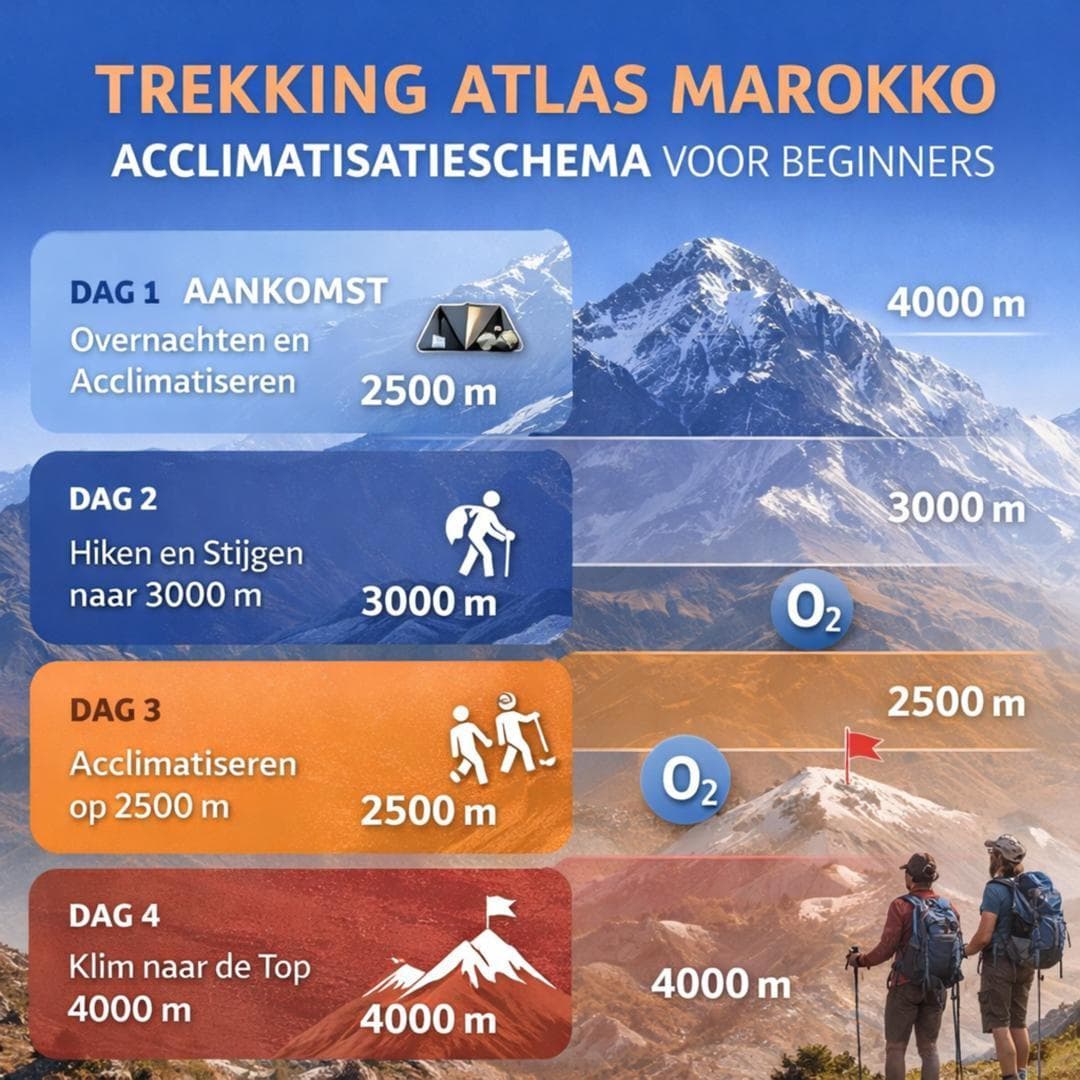
📊 Safe acclimatisation schedule Atlas beginners
| Day | Sleeping height | Target |
|---|---|---|
| 1 | 1500-1800 m | start |
| 2 | 2200 m | slight increase |
| 3 | 2800 m | initial acclimatisation |
| 4 | 3200 m | rest / short hike |
| 5 | 3200 m | acclimatisation |
| 6 | top day | 4000 m+ |
This schedule significantly reduces the risk of altitude sickness.
🧠 How to speed up acclimatisation
For those with little time, pre-acclimatisation at home can help. This involves sleeping in an environment with less oxygen so that the body already starts to adapt.
See also preventing altitude sickness complete guide.
Important:
- gradual increase
- SpO2 trend tracking
- using sleep as a stimulus
- do not increase too quickly
📊 This is how you monitor acclimatisation objective
- SpO2 should gradually decrease and recover
- Sleep should remain stable
- No increasing headaches
- No extreme fatigue
Always use SpO2 as a trend, not as an isolated value.
❓ FAQ trekking Atlas acclimatisation
Is acclimatisation necessary for Toubkal?
Yes, above 3,000 metres acclimatisation is highly recommended.
How fast can you get to 4,000 metres?
Maximum 300-500m sleep height per day.
Is altitude sickness possible in Morocco?
Yes, especially on fast climbs.
Does a high altitude tent help?
Yes, it can significantly reduce the risk of symptoms.
🎯 Preparation is half the battle
Going to do a trek around 4,000 metres like the Atlas or Toubkal?
Then pre-acclimatisation at home can make the difference between enjoying and getting sick.