Acclimatising Peru Bolivia: Cusco, La Paz and Andean treks
Published 1 March 2026 · 3 min read
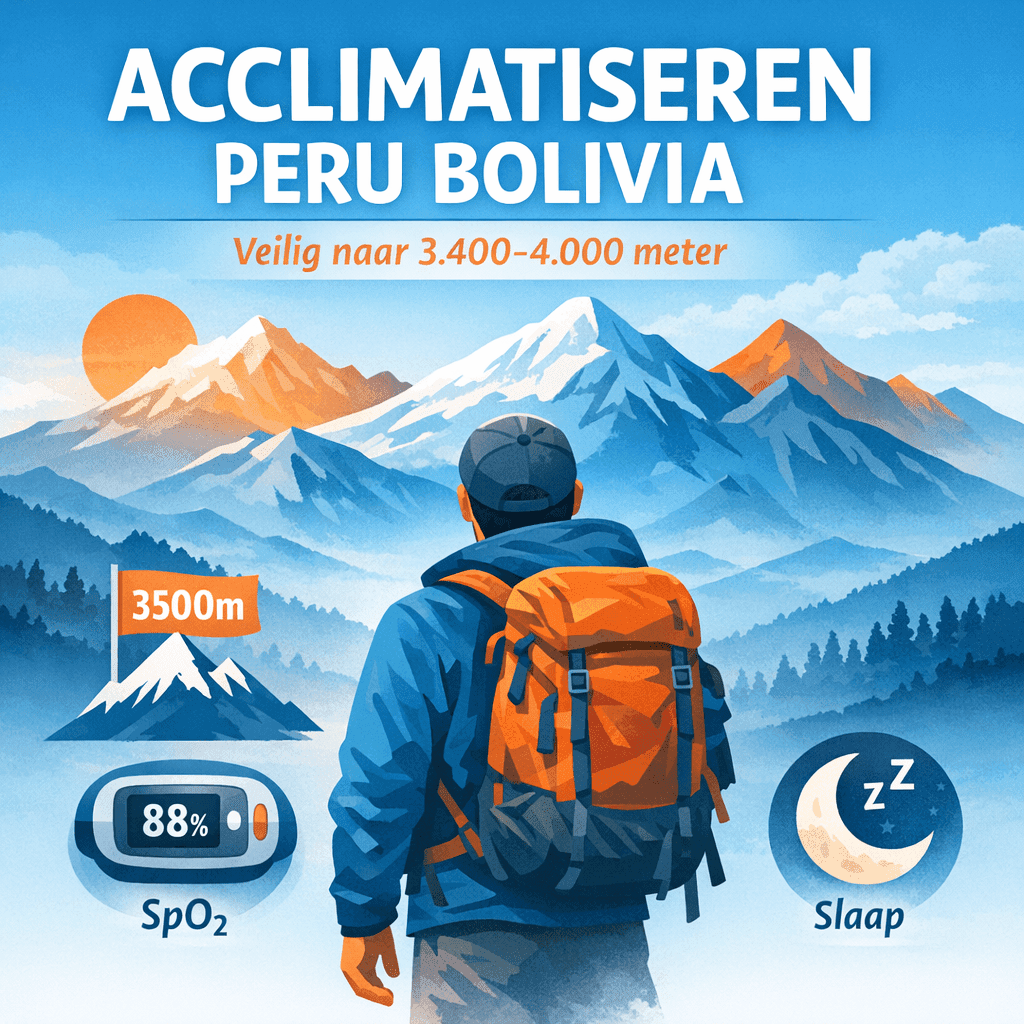
Acclimatisation for Peru Bolivia is not a luxury, but a necessary preparation when travelling to Cusco, La Paz or planning a trek in the Andes. Both countries combine impressive culture with altitudes above 3,000 metres. Those who arrive here without a plan run an unnecessary risk of altitude sickness. With the right approach, you significantly reduce that risk and increase your energy, sleep quality and travel enjoyment.
In this article, you will read how to acclimatise safely in Peru and Bolivia, what you should monitor objectively and how you can possibly prepare already at home.
Why acclimatising in Peru and Bolivia is so important
Many travellers underestimate the altitude of popular destinations:
- Cusco - 3,400 metres
- Lake Titicaca - 3,800 metres
- La Paz - 3,650 to 4,000 metres
- Uyuni region - around 3,700 metres
By comparison, above 2,500 metres, oxygen supply starts to drop noticeably. At 3,500 metres, available oxygen is about 30 per cent lower than at sea level.
That means your body has to shift gears. Your breathing speeds up. Your heart rate rises. Your sleep deteriorates. These are normal adjustments, but they take time.
Also read our detailed explanation on altitude sickness for the underlying physiology.
What often goes wrong when acclimatising Peru Bolivia?
Many travellers fly directly to Cusco or La Paz and plan an intensive hike the very next day. This is understandable, but physiologically unwise.
The most common mistakes:
- Rising too fast without rest days
- Intensive walking in the first 48 hours
- Not drinking enough
- Ignoring poor sleep
- Pushing away symptoms
Therefore, a structured approach is essential.
Step-by-step acclimatisation in Cusco and La Paz
Day 1-2: relative rest
Plan light for the first 48 hours. Avoid strenuous exercise. Walk leisurely around town. Drink plenty of water. Avoid alcohol.
Day 3-4: gradual build-up
Add light walks. Test your response to exertion. Watch for headaches, nausea or sleep problems.
Day 5+: higher treks
Only after several stable days is it wise to schedule higher trekkings or passes above 4,000 metres.
For in-depth explanations on prevention, read our guide: preventing altitude sickness.
This is how you monitor this lens
Feeling is important, but objective monitoring gives peace of mind and direction.
1. SpO2 trend
Measure your oxygen saturation daily at the same time. Do not look at one single measurement, but at the trend over several days. A stable or slightly increasing trend indicates adaptation.
2. Sleep quality
Do you wake up several times a night? Do you feel like you are gasping for breath? Improving sleep is a strong sign of acclimatisation.
3. Recovery feelings and symptoms
Note headache, appetite, energy and dizziness. Do symptoms worsen on exertion? If so, you may be rising too fast.
Decision rule: in case of persistent headache despite rest or neurological symptoms, always descend.
You can read more background on oxygen levels here: oxygen saturation at altitude.
Pre-acclimatisation before leaving for Peru or Bolivia
Anyone flying directly from the Netherlands to 3,400 metres will make a huge leap. This is why more and more travellers are opting for pre-acclimatisation.
With an altitude tent, you simulate altitude via normobaric hypoxia. It is not the air pressure that changes, but the oxygen percentage that is reduced. Sleep is the primary stimulus here. By building up gradually, your body learns to cope with oxygen scarcity beforehand.
Read how that works here: acclimatising at home for mountain travel.
A well-constructed programme will significantly reduce the risk of altitude sickness. It makes the process controlled, measurable and planable.
Specific situations in Peru and Bolivia
Inca Trail and alternative treks
Many routes rise rapidly above 4,000 metres. Without preparation, this increases the risk of acute altitude sickness.
La Paz and higher districts
La Paz has altitude differences within the city itself. Higher districts can be extra taxing in the first few days.
Uyuni salt flats
The combination of altitude, cold and dry air requires extra attention to hydration and energy intake.
When to consider medication?
Acetazolamide may be useful in specific situations, but is not a substitute for acclimatisation. Always discuss this with a doctor.
You can read more about it here: when to use acetazolamide.
Summary: acclimatising Peru Bolivia in 6 principles
- Plan 2 quiet start days
- Ascend gradually
- Monitor SpO2 as a trend
- Listen to sleep quality
- Never ignore symptoms
- Consider pre-acclimatisation on short trips
This way, you won't turn Cusco, La Paz and the Andes into a physical struggle, but an experience to be fully lived.