Sleeping in a high-altitude tent: 3 myths debunked
Published 10 August 2019 · 7 min read

Sleeping in a height tent is the best-known form of altitude training, and at the same time, the most misunderstood. Persistent myths surround the idea of sleeping high and training low: that it would undermine your recovery, that it's impossibly uncomfortable to sleep in, and that you have to spend half the night in it. In this article, we'll set these three misconceptions against what science and practice actually show, so you can start with realistic expectations.
Short answer: Sleeping in a hyperbaric chamber follows the “Live High, Train Low” principle: you sleep in low-oxygen air for blood adaptation, while training intensely at sea level during the day. The three most well-known myths are not true. A correctly dosed tent does not slow your recovery, you get used to it well after a few nights, and it works within a normal night of seven to nine hours.
Conclusion: The majority of objections to sleeping in a hypobaric chamber are based on misconceptions, not physiology.
Nuance: The tent only works when you dose it correctly, as building it up too high or too quickly will indeed disrupt your sleep.
Practical hook: Those who build up strength gradually and monitor their sleep reap the benefits without the drawbacks of staying constantly at a high level.
What “sleep high, train
The principle behind an altitude tent is called Live High, Train Low, introduced in 1997 by physiologists Benjamin Levine and James Stray-Gundersen. You expose your body to low-oxygen air at night, while training at sea level during the day. This way, you combine two advantages that would otherwise conflict: blood adaptation to altitude and the full training intensity of low altitude. More about hoe Live High, Train Low werkt Read our explanation.
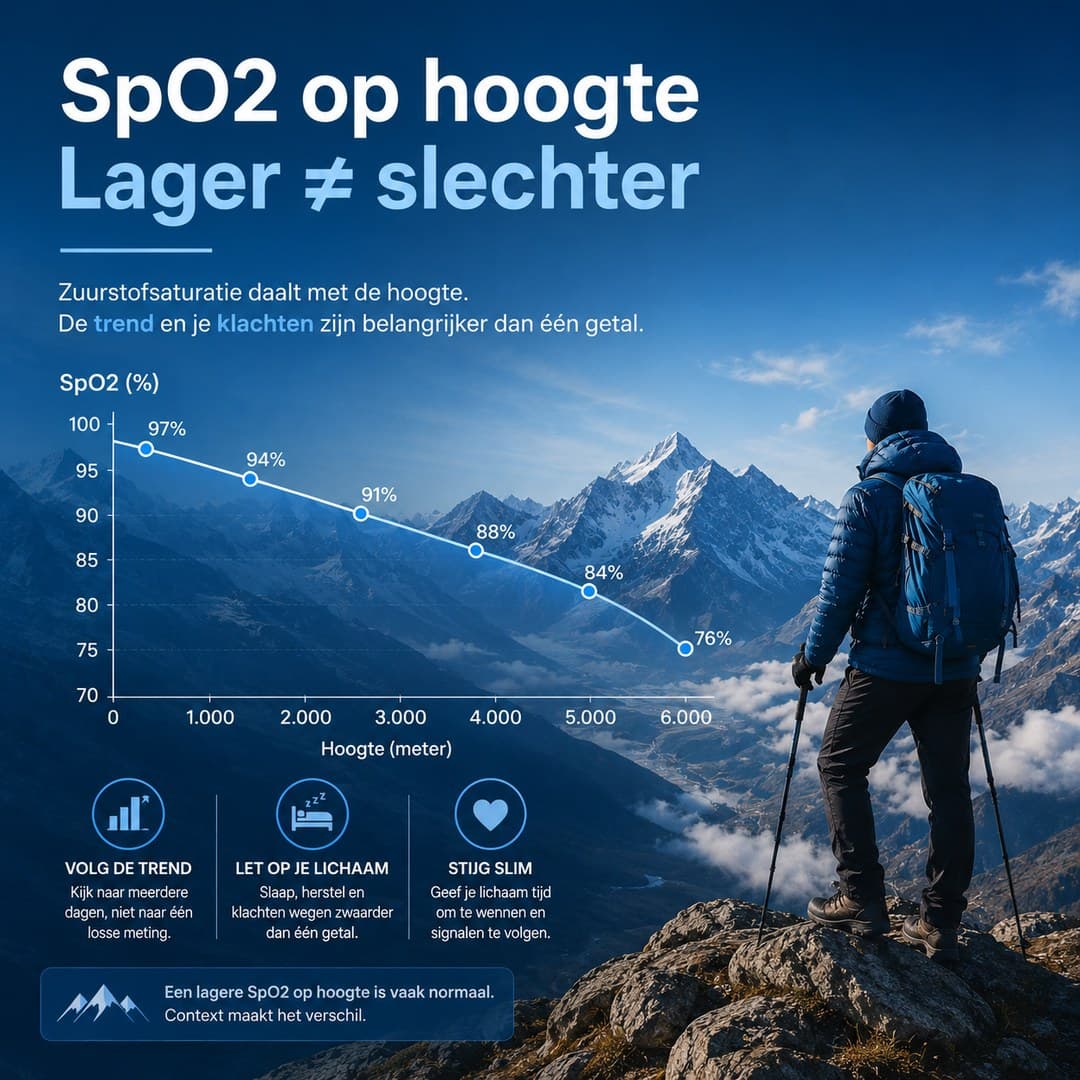
The stimulus comes from the lack of oxygen. Your body reacts to this by increasing red blood cell production, which boosts your oxygen transport. Because you train at a low altitude during the day, you don't have to sacrifice intensity and you avoid the well-known disadvantages of living permanently at high altitude, such as muscle loss, dehydration and a suppressed immune system. Therefore, this method is considered the best-substantiated form of altitude training.
📊 Research shows
In the original study by Levine and Stray-Gundersen, athletes who slept high and trained low measurably improved their red blood cell mass and their sea-level performance. The gains were modest but real, and at a competitive level, such a margin can make all the difference. Consistency over several weeks proved to be decisive.
At the absolute top too, the approach has become established. Swimming legend Michael Phelps slept in a hypoxic tent in the run-up to his Olympic campaigns, precisely to build up that blood adaptation without sacrificing his training in the pool. In the video below, you can see what that preparation looked like.

The three myths debunked
Much doubt about altitude tents boils down to three recurring objections. We'll go through them one by one and explain what's really happening alongside them.
Myth 1: it slows down your recovery after heavy training
This misconception persists because people equate “altitude” with “heavier”. However, this is not the case with Live High, Train Low. You simply train at sea level, where your recovery stress remains normal. The tent adds a sleep stimulus, not extra training load. A correctly dosed altitude tent therefore does not undermine your recovery, and many athletes maintain their normal schedule effortlessly.
⚠️ Reality check
Recovery is only at risk when you misjudge the altitude. If you increase the altitude too much or too quickly, you disrupt your sleep and your workload outpaces your recovery. Therefore, build up the altitude gradually and monitor your recovery. This way, the stimulus continues to work as intended, without undermining your training.
How to neatly fit a high-altitude placement or tent period into your schedule, you can read in our explanation about recovery strategies after altitude training. The common thread is always the same: dosing and measuring instead of forcing.
Myth 2: Sleeping in a tent is uncomfortable
A tent around your bed is unusual at first, that’s true. That’s why it usually takes a few nights to get used to. However, getting accustomed to it is easier than it sounds in practice, as modern high-altitude tents are spacious and quiet, and there’s a suitable model for almost every bedroom. Furthermore, many users report that their sleep quality feels more stable after acclimatising.
🧭 In practice
Give yourself the first week to get used to it and don't expect your deepest night's sleep immediately. Start at a low altitude and only increase when your sleep remains undisturbed. This way, you build up comfort and adaptation at the same time. What you can expect in that initial phase is detailed in our guide on The first few weeks in a height tent.
Mythe 3: You have to spend 12 to 14 hours in the tent
More exposure helps, it's true, but hardly anyone has twelve to fourteen hours a day for their altitude tent. Fortunately, that's not necessary either. Most users get their usual seven to nine hours of sleep per night and see a clear, measurable adjustment. What counts isn't one long session, but consistent nights that add up over the weeks.
How many hours per night is meaningful for you depends on your goal and how you build it up. We will elaborate on this in more detail in How many hours you need to sleep in a height tent.
| Myth | What many people think | What practice shows |
|---|---|---|
| Recovery | The tent slows down your recovery after heavy training. | You train low, so your recovery load remains normal with the correct dosage. |
| Comfort | Sleeping in a tent is impossibly comfortable | After a few nights of getting used to it; sleep quality often remains stable |
| Kidneys | You have to be in the tent for 12 to 14 hours a day. | A normal night of 7 to 9 hours already has a measurable effect |
Myth The tent slows down your recovery after tough training sessions.
Practice: You train low, so your recovery load remains normal with the correct dose.
Myth Sleeping in a tent is impossibly comfortable.
Practice: After a few nights of adjustment, the sleep quality often remains stable.
Myth You have to be in the tent for 12 to 14 hours a day.
Practice: A normal night of 7 to 9 hours already has a measurable effect.
When an altitude tent is right for you
The tent is a tool, not a miracle cure. Whether it pays off depends on your objectives, your patience, and your willingness to follow the setup rather than force it.
Does make sense If you have a long-term goal, you can calmly build up your sleep altitude over weeks and are prepared to monitor your recovery.
Doubtful if you can only plan for single nights or only begin just before your goal, because the stimulus builds up over time.
Adjust If your sleep deteriorates or your recovery lags: lower the altitude before you build further.
Don't force it rather than going too hard too soon or piling on extra hours, because it is precisely then that the disadvantages described in the myths arise.
Are you controlling your height stimulus?
A height tent works when you set it up gradually and follow your sleep. Want to approach this predictably at home? Look at your options and read about how other athletes experience it.
Frequently asked questions
Do you sleep worse in a high-altitude tent?
In the first few nights, your sleep may be more restless as your body adjusts to the lower oxygen levels. With a gradual ascent, this usually disappears within a few nights. If you go too high or too fast, your sleep will remain disturbed, so building up gradually is the most important thing.
How many hours per night do I really need?
A normal night's sleep of seven to nine hours is sufficient for most users to build a measurable adaptation. More hours help, but are rarely practically achievable. Consistent nights over multiple weeks carry more weight than one long session.
Does an altitude tent simulate real altitude?
No, a height tent provides controlled support through normobaric hypoxia, not an exact replica of the mountain. It makes the “sleep high” part of the Live High, Train Low plan reproducible and repeatable, which makes it suitable for calmly building up the stimulus at home.
Does a height tent undermine my strength training or recovery?
Not when you dose it correctly. Because you train at sea level during the day, your training and recovery load remains normal. Disrupted recovery is a sign of too much altitude or too rapid progression, not of the method itself.
The three myths about sleeping in an altitude tent have one thing in common: they confuse misuse with the method itself. Those who sleep high, train low, and gradually increase the acclimatisation, avoid the disadvantages and retain the benefits. Treat the tent as a measurable tool that guides your sleep and recovery, and it will deliver exactly what Live High, Train Low promises.