Using an altitude tent: complete guide with safe 4-6 week set-up schedule
Published 21 January 2026 · 4 min read

Using an altitude tent seems logical: you sleep in oxygen-depleted air, your body adapts and you are better prepared for performance or altitude. Yet in practice, things often turn out differently. Athletes sleep worse than expected. Mountain travellers actually feel more tired after a few weeks. Not because an altitude tent doesn't work, but because its use is structurally misunderstood.
In this guide, you will learn how to use an altitude tent safely and effectively with a 4-6 week build-up schedule. No fixed heights or quick steps, but a guided process driven by sleep quality, recovery and measured SpO₂. This way, altitude tent use becomes not a gamble, but a controlled preparation.
Why using a high altitude tent goes wrong yet again
Most mistakes are not caused by ignorance, but by wrong assumptions. Many schedules online focus on metering: up every few days, as long as it feels ‘doable’. What this lacks is an understanding of what happens in the body at night.
Acclimatisation does not take place during motivation or perseverance, but during recovery. And that very recovery is the first to be disrupted when the hypoxic stimulus is too great.
What does this mean concretely?
If your sleep quality deteriorates, it is not an afterthought but a primary signal that the stimulus is not being processed.
What a high altitude tent really does physiologically
An altitude tent lowers the oxygen percentage in the air you sleep in. This is called normobaric hypoxia. Your body registers this lack of oxygen via chemoreceptors and responds with adaptations such as increased breathing, changes in heart rhythm and stimulation of erythropoietin.
These processes largely take place during sleep. At the same time, sleep is also vulnerable to disruption by hypoxia. Faster breathing, short breaths and micro-awakenings are more common when the set altitude rises too fast.
What does this mean concretely?
You can technically sleep at a certain altitude but physiologically not recover. That difference determines whether adaptation occurs or stagnates.
Why sleep is the limiting factor in high altitude tenting
Many users unconsciously steer towards tolerance: “I can handle this”. The problem is that tolerance says nothing about adaptation. Your body can tolerate a stimulus without using it effectively.
When sleep becomes fragmented, the quality of recovery drops. This slows down adaptation and can even lead to regression, despite you ‘obediently’ following your schedule.
What does this mean concretely?
A stable night's sleep is not a luxury, but the prerequisite for effect.
Three persistent misconceptions dissected
Misconception 1: If my SpO₂ does not drop extremely, I will be fine
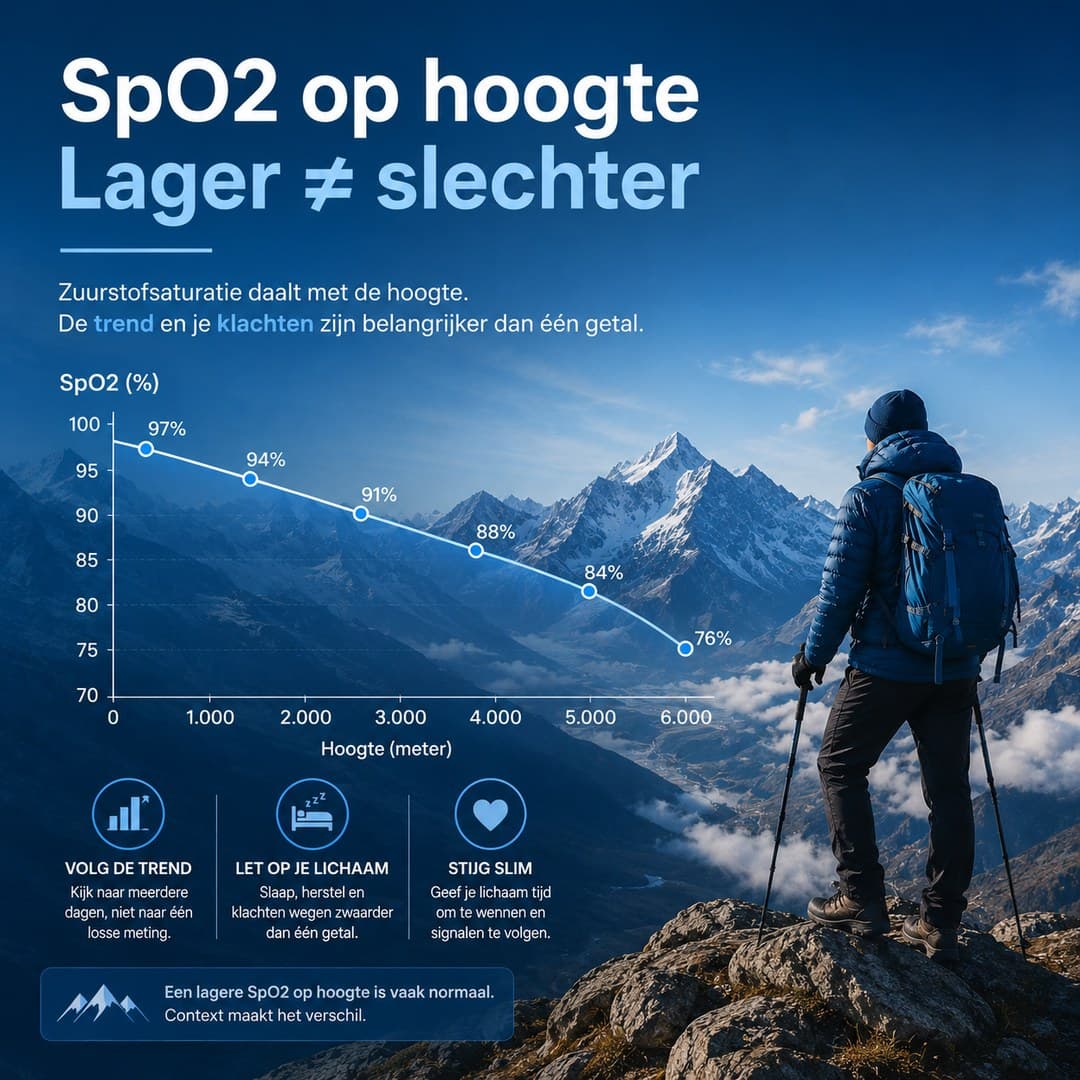
A single morning measurement says little. Trends over several nights are decisive. A slowly declining SpO₂ combined with poorer sleep is often the first signal of overstimulation.
Misconception 2: A mild headache is part of the deal
Occasional habituation is normal. Persistent headache or pressure sensation usually indicates insufficient recovery, not successful adaptation.
Misconception 3: Everyone benefits from the same height
Individual susceptibility to hypoxia varies widely. Age, stress load, training and iron status play a role.
What does this mean concretely?
A good schedule responds to signals. A bad scheme ignores them.
The guided build-up schedule of 4 to 6 weeks
Week 1: introducing the stimulus
Start low, usually between 1,800 and 2,200 metres equivalent. Sleep at exactly the same altitude every night. Measure your SpO₂ at rest every morning, ideally under similar conditions.
What does this mean concretely?
This week is not about effect, but observation.
Week 2: controlled increase
Only when sleep quality remains stable and your SpO₂ recovers towards or above 93 per cent, increase by up to 300m.
What does this mean concretely?
Increase not because the schedule says so, but because your body confirms it.
Week 3 and 4: consolidate adaptation
This is the phase where real adaptation takes place. Some users linger longer here. This is not a lag, but often a sign of effective processing.
What does this mean concretely?
Standing still is sometimes the quickest way forward.
Week 5 and 6: only if purposefully needed
These weeks are relevant for specific performance goals or high-altitude preparation. They require extra attention to recovery and sleep.
What does this mean concretely?
More is only better if the body can keep up.
Scenario: the athlete who thinks he is behind
An endurance runner stays at the same altitude in week 3 because his SpO₂ is still fluctuating. He feels insecure because others are already higher. Yet his sleep stabilises just in this week.
What does this mean concretely?
Comparison distorts the process. Adaptation is individual.
Scenario: the tractor with restless nights
A mountain traveller raises too fast towards 3,000-metre equivalent. His sleep becomes light and restless. Taking a step back restores sleep within a few days.
What does this mean concretely?
Switching back is not a failure, but active guidance.
Decision moments and red flags
- Moving on: stable sleep, consistent SpO₂ trend
- Adjusting: mild sleep deprivation, daytime fatigue
- Slow down or stop: persistent headaches, declining SpO₂, multiple bad nights
What does this mean concretely?
Look at patterns, not single figures.
High altitude tent as preparation, not guarantee
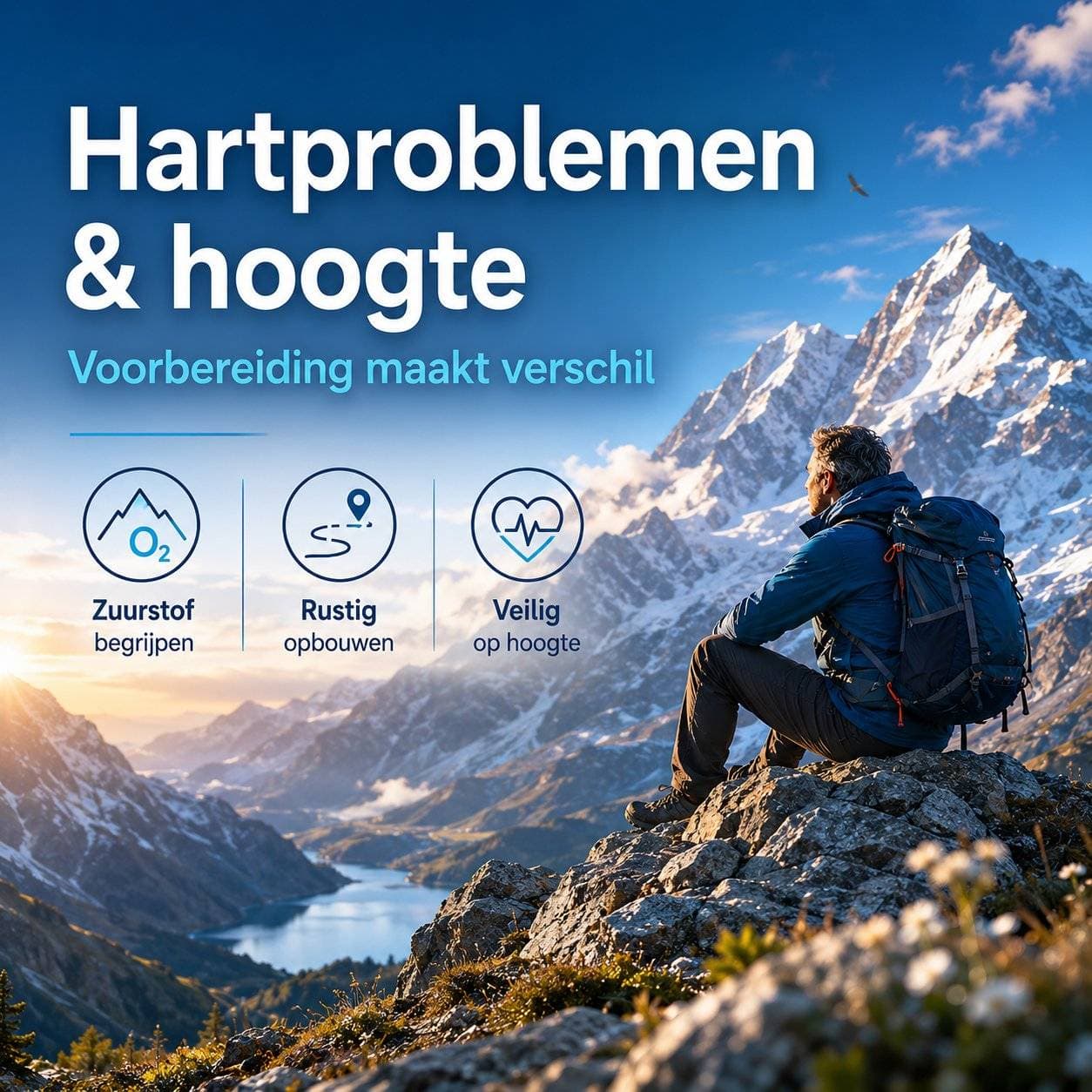
An altitude tent supports physiological adaptation, but does not replace on-site acclimatisation and does not 100% guarantee against altitude sickness. It is, however, a powerful tool which can significantly reduce the risk of altitude sickness.
When a high altitude tent does make sense
For athletes within an LHTL approach and mountain travellers with limited acclimatisation time, an altitude tent can make the difference between overload and controlled preparation.
Finally, why guidance is more important than the schedule
The success of altitude tent use is not in following a set plan, but in recognising signals. Those who learn to manage sleep, SpO₂ and recovery will not use an altitude tent harder, but smarter.