Oxygen deficiency in the mountains: causes and early signs
Published 19 March 2026 · 3 min read
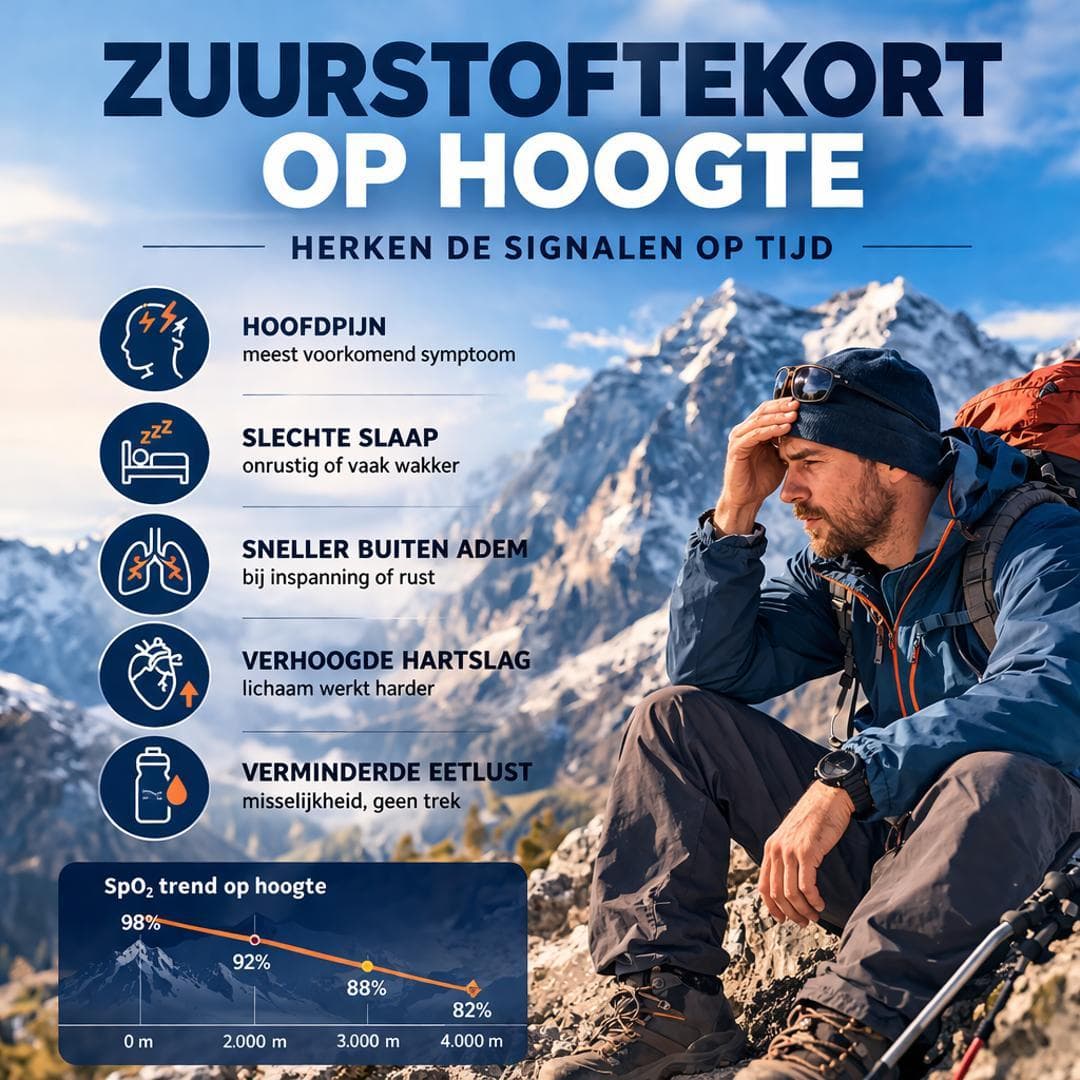
Oxygen deficiency in the mountains occurs once your body receives less oxygen at altitude than at sea level. This happens from around 1,500 metres and can lead to fatigue, headaches, poor sleep and eventually altitude sickness. Many people think that problems only start above 4000 metres, but the first signs of hypoxia often appear much earlier.
Those who recognise the early signs can prevent serious symptoms. In this article, you will read what exactly oxygen deficiency is, why it occurs, which symptoms you notice first and how to monitor it objectively.
If you first want to understand how the body reacts to altitude, read also how altitude sickness occurs and oxygen saturation at altitude.
📌 The essentials in 30 seconds
- Oxygen deficiency occurs as air pressure drops at altitude
- This results in less oxygen entering the blood
- The first signs are often fatigue and headaches
- SpO2 usually drops as early as 2000 metres
- Slow ascent prevents severe altitude sickness
- Pre-acclimatisation can greatly reduce risk
🧭 What is oxygen deprivation in the mountains?
Oxygen deficiency, also known as hypoxia, occurs when the body can absorb less oxygen than it needs. In the mountains, this happens not because there is less oxygen in the air, but because the air pressure becomes lower.
As a result, less oxygen enters the lungs per breath and therefore less into the blood. The body has to adapt by breathing faster, making more red blood cells and improving oxygen transport.
You can read more background in physical reactions to oxygen deprivation.
📊 Altitude vs oxygen in air
| Height | Oxygen available | Effect on body |
|---|---|---|
| 0 m | 100% | normal |
| 2000 m | ≈ 80% | first adjustment |
| 3000 m | ≈ 70% | marked hypoxia |
| 4000 m | ≈ 60% | high-risk complaints |
| 5000 m | ≈ 50% | great burden |
Also see the height to oxygen table for a full overview.
⚠️ Why does oxygen deprivation occur at altitude?
The main cause is falling air pressure. At altitude, the pressure is lower, so fewer oxygen molecules are available per breath.
The body responds with:
- breathe faster
- higher heart rate
- increased urine output
- sleep worse
- increased red blood cell production
This process is called acclimatisation and takes days to weeks.
🚨 Early signs of oxygen deprivation
The initial symptoms are often underestimated. Many people think they are tired because of travelling or exertion, when in fact the body is already reacting to hypoxia.
- headache
- poor sleep
- loss of appetite
- out of breath more quickly
- dizziness
- low saturation
- elevated heart rate
Read also altitude sickness symptoms and risks.
🧠 Common misunderstandings
Misconception 1: problems only start above 4,000 metres
Most people notice effects as early as 2000-2500 metres.
Misconception 2: good fitness protects
Even elite athletes can get altitude sick.
Misconception 3: One night is enough to get used to it
Acclimatisation takes days to weeks.
Misconception 4: everyone reacts the same
Sensitivity to altitude varies widely.
📊 This is how you monitor oxygen deprivation objectively
Always use multiple signals at the same time.
- SpO2 trend over several days
- sleep quality
- resting heart rate
- headache
- appetite
- recovery
Important rule:
- SpO2 does not rise → no further increase
- SpO2 drops for several days → take rest
- complaints + low SpO2 → descending
🧭 When does oxygen deprivation become dangerous?
- above 3000 m → increased risk
- above 4000 m → high risk
- above 5000 m → acclimatisation necessary
- above 6000 m → extreme stress
Read also tips against altitude sickness.
🏕 How can you prevent oxygen deprivation?
- rise slowly
- take rest days
- adequate drinking
- SpO2 measurement
- don't sleep too fast at altitude
- pre-acclimatisation
For expeditions acclimatising at home help to greatly reduce the risk of complaints.
🎯 Conclusion
Oxygen deficiency in the mountains is caused by lower air pressure and can cause symptoms from a relatively low altitude. Those who recognise the early signs and monitor objectively can usually prevent severe altitude sickness. Ascending slowly, acclimatising well and listening to your body are the most important rules.
✅ Want to greatly reduce the risk of oxygen deprivation?
With pre-acclimatisation, you can let the body get used to altitude in advance. This allows you to start a trek or expedition with a head start.
View pre-acclimatisation packages
Read altitude tent customer experiences