Best preparation for trekking to Kilimanjaro or Everest Base Camp
Published 20 September 2025 · 3 min read
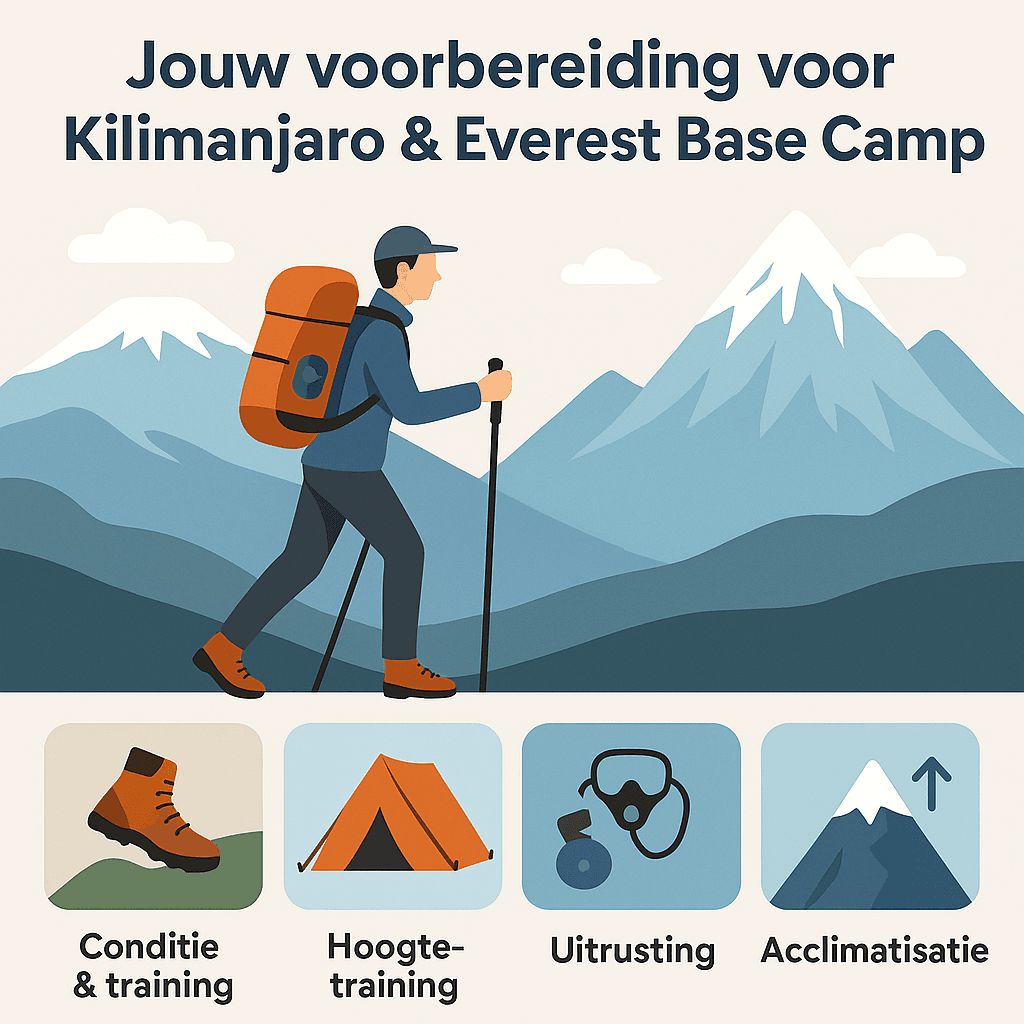
Trekking to Mount Kilimanjaro in Tanzania or Everest Base Camp in Nepal is a once-in-a-lifetime experience for many. But to make this dream come true, thorough preparation is essential. The better you prepare your body, equipment and mindset, the more likely you will not only make it to the summit, but also enjoy the adventure to the fullest. In this article, you will discover step by step how best to prepare for a trek to high altitude.
Why good preparation is crucial
Hiking at high altitude demands a lot from your body. The reduced amount of oxygen makes each step heavier, so you run out of breath faster and fatigue sets in. In addition, altitude sickness (AMS - Acute Mountain Sickness) can completely thwart your plans. With the right preparation, you can reduce these risks and increase your chances of success.
1. Build your physical fitness step by step
A trek to Kilimanjaro or Everest Base Camp is physically intensive, even if you don't need to have technical climbing skills. Good basic fitness is essential:
- Duration training: Hikes of 4-6 hours in hilly terrain mimic conditions best.
- Strength training: Focus on legs, core and back. Think squats, lunges, step-ups and core-stability exercises.
- Interval training: Alternating between intense exercise and recovery helps you cope better with oxygen deprivation.
- Walk with packs: Practice with a 6-10 kg backpack to get your shoulders and back used to it.
2. Train your body for altitude conditions
The biggest challenge on Kilimanjaro and in the Himalayas is the lack of oxygen. A proven method to prepare for this is altitude training. With an altitude tent or altitude chamber, you can get your body used to lower oxygen levels weeks before departure. This increases your red blood cells and makes you more resistant to altitude sickness.
3. Choose the right material
Good equipment is half the battle. Invest in decent equipment, as frozen toes or a wet sleeping bag can ruin your trek.
- Shoes: Sturdy, waterproof mountaineering boots (category B or C) that are well broken in.
- Clothing: Layer principle - base layer (merino wool or synthetic), insulating layer (fleece or down), outer layer (water- and windproof).
- Sleeping bag: Comfort temperature of at least -15°C for Kilimanjaro and -20°C for Everest Base Camp.
- Accessories: Hiking poles, headlamp, gloves, sunglasses with UV protection and a thermos bottle.
4. Mentally strong up the mountain
Not only your body, but also your mind is severely tested. Long days, cold, fatigue and sometimes headaches due to altitude require perseverance. Some tips:
- Practice with multi-day treks to mentally get used to fatigue.
- Visualise the end goal: reaching the summit or seeing Base Camp.
- Keep a positive mindset even when you are struggling.
5. Nutrition and hydration
At high altitude, you consume a lot of energy and fluids. Make sure you are well prepared:
- Eat plenty of carbohydrates: Rice, pasta and potatoes provide long-lasting energy.
- Drink at least 3 litres a day: Water and tea help prevent dehydration and altitude sickness.
- Bring snacks: Energy bars, nuts and dried fruit are ideal during the trip.
- Iron supplements: Consider replenishing your iron stores, especially in combination with altitude training.
6. Acclimatisation is key
Even with the best preparation, you need to give your body time to get used to the altitude. Therefore, choose a route or schedule that allows acclimatisation.
- Kilimanjaro: Avoid the 5-day routes, preferably choose a 7-8-day trek (e.g. Machame or Lemosho route).
- Everest Base Camp: Plan enough rest days in Namche Bazaar and Dingboche.
Stick to the adage: "Climb high, sleep low". As a result, your body adapts better.
7. Medical preparation
A medical check-up is highly recommended. Discuss with your doctor:
- Altitude sickness medication (e.g. Diamox).
- Vaccinations for Tanzania or Nepal.
- Personal medical history (asthma, heart problems, etc.).
8. Practicalities: visa, guides and insurance
Besides physical and mental preparation, there are practical things you should not forget:
- Visa: Mandatory for Tanzania and Nepal.
- Local guides: Mandatory on Kilimanjaro, highly recommended for Everest Base Camp.
- Insurance: Get insurance that also provides cover above 4,000-5,000 metres.
Conclusion: success starts at home
A trek to Kilimanjaro or Everest Base Camp requires much more preparation than just a pair of sturdy hiking boots. By preparing well physically, mentally and practically, you increase your chances of making your dream come true - safely, healthily and with a backpack full of unforgettable memories.
Want to leave optimally prepared? Then take a look at our height tent rental service, allowing your body to acclimatise already in the Netherlands or Belgium.