Altitude training and COVID-19: what an altitude tent can and cannot do
Published 3 October 2020 · 2 min read
During the pandemic, many customers asked us whether altitude equipment could help against COVID-19. The honest answer: an altitude tent does not protect you against the virus, and it is not a treatment for COVID-19 or its after-effects. This page explains what the equipment does, what the research on hypoxic training says and when to be careful.
What an altitude generator does
An altitude generator lowers the share of oxygen in the air you breathe in the tent, to simulate altitude (normobaric hypoxia). It does not add oxygen. Before the air reaches the tent, it passes through filters, including a HEPA filter that is replaced every year. Filtered air can feel more comfortable, for example for people with hay fever, but a filter in an altitude tent is not protection against viruses and does not replace the usual advice on hygiene and vaccination.
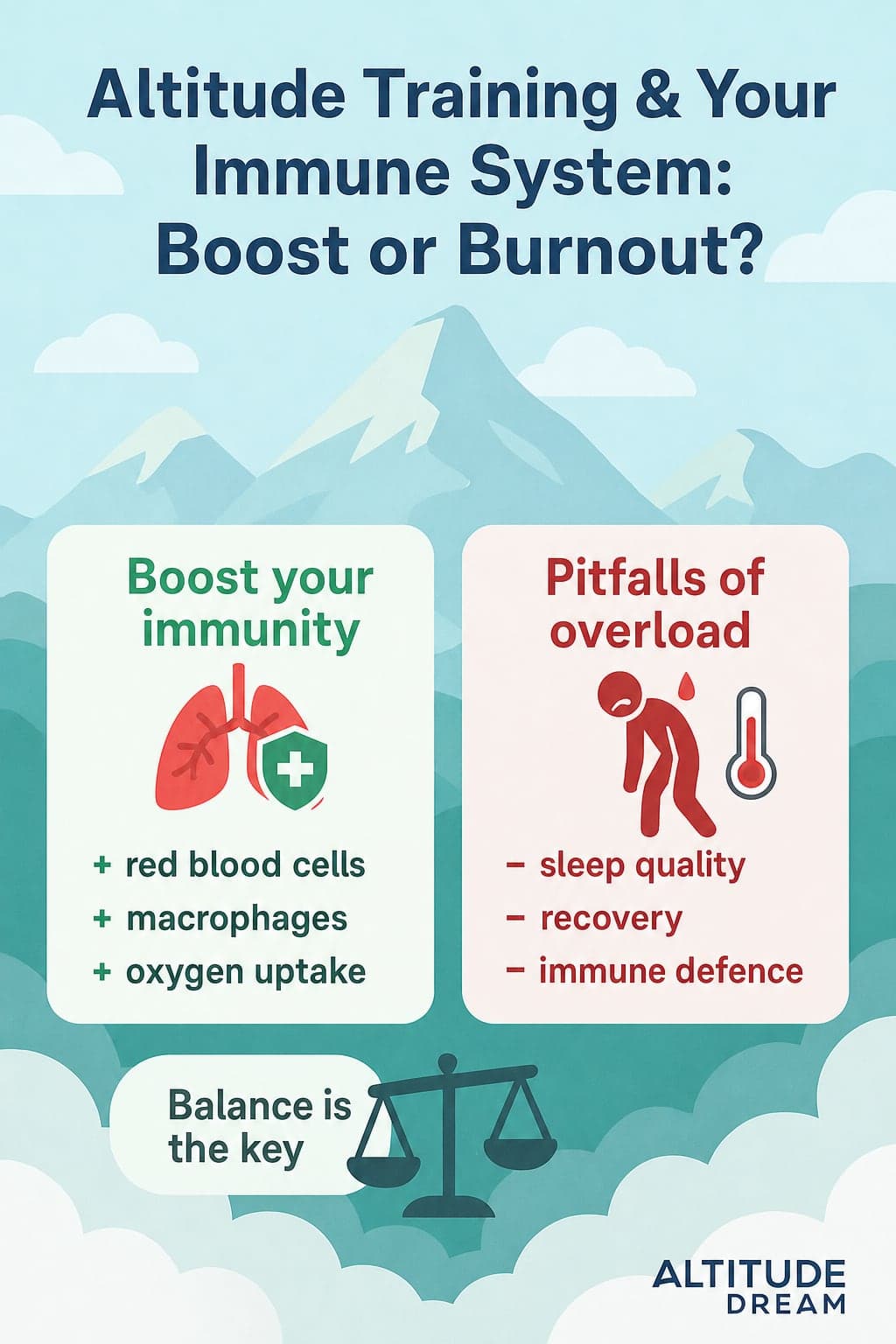
Hypoxic training and the immune system
Intermittent hypoxic training (IHT) alternates short periods of reduced oxygen with normal air. Research into its effects on the immune system is limited and the results are mixed. There is no evidence that altitude training or IHT prevents an infection with the coronavirus or lowers the risk of severe illness. A small number of studies look at IHT as part of rehabilitation after COVID-19 and long COVID; we summarise them, with their limits, in IHT for recovery from COVID-19 and long COVID: what does the research say?
Oxygen therapy, which hospitals use for patients with severe COVID-19, works the other way round: it adds oxygen. It is a medical treatment and has nothing to do with training at simulated altitude.
When to be careful
- Do not train or sleep at simulated altitude while you are ill, have a fever or are short of breath.
- After COVID-19, and certainly with lasting symptoms or lung problems, talk to your doctor before you start or resume altitude training.
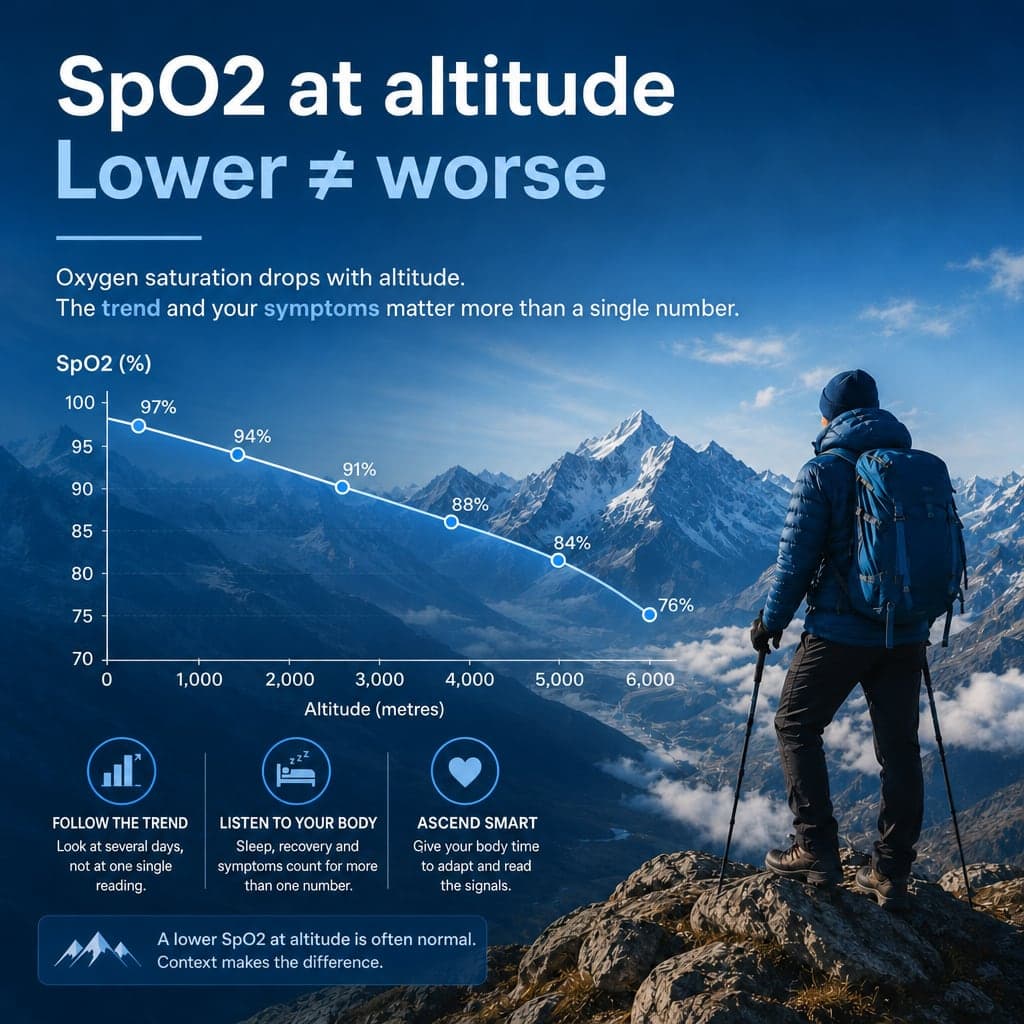
- Build up gradually, check your oxygen saturation with an oximeter and stop if you feel unwell.
Do you have a question about your own situation? Contact us. If your question is medical, ask your doctor first.