
Altitude training for skaters: here’s how to plan it towards important competitions
Published 5 April 2026 · 10 min read
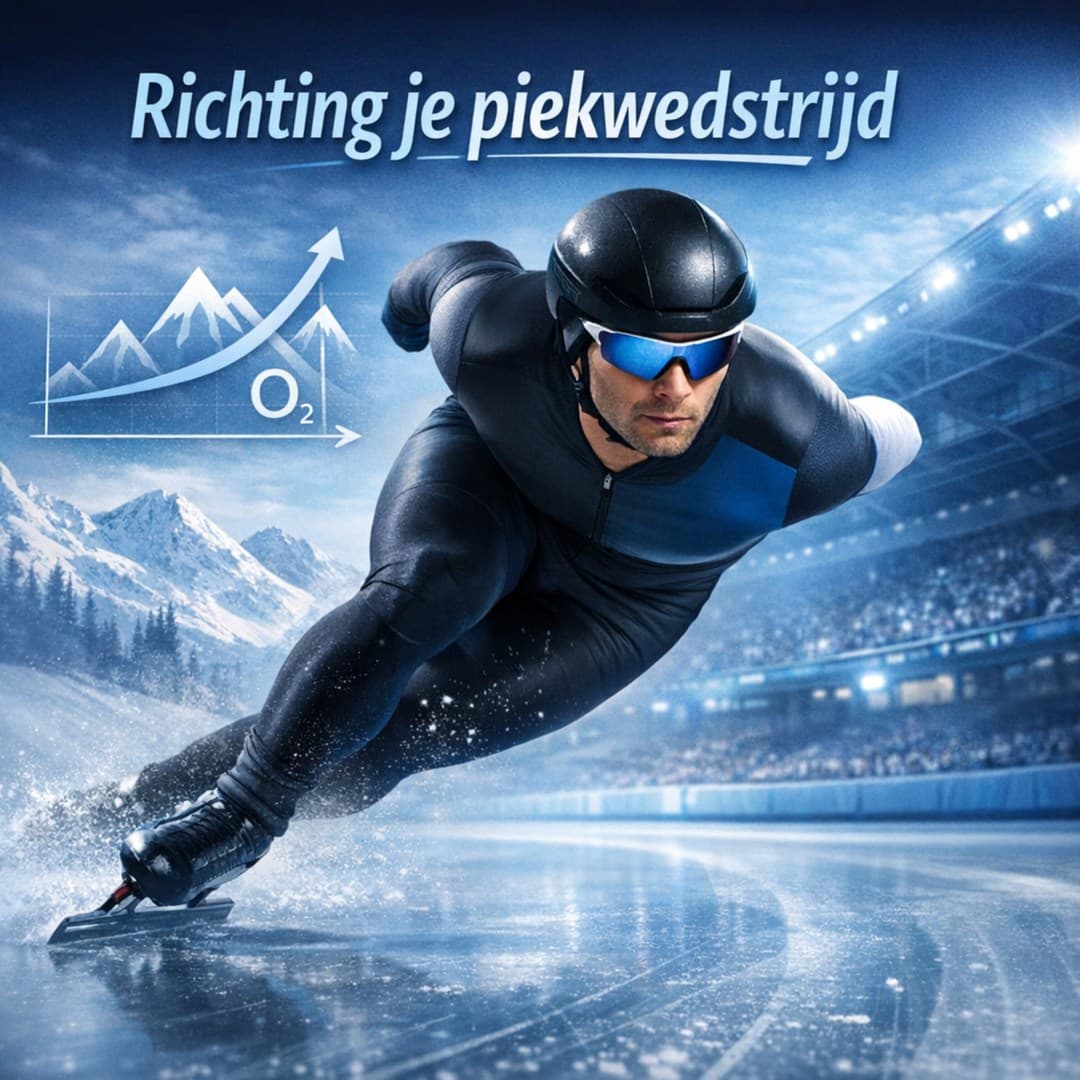
Altitude training for skaters works best if you look not only at extra incentive, but especially at timing. Heading towards important competitions, you want to get fitter without reducing your sleep, recovery or quality on the ice. Therefore, the best approach is usually not: as high as possible and as long as possible. The best approach is: start on time, build slowly, protect training quality and wind down at the right time.
For speed skaters, this is extra important. A good 1500 metres, 3 kilometres or team pursuit requires not only a strong aerobic motor, but also freshness, timing, rhythm and technique. Altitude training can help in this, as long as it remains supportive of your skating training and not the other way around.
Short answer:
- Usually start 4 to 6 weeks before your main competition block.
- Preferably opt for a gentle, build-up LHTL approach where you mainly sleep in hypoxia and keep your quality training low.
- In the last 5 to 7 days, build down often so that sharpness, sleep and ice feel central.
Conclusion: skaters usually benefit more from cleverly planned altitude training than aggressive altitude training.
Nuance: the effect depends heavily on recovery, sleep quality, type of distance and your place in the season.
Practical hook: Always protect your key sessions on ice and use hypoxia as a stimulus, not an end in itself.
Why altitude training for skaters should be planned differently
Ice skating is neither a pure endurance sport nor a pure strength sport. It is precisely this combination that makes planning different. You need aerobic capacity to sustain high speeds for longer. At the same time, you want to stay neuromuscularly fresh for technique, acceleration, turn control and race feel.
Therefore, a classical approach where you try to maximise everything at once often does not work as well. When hypoxia becomes too severe, you usually see it first in sleep, legs and quality of your intensive sessions. And that's exactly what you don't want at the stage when races become important.
For skaters, it is therefore smart to first determine what kind of altitude training best suits the moment in your season. In many cases, this amounts to a controlled sleep high, train low approach. In this, you use sleeping in hypoxia as a stimulus, while performing heavy training in normal oxygen conditions.
📊 Research shows
The physiological gains from altitude training come mainly from repeated exposure over time, not from one extremely hard week. This is precisely why a steady build-up often works better than a hard spike, especially in a sport where technique and training quality weigh so heavily.
When altitude training makes sense for skaters heading into competitions
Altitude training for skaters is especially useful if you still have enough time to build up and land a stimulus. Those who start too late mainly accumulate fatigue. Those who stop too early often lose part of the transfer towards the competition.
When is this a good fit?
You still have 4 to 6 weeks until your peak moment, you can monitor sleep and recovery well, and your key intensive sessions stay technically sharp.
When is this less smart?
You are already in a crowded racing period, your sleep is fragile, or your recovery is already under pressure from travel, strength training and competition stress.
In practice, you see roughly three good moments:
- Before an important match block: To lay a broad incentive without disrupting your matches themselves.
- Between two peak moments: if there is enough space between blocks and your first peak is already over.
- In the build-up to an NK, EC, WC or selection competition: provided you deliberately plan the last week more calmly.
The mistake that many athletes make is that they see altitude training as something you have to keep going until race day. For skaters, that is rarely the best route. Fresh legs and good sleep patterns are often more valuable in the final days than one more hypoxic stimulus.
Height training for skaters heading into competitions: a practical protocol
The protocol below is not a rigid schedule, but a good starting point for skaters who want to approach an important competition or series of competitions with altitude training. Consider a controlled altitude training approach with normobaric hypoxia. This involves lowering the oxygen percentage and not the air pressure.
| Period to match | Target | Hypoxia approach | Training focus | Decision rule |
|---|---|---|---|---|
| 6-5 weeks | Quiet entry | Start low. Think about 2000-2200 metres and 7-8 hours of sleep exposure. | Basic load, technique and ordinary quality maintained. | Increase only if sleep and morning feeling remain stable. |
| 4-3 weeks | Main phase | Work gradually to about 2200-2500 metres and 8-10 hours of exposure. | Key interval sessions and strength remain leading. | Do not increase during weeks with extra heavy ice packs or a lot of muscle pain. |
| 2 weeks | Consolidate | Not necessarily higher. Often keeping things stable is better than scaling up further. | Match-specific incentives, rhythm and efficiency. | When sleep is poor or fatigue is present, it is preferable to scale down rather than push through. |
| 7-5 days | Phasing out | Often turn lower or stop temporarily. | Sharpness, fresh legs and technical sense. | If your legs feel heavy, sleep is restless or heart rate remains higher: cut back immediately. |
| Last 4-2 days | Taper | No more introducing a new height incentive. | Recovery, confidence and competitive spirit. | Everything now should feel like preparation to perform, not adaptation. |
6-5 weeks
Objective: quiet entry.
Hypoxia: about 2000-2200 metres and 7-8 hours of sleep exposure.
Focus: keep basic load, technique and ordinary quality.
Decision rule: increase only if sleep and morning feeling remain stable.
4-3 weeks
Objective: main phase.
Hypoxia: about 2200-2500 metres and 8-10 hours of exposure.
Focus: Intervals and strength remain leading.
Decision rule: do not increase in extra-heavy training weeks.
2 weeks
Objective: consolidate.
Hypoxia: Keeping stable is often better than scaling up further.
Focus: match-specific incentives, rhythm and efficiency.
Decision rule: In case of poorer sleep or fatigue, prefer to scale down.
7-5 days
Objective: winding down.
Hypoxia: often turn down or temporarily stop.
Focus: sharpness, fresh legs and technical sense.
Decision rule: heavy legs or restless sleep are grounds for immediate tapering off.
Last 4-2 days
Objective: taper.
Hypoxia: No more adding a new height incentive.
Focus: recovery, confidence and competitive spirit.
Decision rule: everything must now serve performance.
The key choice: continue or wind down in time?
The most practical question towards an important competition is often not whether to use altitude training, but when to wind down. For skaters, this is often the key to success.
Running through to just before the match
Can work if you respond very stably, already have experience with hypoxia and don't see a drop in sleep quality or explosiveness.
Risk: fatigue creeps in without you noticing it right away.
Phase out 5-7 days earlier
Often works better for skaters who want to maximise sharpness, freshness and technical feel in the final week.
Risk: you stop a little earlier, but usually you gain more in quality than you lose in incentive.
For most skaters, the second option is safer. This is especially true if you are prone to poor sleep, heavy legs or feeling a bit flat during intense blocks. Altitude training has still been useful then, but you give the race room to come out.
Common skating mistakes
Checklist: avoid these mistakes
- Starting late, only bringing fatigue into the match.
- Increasing the height too quickly because you think higher is automatically better.
- Ignoring poor sleep when it is often the first warning sign.
- Hypoxia combine with your heaviest strength week as well as your heaviest ice week.
- No clear cut choice in final match phase.
⚠️ Reality check
An altitude tent is no substitute for acclimatisation or proper training. It is controlled, measurable and plannable support. The risk of disruption increases as soon as you want to build up faster than your recovery can handle.
A second mistake is that athletes only look at feeling. This is understandable, but too limited. This is precisely why it is smart to also work more objectively. On the page about measuring the effect of altitude training you can clearly see why trend data is often more valuable than a single individual measurement.
This is how you monitor this lens
Heading into important matches, you don't want to gamble. That's why you monitor at least four things: SpO2 trend, sleep quality, sense of recovery and symptoms.
- SpO2 trend: look at the line over several mornings. Not at one isolated outlier.
- Sleep quality: pay attention to sleep-in time, night waking and how rested you get up.
- Recovery: follow muscle feeling, sense of training and how quickly you recover from intense sessions.
- Symptoms: headache, restless night, noticeably higher resting heart rate or heavy legs are signs to take seriously.
Practically, you can use the following decision rules:
- If there are several mornings in a row with stable feeling, good sleep and a favourable SpO2 trend, then you can usually continue calmly.
- If you see markedly worse recovery or declining training quality three days in a row, then not increasing is the best choice.
- If you feel flat in speed sessions or turns get sloppier, then scaling down is often smarter than holding on.
- If sleep deteriorates noticeably in the last 7 to 10 days, taper almost always wins over extra stimulus.
Recovery also deserves a place in your plan. Especially if you combine skating with strength, cycling or running. In that respect, a skating protocol is often more in line with the logic behind good recovery strategies after altitude training than with a pure duration approach.
What to expect from the mechanism
Altitude training for skaters is not a trick to create a big performance difference in a few days. Rather, it is a way to elicit additional adaptation in a well-planned block. Think support for oxygen transport, more efficient load handling and, in some cases, a stimulation of processes associated with natural EPO stimulation.
But that mechanism only works if the basics are right. Without rest, proper training and a logical race schedule, altitude training quickly becomes an additional stressor rather than an advantage.
Practical approach for different skaters
Skaters at longer distances
For 3km, 5km and marathon on ice, the aerobic component may weigh relatively heavily. There, a slightly longer block can often fit well, as long as your intensive stimuli on the ice remain pure.
All-rounders
All-rounders often benefit most from balance. Not too aggressive, not too short. The trick is in a solid block of several weeks, followed by a clear taper.
More explosive skaters
At 500 and 1000 metres, you have to be extra alert to loss of freshness. There, a lighter stimulus is often better than a deep hypoxic block. Less high, less long and tapering off earlier often fits better then.
Conclusion
Altitude training for skaters works especially well if the planning adapts to the sport. Not the other way around. Heading towards important competitions, you want to build up a useful stimulus without disrupting sleep, sharpness and technique. Therefore, in practice, a calm build-up with a clear wind-down phase often works better than an aggressive approach until the last day.
The gist is simple: start on time, protect your quality training, monitor objectively and dare to scale down as soon as the race approaches. Then altitude training increases your chances of being at the start with fresh legs and a better engine.
Want to plan your altitude training smartly towards a peak race?
For skaters, timing is everything. A good schedule takes into account training quality, recovery and the right time to wind down. Check out our rental service or read practical experiences from a similar endurance sports context first.
Frequently asked questions about altitude training for skaters
When is the best time to start altitude training for skaters?
Usually 4 to 6 weeks before an important competition block. Then you have time to build up slowly and still build down towards your peak moment.
Should a skater stay in the altitude tent until race day?
No, not usually. Many skaters perform better when they wind down in the last 5-7 days, so freshness and sleep quality are key.
Is altitude training especially useful for long distances?
The effect is often clearer there, but all-rounders can also benefit. At more explosive distances, the stimulus usually needs to be dosed more carefully.
How do you know if the load is getting too high?
You often see this first in worse sleep, heavy feeling in the legs, less sharp quality sessions and an unfavourable trend in recovery measurements.


